From traffic-heavy Bujumbura to long, corrugated roads up-country and humid equatorial heat, Burundian conditions are tough on batteries. This guide walks you through battery types, sizing used locally (JIS/DIN), price expectations (BIF), and the best places to buy or order—plus quick links to compare AGM, EFB (idle‑stop), and essentials like a smart maintainer and jumper cables.
Table of Contents
- Quick Picks (By Use Case)
- Car Battery Types in Burundi Comparison
- Car Battery Size & Fitment Size Burundi
- Best Car Battery Brands in Burundi
- Where to Buy Car Battery in Burundi
- Buying Car Battery in Burundi Guide and Tips
- Car Battery Burundi FAQs
Quick Picks (By Use Case)
- Daily commuter (no idle‑stop/start): Quality flooded lead‑acid or EFB. Compare Group 35/55D23 options. Typical spend: BIF 280,000–650,000 depending on brand/capacity.
- Cars with idle‑stop/start (Eco idle): EFB (budget) or AGM (premium). Browse EFB or AGM. Budget: BIF 500,000–1,100,000.
- 4×4, NGO field work, touring & towing: AGM starter or dual setup (starter + deep‑cycle) with 12V deep‑cycle AGM and a DC‑DC charger.
- High heat & rough roads: Sealed maintenance‑free flooded or AGM with reinforced plates; consider heat‑rated models.
- Short‑trip city use: AGM/EFB plus periodic top‑up via smart maintainer to prevent sulfation.
- Audio/performance builds: AGM with higher RC/Ah and tight voltage regulation. See high‑reserve AGM.
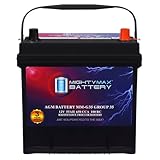
Mighty Max Battery MM-G35 Start and Stop Car BCI Group Size 35 12V 55Ah, 100RC, 650 CCA Rechargeable AGM Car battery

ACDelco Gold 48AGM (88864541) 36 Month Warranty AGM BCI Group 48 Battery

ACDelco Gold 94RAGM (88864542) 36 Month Warranty AGM BCI Group 94R Battery
Car Battery Types in Burundi Comparison
| Type | Best For | Pros | Cons | Price (BIF) | Shop |
|---|---|---|---|---|---|
| Flooded (SMF) | Most petrol sedans, taxis | Lowest cost, easy to source | Lower vibration tolerance | ~200k–550k | Compare MF 12V |
| EFB | Idle‑stop cars, city fleets | Better charge acceptance, cycles | Costs more than flooded | ~450k–900k | Shop EFB |
| AGM | 4x4s, premium, audio builds | Spill‑proof, high CCA, vibration‑resistant | Highest price; needs smart charging | ~650k–1.4m | Shop AGM |
| Deep‑cycle (Aux/2nd battery) | Fridges, winches, camping | Longer runtime on accessories | Not ideal as sole starter | ~500k–1.2m | Deep‑cycle AGM |
Car Battery Size & Fitment Size Burundi
| Common Size | Standards | Typical Vehicles in Burundi | Notes | Search |
|---|---|---|---|---|
| NS60 / 46B24 (JIS) | JIS small case | Toyota Vitz/Yaris, Corolla (older), Probox | Check terminal L/R orientation | NS60 search |
| 55D23 / 65D26 / N70 (JIS) | JIS mid/large | Toyota Noah, Hilux, Land Cruiser Prado (petrol) | Popular up‑country; higher CCA | 65D26 • N70 |
| DIN H4/H5/H6 (L1/L2/L3) | DIN/EN sizes | Modern European imports, some SUVs | Measure tray & hold‑down height | H5 • H6 |
| Group 24/34/35 (BCI) | North American | US‑spec 4x4s & pickups | Verify terminal post type (SAE/JIS) | Group 24 • Group 35 |
Best Car Battery Brands in Burundi
- Chloride Exide: Widely distributed regionally; good value sealed MF and N70 sizes for Hilux/Prado. Online example locally via Shopit.bi (check current stock & delivery). Typical BIF: 350k–900k. Compare Exide on Amazon
- Yokohama Batteries: Known presence via independent importers/shops; favored for taxis and minibuses. Typical BIF: 300k–800k. Yokohama search
- Bosch: DIN sizes (H5/H6/H7) popular on European cars; strong CCA and heat resistance in AGM lines. Typical BIF: 600k–1.3m. Bosch AGM
- VARTA: Premium DIN/EFB/AGM, great for idle‑stop imports and German marques. Typical BIF: 700k–1.4m. VARTA AGM
- GS Yuasa: Reliable JIS sizes (NS60/55D23/65D26) for Japanese vehicles; consistent quality. Typical BIF: 500k–1.1m. Yuasa NS60
Where to Buy Car Battery in Burundi
- Burundi Auto Parts (BAP)
- 19 Bis Boulevard du 1er Novembre, Bujumbura
- Contact: +257 22 22 66 39 / +257 22 22 45 21 • Email: bap.jd@spidernet-bi.com
- Hours: Mon–Sat (typical); call to confirm
- Toyota Burundi (Dealer Parts & Service)
- Rue Kanzigiri, Bujumbura (dealer campus)
- Contact: See website / Facebook for current numbers
- Hours: Mon–Fri, Sat AM (typical)
- Bonauto s.a. (Spare parts, tires, batteries)
- Bujumbura (industrial zone); check site for map
- Contact: Via website/Facebook
- Hours: Mon–Sat (typical)
- Shopit.bi (Online)
- Online retailer with Chloride Exide models; delivery options vary
- Contact: Website contact form
- Hours: Online ordering
- Ubuy Burundi (Online)
- Marketplace shipping to Burundi; confirm import duties and delivery times
- Contact: Website support
- Hours: Online ordering
Buying Car Battery in Burundi Guide and Tips
- Match spec first: Use your current label (JIS/DIN/BCI size, Ah, CCA) or owner’s manual. If upgrading from flooded to AGM/EFB, ensure your vehicle’s charging system is compatible.
- Heat & vibration matter: Prioritize robust construction (AGM or reinforced MF) for rural roads. Ask for anti‑vibration features and higher CCA for 4x4s.
- Fresh stock: Choose a battery manufactured within the last 6–9 months. Verify date code on the case.
- Warranty & service: Typical retail warranties run 12–24 months. Confirm pro‑rated terms and what voids coverage (over‑discharge, alternator faults).
- Fitment & polarity: JIS sizes come in Left/Right terminal layouts (e.g., NS60L vs NS60). Reversing can short cables—double‑check before installing.
- Idle‑stop cars: Always replace like‑for‑like with EFB or upgrade to AGM. Standard flooded units will fail early in start‑stop duty.
- Charging tools: City short trips and parked vehicles benefit from a smart maintainer. For off‑grid travel, add a DC‑DC charger.
- Test the alternator: Many “bad battery” symptoms come from weak charging. Ask shops to load‑test battery and check alternator/regulator voltage.
- Keep receipts: Photograph the invoice and warranty card—handy for roadside claims up‑country.
Car Battery Burundi FAQs
Which battery type is best for Burundi’s heat and mixed roads?
AGM handles vibration and heat better, but quality sealed MF (maintenance‑free) works well for budget builds. For idle‑stop cars, use EFB at minimum.
How much does it typically cost to replace and install a car battery in Burundi?
Expect BIF 280,000–1,400,000 for the battery depending on size/brand, plus BIF 20,000–60,000 for testing/fitment in city workshops.
What’s the typical car battery warranty in Burundi?
Most retailers offer 12–24 months, sometimes pro‑rated. Keep the stamped warranty card and test report.
How are car batteries recycled in Burundi?
Shops usually collect cores and send to regional recyclers. Always return your old battery (often earns a small core credit) and avoid dumping—lead‑acid is hazardous.
Can I upgrade from flooded to AGM?
Yes, if the physical size and terminals match and the vehicle’s alternator/regulator stays within AGM charging voltage. Many 4×4 owners upgrade for durability.
What size does my car use?
Check the old label (e.g., NS60, 55D23, N70, H5/H6). Measure tray length/height and confirm terminal orientation (L/R) before purchase.
How do I prevent early failure?
Secure the hold‑down, keep terminals clean, avoid deep discharges, and use a maintainer if the car sits for long periods.
The Bottom Line
- For typical city cars: sealed MF or EFB in the correct JIS size (NS60/55D23).
- For 4x4s and rural use: upgrade to AGM with higher CCA (65D26/N70 or DIN H6/H7 as applicable).
- Buy from reputable local shops for warranty support, and carry a smart charger to extend life.