
Freightliner trucks live hard lives — hotel loads, APU draw, brutal vibration, freezing starts at remote docks, and long idle laws that force you to run HVAC off battery instead of engine. The wrong battery means no-start calls, “Check Electrical System” faults, and downtime you can’t invoice. This guide walks you through the best battery type for your exact Freightliner platform, explains Group 31 vs 49/H8 vs auxiliary/deep-cycle house banks, and gives buying shortcuts (including AGM picks you can browse on Amazon like Group 31 AGM, H8/Group 49 AGM, and deep-cycle Group 31).
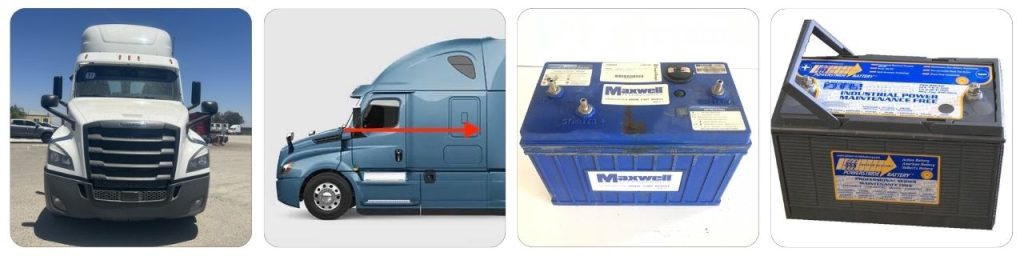
Table of Contents
- Quick Picks for Freightliner Owners (By Use Case)
- Top Battery Types for Freightliners (What to Choose & Why)
- Freightliner Model-Specific Buying Tips
- Freightliner Battery Fitment Cheat Sheet (Most-Common Sizes)
- Spec Targets: CCA, RC, and Warranty
- Best Car/Truck Battery Brands for Freightliner & Where-to-Buy
- Freightliner Battery Installation Guide (DIY or Shop)
- Freightliner Battery Maintenance & Longevity
- Signs You Need a New Battery
- Contact Freightliner Customer Service & Support
Quick Picks for Freightliner Owners (By Use Case)
- Long-haul sleeper tractor (Cascadia, multiple hotel loads overnight): High Reserve Capacity AGM Group 31 “deep cycle starting” batteries. Look for 200+ minute RC and vibration-resistant construction. Browse Group 31 AGM truck batteries. ~$230–$400 each, buy 3–4 as a matched set
- Day cab / regional (no sleeper HVAC draw): Premium Flooded Commercial Group 31 or cost-effective AGM. This is the sweet spot if you mainly need cranking power and reliable starts at 4 AM. See commercial Group 31 batteries. ~$160–$280 each
- M2 / Business Class medium-duty delivery (liftgate, PTO, accessory use): Dual-purpose Group 31 AGM or EFB-style high cycle batteries. You want repeatable discharge/recharge without killing plates. Check AGM deep-cycle Group 31. ~$220–$360
- Older Freightliner Classic / FLD / Columbia: High CCA Flooded Group 31 is still fine if you’re on a budget and you don’t idle for hotel loads. See high-CCA Group 31 flooded. ~$150–$220
- Freightliner Sprinter / van chassis / utility body: European-style H8 / Group 49 AGM (start-stop friendly, electronics-stable). Browse H8 / 49 AGM. ~$190–$300
- Extreme cold starts (northern oilfield, winter reefer support): Highest possible CCA per battery (>950 CCA for Group 31). AGM usually wins in the cold. See high-CCA AGM Group 31.
- APU / hotel power bank upgrade without touching start bank: Add dedicated deep-cycle AGM Group 31 or 8D batteries to run inverter, microwave, TV, bunk A/C. Shop AGM 8D deep cycle. ~$350–$500 each, heavy but long runtime
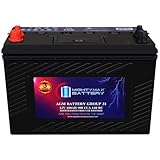
Mighty Max Battery MM-G31 Start and Stop Car BCI Group 31 12V 100AH, 140RC, 900 CCA, Rechargeable AGM Car battery

Interstate Batteries Marine/RV Battery 12V 100Ah 825CCA Dual Purpose Power Pure Lead AGM RV & Marine Starting Replacement Battery (Group Size 31M) Boats, RV's (8-31MAGMDC / 31M-AGM-A)

ACDelco Gold 31AGMT (88866292) 24 Month Warranty Heavy Duty AGM BCI Group 31 Battery
Top Battery Types for Freightliners (What to Choose & Why)
| Battery Tech | Best For | Why It Matters | Typical Price (USD) | Where to Look |
|---|---|---|---|---|
| Flooded Lead-Acid (Commercial Group 31) | Older FLD / Columbia / budget fleets | High CCA, proven, cheap. Easy to find anywhere on the highway. Needs water checks if serviceable, not great with deep discharge abuse. | $150–$220 ea | Group 31 flooded |
| EFB (Enhanced Flooded) | Medium-duty delivery with frequent restarts | Stronger plate design than basic flooded. Handles stop/start cycles, liftgate drops, short-hop routes where alternator never fully tops off. | $180–$260 ea | Commercial EFB |
| AGM (Absorbent Glass Mat) | Cascadia sleeper / HVAC on battery / cold climates | Spill-proof, low internal resistance, better vibration resistance, recharges faster off alternator, tolerates deeper discharge overnight. Usually higher CCA and RC in the same footprint. | $220–$400 ea (Group 31) | Group 31 AGM |
| AGM Deep-Cycle / House Bank | APU / inverter / hotel loads / fleet idle-reduction compliance | Built to drain slower and recover repeatedly without shredding plates. Keeps bunk A/C and fridge alive without murdering your start bank. | $250–$500 ea (31 / 8D) | AGM deep cycle |
| Lithium (LiFePO4 auxiliary) | Aftermarket hotel power upgrades, not engine starting | Huge usable capacity, crazy lightweight. But needs DC-DC charging and proper BMS. Do not replace your Freightliner start bank with random lithium unless engineered for cranking. | $500–$1,200 ea | LiFePO4 house bank |
Freightliner Model-Specific Buying Tips
- Freightliner Cascadia (most 2008+ and especially Cascadia Evolution / Cascadia Next Gen): Usually runs a bank of 3 or 4 Group 31 batteries. If you’re using bunk HVAC, fridge, microwave, CPAP, game console, etc., pick high RC AGM. Expect ~950+ CCA per battery, ~200+ minute RC. Budget around $800–$1,400 total for a full matched set of four.
- Freightliner Cascadia with factory idle management / ParkSmart / optimized idle: Daimler often spec’d AGM because those systems lean on the batteries while the engine is off. Stick to AGM. Search Cascadia Group 31 AGM.
- Freightliner M2 / Business Class / M2-106 / bucket truck / rollback: You’re doing PTO work, liftgates, boom hydraulics, strobes, work lights. You deep-cycle more than you think. Choose EFB or AGM Group 31 “dual purpose.” You’ll typically run 2 batteries. Budget $400–$700 total.
- Freightliner Columbia / Century / FLD / Classic XL: Older pre-emissions or pre-DD15 trucks are kinder on batteries (less hotel load electronics). High-CCA flooded Group 31 is still cost-effective, especially if you’re okay with regular maintenance. Around $150–$200 per battery.
- Freightliner Sprinter-based delivery van or RV upfitted on a Freightliner chassis: Usually takes an H8 / Group 49 under-hood starter battery (AGM strongly recommended for all the sensors and stop/start on newer diesel vans). Expect $190–$300 for a quality AGM. Browse H8/49 AGM batteries.
- APU / inverter bank add-on: If you’re adding a dedicated “hotel” bank to run a 1500–3000W inverter, go AGM deep cycle Group 31 or 8D instead of robbing your start batteries. Figure $500–$1,000+ in batteries plus cabling, but you’ll get quieter rest and less idling fuel burn.
- Idle in high heat (Texas, Arizona) or subzero cold (Dakotas, Alberta oil patch): Heat cooks flooded batteries. Cold buries weak CCA. AGM resists both extremes better, which is why serious OTR fleets are slowly standardizing on AGM even with the higher upfront cost.
Freightliner Battery Fitment Cheat Sheet (Most-Common Sizes)
| Freightliner Model | Common Battery Group / Form Factor | Typical Count | Notes |
|---|---|---|---|
| Cascadia (Sleeper) | Group 31 (AGM preferred) | 3–4 in parallel | Often mounted in a side box. Must match height/hold-down style. Replace all together. |
| Cascadia Day Cab | Group 31 Flooded or AGM | 3 (sometimes 2) | Less hotel load → you can run high-CCA flooded if budget matters. |
| Columbia / Century / FLD / Classic XL | Group 31 Flooded Commercial | 3–4 | Old-school mounts. Watch for corrosion on jumper links between batteries. |
| M2 / Business Class / M2-106 | Group 31 (Dual Purpose AGM or EFB) | 2 (sometimes 3) | Liftgate and PTO work benefit from deep-cycle capable designs. |
| Freightliner Sprinter / Van / Cutaway Chassis | H8 / Group 49 (AGM) | 1 starter battery | Electronics-sensitive. Avoid cheap low-CCA generic car batteries. |
| APU / House / Inverter Bank (aftermarket) | Group 31 Deep Cycle AGM or 8D AGM | 2–4 in parallel, isolated | Not always tied to starter system. Wire through isolator or DC-DC charger. |
Spec Targets: CCA, RC, and Warranty
RC: Reserve Capacity (minutes)
Vibe: Vibration Resistance
Chem: Flooded / EFB / AGM
- CCA (Cold Cranking Amps): Match or exceed OE spec. For Class 8 diesels, you’re usually looking at ~900–1,150 CCA per Group 31 battery. More CCA = easier starts in winter, less starter abuse.
- RC (Reserve Capacity): RC tells you how long the battery can feed loads with no alternator. Higher RC = longer hotel time with lights, bunk fan, fridge, in-cab electronics. Sleeper trucks should chase high RC AGM.
- Cycle Life: Delivery / PTO / bucket / wrecker trucks hammer batteries with partial discharge all day. You want a dual-purpose AGM or EFB that’s built for repetitive discharge/recharge, not just brute cranking.
- Vibration rating: Vibration is murder. Cascadia frame rails, rough secondary roads, and APU compressors all shake plates apart. AGM is mechanically tougher than flooded because the electrolyte is absorbed in fiberglass mats, not sloshing liquid.
- Warranty: Shoot for at least 24–36 months free replacement on premium AGM commercial batteries. A longer warranty can actually tell you who trusts their build quality.
- Terminal style / orientation: Group 31 commercial batteries often use 3/8″ or 5/16″ stud terminals instead of standard automotive posts. Sprinter-style H8 / 49 still uses standard top terminals. Order the correct terminal style or you’ll be improvising at the truck stop.
- Mixing ages: Never mix one brand-new AGM with three half-dead flooded. The weak ones will drag the new one down, and you’ll just waste money. Replace the full bank together.
Best Car Battery Brands for Freightliner & Where-to-Buy
| Brand / Line | Why Drivers Like It | Watch Outs | Where to Shop |
|---|---|---|---|
| NorthStar / Odyssey / “pure lead” AGM commercial lines | Very high CCA and RC, insanely tough against vibration. Favored by owner-ops who idle less and hotel more. | Premium cost. Absolutely replace the whole bank at once ($1k+ hit). | Odyssey Group 31 AGM |
| Interstate / Alliance (Freightliner OE partner) Commercial Group 31 | Easy to source on the road, decent warranty support, meets Freightliner specs without drama. | AGM versions cost more than basic flooded; make sure you’re getting the spec you asked for. | Interstate-style Group 31 |
| Exide / Clarios (various labels) | Often the same core battery gets rebranded, so you can find solid Group 31 AGMs even at big box or travel centers when stranded. | Quality depends on line, not just the name. Check CCA/RC labels, not just logo. | High-CCA AGM 31 |
| AGM H8 / Group 49 premium car/Sprinter batteries (DieHard, Bosch, etc.) | Great for Freightliner Sprinter chassis: strong cranking + stable voltage for sensitive modules, emissions, DEF heaters, etc. | Don’t cheap out with a random “car battery” if you have heavy upfitting (reefer, liftgate, inverter) — you may still need an aux house battery. | H8 / 49 AGM search |
- Truck stop / dealer (Freightliner / Daimler dealer network): Fastest way to get back on the road with correct stud terminals and proper venting. Labor help on the spot.
- Amazon / online order: Good for planning a proactive full-bank replacement on home time. You can compare CCA and RC specs side by side and find true AGM instead of “heavy duty flooded marketed as AGM-ish.” See Freightliner Group 31 AGM.
- Local heavy truck parts store: You’ll get core credit immediately (saves disposal hassle) and they’ll usually load test your old bank for free.
How to Check Freshness & Authenticity
- Date code: Batteries have build stamps (letter+number or YYMM). Fresher is better. Try for <3 months old for AGM if possible. Old stock sits sulfating on the shelf.
- Match labels: All batteries in the starting bank should have matching brand/series/model number, not “almost the same.” Mixed internals = uneven charging.
- Check studs/threads: Damaged or re-painted studs can be a sign of “reconditioned” units. Avoid mystery refurbs for a Class 8 start bank.
- Weigh it: Cheap flooded copies can feel suspiciously light. True AGM Group 31s are dense and heavy. If it feels oddly hollow, walk away.
Car Battery Warranty Tips
- Free replacement vs pro-rated: A 36-month free replacement warranty is stronger than a 12-month free + long pro-rate. Free is what matters when you’re stranded.
- Commercial use fine print: Some “3-year” warranties quietly drop to 12 months if installed in a commercial truck. Read that line before you pay.
- Keep proof: Take a pic of the receipt, the battery labels, and odometer/engine hours at install. That’s your claim ammo later.
- Ask about roadside support: Dealer network batteries sometimes include roadside service priority for no-start situations. That’s worth real money vs. sitting half a day waiting for a jump.

ACDelco Gold 48AGM (88864541) 36 Month Warranty AGM BCI Group 48 Battery

ACDelco Gold 94RAGM (88864542) 36 Month Warranty AGM BCI Group 94R Battery

Mighty Max Battery MM-H6 Start and Stop Car BCI Group Size 48 12V 70 AH, 120RC, 760 CCA Rechargeable AGM Car Battery
Freightliner Car Battery Installation Guide (DIY or Shop)
- Safety first: Engine off, keys out, parking brake set, and if equipped, turn off any inverters/APU loads. Wear eye protection and gloves. Batteries in Freightliners are heavy — 50+ lb each.
- Locate the bank: On Cascadia and many other tractors, batteries are in an external side/belly box. On M2, they can sit on the frame rail. On Sprinter-style chassis, the starter battery may be under the hood or under the driver floor.
- Document wiring: Take clear photos of cable routing and jumpers between batteries. Freightliner starting banks are almost always parallel, and you must reconnect exactly the same way.
- Disconnect ground first: Loosen and remove the negative cables first. This reduces the chance of arcing a wrench to frame ground when you pull the positives.
- Then remove positive: After all negatives are off and secured away from studs, remove the positive connections and any cross-links.
- Clean hardware: Wire brush or replace corroded lugs and bus bars. Corrosion = voltage drop, voltage drop = hard starts and nuisance fault codes.
- Swap batteries: Lift old units straight out. Drop in the new set. Make sure they sit flat in the tray, match the hold-down brackets, and the studs/posts face the correct direction for cable reach.
- Reconnect positive first: Reinstall positive cables and jumper links exactly as photographed. Tighten to spec, not “gorilla tight,” so you don’t strip studs.
- Reconnect ground last: Finish with the negative cables. This is standard best practice to avoid accidental shorting.
- Secure and test: Reinstall covers/hold-downs. Start the truck. Watch voltage on the dash or with a multimeter. You should see alternator charge voltage typically in the ~13.8–14.4V range on a running diesel, depending on system.
- Reset / relearn modules if required: Some newer Freightliner and Sprinter-based platforms may throw low-voltage or clock/radio faults after a battery pull. Clear or relearn as needed.
Freightliner Car Battery Maintenance & Longevity
- Keep terminals tight and clean: Loose studs cause arcing, heat, and voltage drop. That’s starter death and ECM tantrums.
- Avoid chronic undercharge: Lots of short trips (yard spotting, local P&D) can leave batteries at partial state-of-charge. Low state-of-charge = sulfation = early failure. Hook to a smart commercial charger every so often, especially in winter layovers. See AGM-compatible smart chargers.
- Isolate hotel loads: If you sleep in the truck, consider a dedicated house bank or APU bank so you’re not murdering your start bank nightly.
- Check hold-downs after rough roads: Vibration cracks plates. A loose battery bouncing in the side box can die in months instead of years.
- Watch voltage history: If the dash voltmeter is dipping below ~12.2V overnight with HVAC and fridge on, capacity is fading. Time to plan replacement before you’re stranded at 3 AM in a cold dock.
Signs You Need a New Battery
- Slow crank, especially when cold, even after a long highway run (which should have fully charged the bank).
- Cab power drops fast with key-on / engine-off (radio cuts, dome lights dim in under 10 min).
- Inverter low-voltage alarm screams earlier than it used to.
- Visible swelling/bulging case or acid residue in the side box (flooded batteries boiling or cracking).
- You replaced “just one” battery in a 3- or 4-battery bank recently. That mismatch almost always accelerates failure of the rest.
- Your APU or bunk HVAC shuts off on low voltage before you finish a normal rest cycle — classic sign RC is gone.
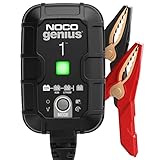
NOCO GENIUS1: 1A 6V/12V Smart Battery Charger – Automatic Maintainer, Trickle Charger & Desulfator with Overcharge Protection & Temperature Compensation – for Lead-Acid & Lithium Batteries
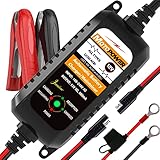
MOTOPOWER MP00205A 12V 800mA Automatic Battery Charger, Maintainer, Trickle and Desulfator

NOCO E404 12.25 Oz Battery Terminal Cleaner Spray and Corrosion Cleaner with Acid Detector
Contact Freightliner Customer Service & Support
- Freightliner Customer Assistance / 24/7 support: Freightliner (Daimler Truck North America) runs a roadside and customer assistance line for breakdowns, electrical no-start, and warranty questions. Provide your VIN, mileage/engine hours, and where you’re parked. You can find official info on the Freightliner Roadside Assistance page or via your regional Freightliner site.
- Freightliner Dealer / Service Locator: Use Freightliner’s official dealer locator to find the nearest authorized service center or parts counter. They can pull the exact OEM battery spec (AGM vs Flooded, required CCA, stud style) for your VIN.
- Owner / Driver Manual & Wiring Diagrams: For Cascadia, M2, and Sprinter-based chassis, Freightliner publishes electrical system diagrams and recommended battery replacement procedures. These docs also list torque specs for battery terminals and the proper battery isolation sequence. Many are available through the official Freightliner Driver & Maintenance Manuals page or via your dealer.
- Warranty questions: Ask the dealer to confirm whether your truck is still under any electrical system coverage or if your fleet has an extended electrical plan. Sometimes the battery bank is considered a consumable, but the cables / junction block might still be covered. Your Freightliner dealer (found via the dealer locator) can also reference the latest warranty and policy documents for your VIN.
Freightliner Car Battery FAQs
Can I upgrade from a standard flooded battery to AGM in my Freightliner?
Yes, in most cases AGM is considered an upgrade. AGM (Absorbent Glass Mat) batteries deliver more stable voltage to ECUs, lighting, HVAC blowers, liftgates, and idle electronics, especially on Freightliner vehicles with high accessory draw. You can safely move from flooded → AGM. What you should not do is move from AGM → basic flooded if the truck relies on that higher electrical stability for things like idle management, power-hungry hotel loads, or auxiliary equipment.
Do I need a heavy-duty / commercial-grade battery for my Freightliner?
Most Freightliner trucks (especially medium/heavy-duty chassis and sleeper tractors) are built around high-capacity commercial batteries with high Cold Cranking Amps (CCA) and deep-cycle tolerance to run electronics while idling less. A standard passenger-car battery is usually not appropriate. Look for a commercial-grade AGM or flooded deep-cycle/commercial starting battery that matches the original group size, post style, and CCA.
How long should a Freightliner car battery last?
In a Freightliner that sees daily operation, typical lifespan is about 2–4 years for a flooded commercial starting battery and 3–5 years for a quality AGM. Long idle sessions with HVAC, lights, inverters, or sleeper cab accessories running off the batteries will shorten life. Trucks that do long-haul highway miles (good alternator recharge, fewer stop/start cycles) usually get the longest service life.
How much is a Freightliner car battery?
Most Freightliner-sized commercial batteries run roughly $150–$250 each for quality flooded heavy-duty starting batteries, and around $220–$400 each for premium AGM or deep-cycle/AGM hybrids. Since many Freightliner platforms use multiple batteries in parallel, a full “battery job” can easily be $400–$800+ depending on how many units you’re replacing at once.
What size battery does my Freightliner need?
Freightliner often uses large commercial group sizes (for example Group 31) rather than small passenger-car sizes. You need to match: (1) the physical case size so it fits the battery tray and hold-down, (2) terminal/post orientation so cables reach without strain, and (3) CCA equal to or higher than spec to ensure reliable cold starts for a big diesel. The door jamb placard, maintenance manual, or the label on your current batteries will usually list the correct group and rating.
When should I replace instead of just recharging or jump-starting?
If you’re repeatedly needing jump starts after normal downtime, voltage at rest keeps sagging under ~12.4V (for flooded/AGM) after a full drive, or you’re seeing flickering dash lights and sluggish starter engagement in the morning, the batteries are likely sulfated or losing capacity. At that point, replacement is cheaper and safer than gambling on a roadside no-start.
Does warranty matter when choosing a Freightliner battery?
Absolutely. Freightliner-duty batteries deal with vibration, heat, and deep cycling from hotel loads. A strong free-replacement warranty (not just pro-rated credit) for at least 24–36 months is a good signal the internal plates are reinforced for commercial use. Keep the invoice in the cab; some suppliers require proof of purchase date if you’re on the road and need a swap under warranty.