
This all-in-one guide explains battery types (Flooded/EFB/AGM), fitment by popular Haval models, how to choose the right specs (CCA/RC), DIY installation, and maintenance—plus helpful Amazon searches with our affiliate tag for quick comparison. Quick compare searches: DIN L2 / Group 48 (AGM), DIN L3 / Group 94R (AGM), JIS 55D23L (EFB), N70 / Group 27 (AGM).
Table of Contents
- Quick Picks for Haval Owners (By Use Case)
- Top Battery Types for Havals (What to Choose & Why)
- Haval Model-Specific Buying Tips
- Haval Battery Fitment Cheat Sheet (Most-Common Sizes)
- Spec Targets: CCA, RC, and Warranty
- Best Car Battery Brands for Haval & Where-to-Buy
- Haval Car Battery Installation Guide (DIY or Shop)
- Haval Car Battery Maintenance & Longevity
- Signs You Need a New Battery
- Contact Haval Customer Service & Support
- Haval Car Battery FAQs
Quick Picks for Haval Owners (By Use Case)
- Daily driver (no start‑stop): Quality Flooded/Lead‑Acid or EFB with good Reserve Capacity (RC). Popular sizes to compare: DIN L2, DIN L3. ~$120–$220 (Flooded), $160–$260 (EFB)
- Start‑stop (i.e., GWM/Haval models with idle stop): Choose EFB (good) or AGM (best). Do not downgrade to standard flooded. See AGM L2 / AGM L3. ~$180–$350
- Electronics‑heavy, short trips: AGM for strong charge acceptance and vibration resistance. Browse AGM best sellers. ~$200–$380
- Hot climate: Look for higher RC and heat‑tolerant plates (EFB/AGM). Compare EFB.
- Cold climate: Prioritize CCA and sealed AGM. High‑CCA AGM picks.
- Towing/off‑road (H9/Big Dog/Dargo, etc.): AGM deep‑cycle‑friendly options with higher RC. See N70/Group 27 and Group 31 sizes where tray space allows.

Autocessking H5 Group Size 47 Start and Stop AGM Automotive Battery, 12V 60Ah, 680 CCA, 100 RC Rechargeable Car Battery
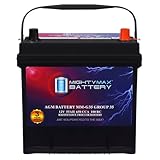
Mighty Max Battery MM-G35 Start and Stop Car BCI Group Size 35 12V 55Ah, 100RC, 650 CCA Rechargeable AGM Car Battery

1AUTODEPOT BCI Group 94R Car Battery, 12V 80Ah Size H7 Automotive Battery Premium Maintenance Free AGM Batteries, 850CCA, 140RC
Top Battery Types for Havals (What to Choose & Why)
| Type | Best For | Pros | Considerations | Typical Price | Shop |
|---|---|---|---|---|---|
| Flooded/Lead‑Acid | Older/basic Havals without start‑stop | Lowest cost, widely available | Lower cycle life, weaker for short‑trip use | ~$120–$200 | Search flooded |
| EFB | Start‑stop (OE EFB) or heavy urban driving | Better cycling vs flooded, value friendly | Not as robust as AGM | ~$160–$260 | Search EFB |
| AGM | Premium trims, harsh climates, lots of accessories | High CCA, vibration‑resistant, faster recharge | Higher cost; requires smart charging | ~$200–$380 | Search AGM |
Haval Model‑Specific Buying Tips
- Haval Jolion/Chitu (1.5T/HEV): Commonly uses compact DIN L2/L3 sizes; choose EFB/AGM if equipped with start‑stop or hybrid systems. Budget ~$180–$320. Compare L2 EFB.
- Haval H6 (incl. HEV/PHEV variants): Frequently DIN L3/LN3 footprint; AGM recommended for accessory load and frequent stops. ~$220–$360. Shop L3 AGM.
- Haval H2/H2s: Typically compact DIN/JIS sizes; focus on CCA upgrades (+50–100 CCA over OE in cold regions). ~$150–$260. JIS 55D23L options.
- Haval H9 (off‑road, winch, lights): Many markets use higher‑capacity trays supporting N70/Group 27‑class batteries; AGM favored for accessories. ~$240–$400. N70/Group 27 picks.
- Haval Dargo/Big Dog: Consider mid‑size DIN L3 AGM for mixed urban/off‑road use; verify hold‑down and terminal orientation. ~$220–$360. L3 AGM choices.
- Ora/Haval EV 12V aux (where applicable): Many EVs/HEVs still use a 12V AGM aux battery—match OE tech and size; never downgrade. ~$180–$300. 12V AGM aux.
Haval Battery Fitment Cheat Sheet (Most‑Common Sizes)
| Model | Model Years | Common Footprint | Typical Tech | Notes | Shop |
|---|---|---|---|---|---|
| Jolion (incl. HEV) | 2021–present | DIN L2 (60Ah) or L3 (70Ah) | EFB / AGM | Start‑stop/HEV: choose EFB or AGM; verify clamp height | L2 EFB |
| H6 / H6 HEV/PHEV | 2017–present | DIN L3 (70–80Ah) | AGM (preferred) / EFB | Urban driving & accessories benefit from AGM | L3 AGM |
| H2 / H2s | 2014–2020 | JIS 55D23L (approx.) | Flooded / EFB | Check terminal orientation (L/R) before purchase | 55D23L |
| H9 | 2015–present | N70 / Group 27 (where tray allows) | AGM | Great for winch/lighting; confirm hold‑down & height | N70 AGM |
| Dargo / Big Dog | 2020–present | DIN L3 | EFB / AGM | AGM recommended for mixed terrain & accessories | L3 choices |
Spec Targets: CCA, RC, and Warranty
RC: Reserve Capacity
Tech: Flooded / EFB / AGM
- CCA: Meet or exceed OE CCA. Cold climates benefit from +50–100 CCA over the minimum.
- RC: Higher RC helps with lights/HVAC/audio during traffic and short trips.
- Technology: If OE was EFB/AGM (start‑stop/HEV), don’t downgrade.
- Warranty: Target 24–36 months free replacement (or the strongest regional equivalent).
- Dimensions & terminals: Verify length/width/height and polarity (e.g., L2 vs L3; JIS L vs R).
Best Car Battery Brands for Haval & Where‑to‑Buy
| Brand | Strengths | Good For | Shop Links |
|---|---|---|---|
| AGM Leaders (various) | High CCA, durable, sealed | H6, H9, Dargo, electronics‑heavy trims | AGM L3 search |
| EFB Specialists | Value with start‑stop compatibility | Jolion, urban commuters | EFB L2 search |
| Heavy‑Duty/4×4 | Deep‑cycle tolerance, rugged build | H9, touring setups | N70/Group 27 AGM |
- Amazon: Huge selection and fast delivery—compare by footprint and CCA: Haval battery search.
- Local battery shops: Same‑day testing/installation and core returns.
- 4×4 specialists (H9/Dargo): Can advise on dual‑battery trays, winch loads, and isolators.
How to Check Freshness & Authenticity
- Date codes: Look for a stamped/label date; prefer batteries <3 months old.
- Open‑circuit voltage: 12.6–12.8V (AGM often 12.8V+) at rest indicates good charge.
- Seals & vents: AGM should be sealed with intact vent ports; no acid residue.
- Labeling: Match brand/specs/size with your receipt and online listing.
- Seller reputation: Choose reputable sellers with clear warranty terms.
Car Battery Warranty Tips
- Get the warranty length and terms in writing (free replacement vs pro‑rated).
- Keep your receipt and installation notes; many claims require proof.
- Use a smart charger during storage or infrequent use to preserve warranty eligibility.
- Record voltage and alternator output after install (health baseline).

ACDelco Gold 48AGM (88864541) 36 Month Warranty AGM BCI Group 48 Battery
Mighty Max Battery MM-G35 Start and Stop Car BCI Group Size 35 12V 55Ah, 100RC, 650 CCA Rechargeable AGM Car Battery

Interstate Batteries Automotive Battery 12V 41Ah 435CCA (Group Size 51R) SLI AGM Auto Replacement Battery for Cars, SUVs, Sedans, Trucks, Vans (MTX-51R)
Haval Car Battery Installation Guide (DIY or Shop)
- Save radio presets/windows if needed; park safely, engine off, key out.
- Wear eye/hand protection. Keep sparks/flames away.
- Open hood and locate the battery. Photograph cable routing and hold‑downs.
- Connect a memory saver if your model is sensitive to power loss (optional).
- Remove hold‑down. Disconnect negative (–) first, then positive (+).
- Lift out old battery; avoid tilting. Clean tray and terminals; neutralize corrosion.
- Place new battery (correct orientation). Install hold‑down snugly (don’t overtighten).
- Reconnect positive (+) first, then negative (–). Torque to spec; apply terminal protectant.
- Start engine; check for warnings. Reset auto‑up windows/clock as needed.
- If your Haval has start‑stop or smart charging, register/coding the new battery may be required—have a shop or scan tool perform it.
Haval Car Battery Maintenance & Longevity
- Drive long enough weekly (20–30 min) to fully recharge, especially with start‑stop.
- Use a smart charger if the car sits for days.
- Keep terminals tight/clean; apply dielectric/anti‑corrosion spray.
- Avoid repeated deep discharges; turn off lights and accessories when parked.
- Inspect ground straps and alternator output (13.8–14.7V typical while running).
Signs You Need a New Battery
- Slow crank, especially in the morning.
- Start‑stop disabled message persists.
- Dim lights or fluctuating infotainment resets.
- Battery case swelling, leaks, or rotten‑egg smell.
- Battery age >3–5 years (climate and usage dependent).

YONHAN Battery Charger 10-Amp 12V and 24V Fully-Automatic Smart Car Battery Charger, Battery Maintainer Trickle Charger, and Battery Desulfator with Temperature Compensation

LotFancy Battery Terminal Cleaners (2 pcs), Plus 12 pcs Battery Terminal Anti-Corrosion Fiber Washers (6 Red & 6 Green) for Car Marine Battery

Tworider 12 pcs Battery terminal cleaner tool kit, battery brush, Wash Cleaning Battery Wire Brush Post Battery Cable Cleaner Dirt Corrosion Brushes Hand Tool Car Battery Cleaner Tool
Contact Haval Customer Service & Support
- Official GWM/Haval Global: gwm-global.com
- Haval (regional sites): Search your country’s Haval website for Owners > Service > Manuals & Dealers.
- Dealer/Store Locator: Use the Find a Dealer / Locate Us tool on your regional Haval site.
- Owner’s Manuals & Diagrams: Check the Owners or Support section for downloadable PDFs by model/year.
Haval Car Battery FAQs
How long should a Haval car battery last?
Most Haval models using EFB/AGM batteries last about 4–6 years in moderate climates. Frequent short trips, extreme heat/cold, and heavy accessories can reduce life to ~3–4 years; gentle highway use may extend it.
How much is a Haval car battery?
Expect roughly $160–$260 for EFB (common on start‑stop Havals) and $220–$380 for AGM, plus installation or BMS coding if required. Prices vary by size (LN2/LN3/LN4), brand, and region.
Do Haval start‑stop systems require EFB or AGM?
Yes. If your Haval has idle stop/start, use at least EFB; AGM is a durability upgrade. Do not downgrade to standard flooded lead‑acid.
Do I need to code/register a new battery?
Many Havals include a Battery Management System (BMS). After replacement, performing a BMS reset/adaptation helps charge control, start‑stop behavior, and battery life.
Which battery sizes are most common in Haval SUVs?
Most models use European DIN sizes: LN2 (L2/H5), LN3 (L3/H6), or LN4 (L4/H7). Exact size depends on engine and trim—always verify tray, hold‑down, and polarity before purchase.
What are signs my Haval needs a new battery?
Slow cranking, intermittent start‑stop, dimming lights, warning messages after start, or a poor conductance/load test result. Batteries older than ~5 years are prime candidates.
Can I replace an EFB with an AGM in my Haval?
Yes. Upgrading from EFB to AGM is generally fine and can improve cycle life and charge acceptance. Keep voltage and terminal layout identical.
Will a higher‑Ah battery damage my Haval?
Going one step higher in Ah within the same physical size is typically safe if it fits and the BMS is adapted/reset. Never change voltage or terminal orientation.
Can I jump‑start a Haval with a flat battery?
Yes—follow the owner’s manual for jump points and polarity. Use a quality jump pack or cables, then fully charge and test the battery; repeated jump‑starts indicate replacement time.
What warranty should I look for?
Aim for at least 36 months free replacement (or regional equivalent). Keep your receipt and record the install date/odometer; some warranties require proof of correct fitment and charging.
Bottom line
ACDelco Gold 48AGM (88864541) 36 Month Warranty AGM BCI Group 48 Battery
Mighty Max Battery MM-G35 Start and Stop Car BCI Group Size 35 12V 55Ah, 100RC, 650 CCA Rechargeable AGM Car Battery