
Owning a Hyundai should feel easy: push start, drive, done. But a weak or wrong battery can turn even a reliable Elantra, Tucson, Santa Fe, or IONIQ Hybrid into a dash-light Christmas tree. This guide breaks down which battery type your Hyundai actually needs (flooded, EFB, or AGM), which group sizes fit most popular Hyundai cars and SUVs, what specs matter (CCA, RC, warranty), and when you can safely upgrade. You’ll also see price expectations and curated Amazon searches for common Hyundai battery sizes like Group 51R AGM, Group 48 / H6 AGM, and Group 47 / H5. If you drive a start-stop Hyundai or hybrid, pay extra attention: you should not downgrade from AGM/EFB to a cheaper flooded lead-acid.
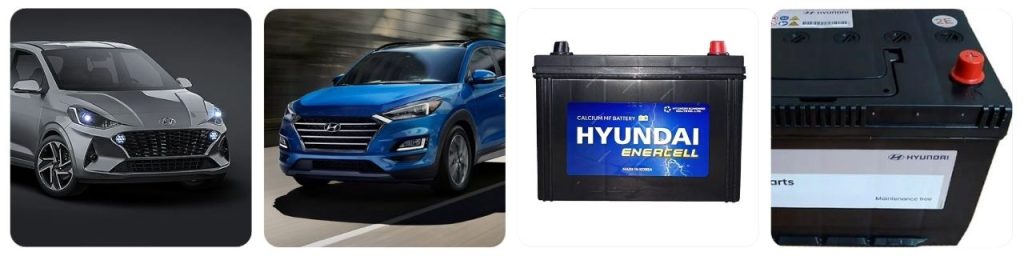
Table of Contents
- Quick Picks for Hyundai Owners (By Use Case)
- Top Battery Types for Hyundais (What to Choose & Why)
- Hyundai Model-Specific Buying Tips
- Hyundai Battery Fitment Cheat Sheet (Most-Common Sizes)
- Spec Targets: CCA, RC, and Warranty
- Best Car Battery Brands for Hyundai & Where-to-Buy
- Hyundai Car Battery Installation Guide (DIY or Shop)
- Hyundai Car Battery Maintenance & Longevity
- Contact Hyundai Customer Service & Support
Quick Picks for Hyundai Owners (By Use Case)
- Daily commuter (Accent / older Elantra / older Sonata, no start-stop): Quality flooded lead-acid with solid Reserve Capacity (RC). Many of these use Group 51R or 47/H5. Browse Group 51R batteries. ~$110–$190 (flooded)
- Modern Hyundai with Idle Stop & Go (ISG) / start-stop (Sonata, Tucson, Santa Fe, Kona, IONIQ Hybrid): EFB (good) or AGM (best). Do not downgrade to a standard flooded battery or you’ll kill it fast and risk charging faults. See Group 48 / H6 AGM and EFB batteries. ~$160–$320
- Electronics-heavy SUV (Palisade, Santa Fe Calligraphy, high trim with rear-seat climate, power liftgate, heated/ventilated seats): AGM recommended for higher charge acceptance and vibration resistance. Shop H6/H7 AGM. ~$200–$350
- Short-trip city driving (lots of accessories on, engine off at lights): AGM or high-quality EFB with strong RC. This helps avoid dimming lights and repeated low-voltage warnings. Browse AGM best sellers. ~$190–$320
- Hot climate / desert / high under-hood temps: Favor batteries marketed as “high heat” or “enhanced cycle life” (often EFB or AGM). Heat kills budget flooded plates early. Compare H5 EFB.
- Cold climate / winter starts: Prioritize CCA (Cold Cranking Amps). AGM often outperforms standard flooded in freezing temps. See high-CCA H6 AGM options. Look for 650+ CCA
- IONIQ / IONIQ Hybrid 12V support battery (aux battery in hatch area): These cars often use an AGM-style low-profile auxiliary battery. Match style and terminals exactly and avoid cheap no-name swaps. ~$200–$300

ACDelco Gold 48AGM (88864541) 36 Month Warranty AGM BCI Group 48 Battery

Weize Platinum AGM Battery BCI Group 47-12v 60ah H5 Size 47 Automotive Battery, 100RC, 680CCA, 36 Months Warranty, Dimensions 9.52" L x 6.89" W x 7.48" H
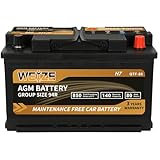
Weize Platinum AGM Battery BCI Group 94R - 12v 80ah H7 Size 94R Automotive Battery, 140RC, 850CCA, 36 Months Warranty, Dimensions 12.4" L x 6.89" W x 7.48" H
Top Battery Types for Hyundais (What to Choose & Why)
| Type | Good For | Why It Matters | Typical Cost | Amazon Search |
|---|---|---|---|---|
| Flooded Lead-Acid | Older Accent, Elantra, basic trims without Idle Stop & Go | Simplest design. Adequate CCA for normal climates if you get a name-brand unit with decent Reserve Capacity. | $110–$180 | Group 51R flooded |
| EFB Enhanced Flooded Battery | Sonata / Tucson / Kona / Santa Fe with Idle Stop & Go (start-stop) | Stronger plates, built for partial-state-of-charge cycling. Handles frequent engine restarts at traffic lights much better than basic flooded. | $150–$250 | Shop EFB |
| AGM Absorbent Glass Mat | Palisade, Santa Fe Calligraphy, IONIQ Hybrid, any Hyundai with heavy electronics or harsh climate | Spill-proof design, higher CCA in cold, better vibration resistance, faster charge acceptance = fewer low-voltage warnings on short trips. | $190–$350 | AGM H6 / Group 48 |
Hyundai Model-Specific Buying Tips
- Hyundai Elantra (gas, non-hybrid): Many trims use Group 51R or H5/47. Look for ~500+ CCA and solid RC if you commute in stop-and-go AC traffic. Expect ~$130–$200 for a quality flooded or EFB. See 51R options.
- Hyundai Sonata (2015+ especially with Idle Stop & Go / Smartstream engines): Sonata often expects an EFB or AGM in an H6 / Group 48 footprint. Aim for 650+ CCA. ~$180–$280. Search H6 AGM for Sonata.
- Hyundai Tucson / Santa Fe (recent model years with start-stop): These crossovers pull a lot of accessories (infotainment, cameras, radar cruise, heated seats). Go EFB minimum, AGM preferred. Expect ~$200–$320 for an AGM H6/H7 depending on trim. Shop H7 AGM.
- Hyundai Palisade: Big 3-row SUV, lots of climate zones, USB power for every row. High RC matters because families run electronics with engine idling. Use high-capacity AGM (H7 / Group 94R style in many regions). Budget ~$230–$350. See 94R AGM.
- Hyundai Kona / Venue: Smaller engine = smaller physical battery, often H5 / Group 47. Don’t cheap out: even small SUVs run cameras, CarPlay, heated seats, etc. ~$140–$220. Search Group 47 / H5.
- IONIQ Hybrid / IONIQ Plug-in Hybrid: Has a high-voltage traction pack plus a small 12V auxiliary battery that still runs computers and accessories. Hyundai often uses AGM here for stability under low-voltage events. Use the correct AGM auxiliary format, not a random lawnmower-sized battery. ~$200–$300.
- Older Accent / early-2010s Hyundai models (no start-stop, fewer screens): A solid flooded 51R or 47/H5 from a major brand is usually fine. Under ~$150 is normal unless you’re in an extreme climate. Budget 51R search.
- Turbo models (N Line / N Performance): Extra heat and vibration. AGM is smart insurance even if the car didn’t ship with one. Expect ~$200+ for a performance AGM in H6/H7 sizing.
Hyundai Battery Fitment Cheat Sheet (Most-Common Sizes)
| Hyundai Model | Common Group Size | Tech From Factory | Notes | Amazon Fitment Search |
|---|---|---|---|---|
| Accent (older) | 51R / H4 | Flooded | Basic electrical load. Flooded OK if no start-stop. | 51R Accent |
| Elantra | 51R or 47/H5 (varies by year/engine) | Flooded / EFB | Check terminal orientation; some Elantras need reversed posts (“R”). | Elantra battery |
| Sonata | 48/H6 | EFB or AGM on start-stop trims | Idle Stop & Go needs EFB/AGM. Do not downgrade. | Sonata H6 AGM |
| Kona / Venue | 47/H5 | EFB (often) | Compact footprint, watch height/hold-down bracket. | Kona H5 |
| Tucson | 48/H6 or 94R/H7 (depending on engine / trim) | EFB / AGM | Turbo and AWD trims may use higher-capacity case sizes. | Tucson H6 AGM |
| Santa Fe | 48/H6 or 94R/H7 | EFB / AGM | Big RC is helpful for tailgate camping / accessory use. | Santa Fe H7 AGM |
| Palisade | 94R/H7 | AGM (common) | Three-row SUV with lots of electronics: favor high RC AGM. | Palisade H7 AGM |
| IONIQ Hybrid / Plug-in | Aux AGM (compact format) | AGM | This is not a normal big starter battery; match exact style. | IONIQ aux AGM |
Spec Targets: CCA, RC, and Warranty
RC: Reserve Capacity
Tech: Flooded / EFB / AGM
- CCA: Match or slightly exceed the factory CCA spec. In colder climates, going +50–100 CCA above stock gives easier winter starts and less strain on starter motors.
- RC (Reserve Capacity): Higher RC = the car can sit in accessory mode (AC blower, radio, dash cam, hazard lights) longer without dropping voltage. SUVs like Palisade and Santa Fe benefit from high RC.
- Technology: If your Hyundai shipped with EFB or AGM because of Idle Stop & Go, do not install a standard flooded battery. The cheaper flooded battery will get hammered by restart cycles and usually fails early.
- Warranty: Aim for 36+ months free replacement (or regional equivalent). Some premium AGM batteries offer 48+ months.
- Terminal orientation: Many compact Hyundais use 51R (the “R” means reversed terminals). Order the wrong orientation and your cables physically won’t reach.
- Height & hold-down: Hyundai trays can be tight. Make sure the battery case height clears the hood liner and that the hold-down bracket actually clamps the base.
Best Car Battery Brands for Hyundai & Where-to-Buy
| Brand / Line | Why Hyundai Owners Like It | Good For | Amazon Search |
|---|---|---|---|
| AGM premium lines (often sold as AGM Gold / Platinum / Extreme, etc.) | High CCA, strong RC, long warranties. Many are drop-in for Sonata, Tucson, Santa Fe, Palisade. | Start-stop trims, winter climates, accessory-heavy SUVs. | AGM H7 / 94R search |
| EFB lines (Enhanced Flooded) | Designed for partial state of charge cycling. Usually cheaper than AGM, better than basic flooded. | Hyundai Idle Stop & Go (ISG) systems in mainstream trims. | See EFB stock |
| Standard flooded mid/high-tier | Budget-friendly for older Hyundais with simpler electrical loads. Often still carries a 2-3 year warranty. | Accent, older Elantra, no start-stop. | 51R Hyundai search |
- Buy online (Amazon, etc.): Easy to compare CCA, RC, and warranty across multiple brands. You can pre-filter by group size like Group 48 / H6 AGM or Group 47 / H5. Downside: you still need to install and recycle the old core.
- Local parts store: They can test/print your voltage, confirm fitment, and swap on the spot. Prices trend a little higher but you walk out done, and old-battery recycling is included.
- Hyundai dealership: Easiest OEM match, good if you’re in warranty or have a modern hybrid/ISG car that’s picky about battery sensors. Cost is usually highest.
How to Check Freshness & Authenticity
- Date code: Every battery has a build/date code sticker or stamp (often letter+number like “E4” = May 2024). Fresher is better. Try to buy something less than ~3 months old.
- Seals & caps: No acid stains, bulging case, or cracked vents. An AGM should look perfectly sealed.
- Terminals: No corrosion or filing marks. Scraped posts can mean it was installed/returned.
- Brand labeling & specs: The advertised CCA and RC should be printed right on the case. If the sticker looks tampered with or generic, skip it.
Car Battery Warranty Tips
- Free replacement vs. pro-rated: A “36-month free replacement” means if it dies in month 20, you get a new one at no cost. After that period, some brands only give partial credit.
- Keep proof of install: Snap a photo of the receipt plus the installed battery in your Hyundai’s engine bay. Makes warranty claims easier.
- Electrical mods: Aftermarket light bars, subs, dash cams wired to constant power → these can drain the battery and void goodwill. Use a fuse tap with ignition-switched circuits or add a dedicated auxiliary battery if you run camping gear.
ACDelco Gold 48AGM (88864541) 36 Month Warranty AGM BCI Group 48 Battery
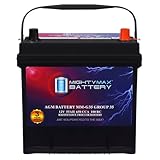
Mighty Max Battery MM-G35 Start and Stop Car BCI Group Size 35 12V 55Ah, 100RC, 650 CCA Rechargeable AGM Car Battery

Interstate Batteries Automotive Battery 12V 60Ah (Group Size 34) 740CCA SLI AGM Auto Replacement Battery for Cars, SUVs, Sedans, Trucks, Vans (MTX-34)
Hyundai Car Battery Installation Guide (DIY or Shop)
- Locate the 12V battery. Most Hyundais keep it under the hood on the driver/passenger side. Some hybrids/EV-derived platforms place the aux 12V in the trunk or under the cargo floor.
- Save memory if needed. If you’re worried about radio presets or window auto-down memory, you can hook up a small 12V memory saver to the OBD-II port before disconnecting. Optional but nice.
- Turn everything off. Key out / ignition off / lights off. Let the car sit for a minute so control modules go to sleep.
- Remove the negative (-) terminal first. Loosen the clamp bolt and lift the cable off. Isolate it so it doesn’t spring back and touch the post.
- Remove the positive (+) terminal next. Same deal — loosen, lift, move aside.
- Undo any hold-down bracket or battery clamp. Keep the hardware somewhere safe.
- Lift the old battery straight up. These are heavy (30-50+ lb depending on group size), so lift with your legs, not your back.
- Drop in the new battery, making sure it sits flat in the tray and the posts are oriented exactly like the old one (left/right matters a lot in Hyundai bays).
- Reinstall the hold-down / clamp so the battery can’t slide or bounce. A loose battery can damage wiring and set off warning lights.
- Reconnect positive (+) first, then negative (-). Tighten snugly; loose terminals cause flickering screens, random trouble codes, and no-starts.
- If your Hyundai has a battery sensor (common on start-stop and hybrids), do not crush or relocate that sensor ring. Some models may need a “battery reset” or registration using a scan tool so the charging system knows a fresh battery is installed. Dealers and many parts stores can perform this.
- Start the car and confirm there are no battery / charging / ISG error messages on the dash. If there are, recheck your terminals and clamps.
- Recycle the old battery properly. Parts stores and recycling centers usually take it for free and may refund a core charge.
Hyundai Car Battery Maintenance & Longevity
- Drive long enough. Hybrids aside, the alternator/charging system needs at least 15+ minutes of steady driving to top off after a cold start. Endless 3-minute errands slowly kill batteries.
- Keep terminals clean. Lightly brush corrosion (white/green crust) with a battery terminal brush and apply dielectric grease or a terminal protector felt washer.
- Watch parasitic drains. Hardwired dash cams, radar detectors, LED strips, and aftermarket amps can pull power overnight. If you daily short-trip, consider an AGM upgrade with higher RC or use a smart maintainer at home.
- Check hold-down tightness after rough roads. A battery that can rattle will fatigue internally, especially in SUVs.
- Trickle/maintain if stored. If your Hyundai sits for weeks (vacation, second vehicle), a smart maintainer on the battery or under-hood jump posts keeps voltage healthy.
Signs You Need a New Battery
- Slow crank / engine turns over lazily in the morning, especially when it’s cold.
- Random warning lights (ABS, airbags, infotainment reboots) that clear after driving a few minutes. Low voltage can freak out modules.
- Dim headlights or flickering screen at idle with AC on.
- Hyundai Idle Stop & Go stops working and the car keeps the engine running at lights. The system will quietly disable start-stop when the battery can’t handle it.
- The battery is 3-5+ years old (AGM can last longer, but high heat shortens life).

YONHAN Battery Charger 10-Amp 12V and 24V Fully-Automatic Smart Car Battery Charger, Battery Maintainer Trickle Charger, and Battery Desulfator with Temperature Compensation

EZRED BMK1914 5-Piece Battery Maintenance Kit

LotFancy Battery Terminal Cleaners (2 pcs), Plus 12 pcs Battery Terminal Anti-Corrosion Fiber Washers (6 Red & 6 Green) for Car Marine Battery
Contact Hyundai Customer Service & Support
-
Hyundai Customer Care (Global):
Search your region’s Hyundai owner site for phone/chat support. A good starting point is the global
Hyundai Global Network,
where you can select your country and navigate to the local “Customer Care” or “Contact Us” page. They typically
list roadside assistance and warranty terms by VIN. -
Dealer / Service Locator:
Use Hyundai’s official dealer locator to find the nearest authorized service center. For example, many regions link
from their main site to a “Find a Dealer” tool such as
Hyundai USA Dealer Locator.
Ask for a battery test before replacing a perfectly good battery. -
Owner’s Manuals / Diagnostic Guides:
Download the PDF manual for your exact model/year from Hyundai’s owner portal. In some regions this is under
“Owners” → “Manuals”, such as the
Hyundai USA Owner’s Manuals
page. Look for sections named “Battery”, “Idle Stop & Go”, or “12V auxiliary battery” (for hybrids).
Hyundai Car Battery FAQs
Can I upgrade from a standard flooded battery to AGM in my Hyundai?
Yes, upgrading from a basic flooded (lead-acid) battery to an AGM (Absorbent Glass Mat) battery is usually considered an upgrade for most Hyundai models. AGM batteries are sealed, handle high electrical loads better (heated seats, infotainment, cameras, start-stop, etc.), and tolerate deep discharge more gracefully. You should not downgrade in the other direction: if your Hyundai came with AGM or EFB (Enhanced Flooded Battery) for start-stop, do not replace it with a cheap conventional flooded battery.
Do I need a special battery for start-stop in my Hyundai?
If your Hyundai has Idle Stop & Go (ISG) / start-stop, you should be using at least an EFB, or preferably AGM in higher-demand trims. Start-stop systems hammer the battery with constant restart cycles and accessory draw while the engine is off at traffic lights. Dropping in a generic flooded battery can lead to weak restarts, dash warnings, and very short lifespan.
How long should a Hyundai car battery last?
Most Hyundai batteries last about 3–5 years in normal mixed driving. Expect the shorter end (2–3 years) if you mostly do short trips, live in very hot climates, or run a lot of accessories at idle. In cooler climates with regular highway driving, you may see 5+ years, especially with a quality AGM or EFB.
How much is a Hyundai car battery?
A typical Hyundai replacement battery costs around $100–$180 for standard flooded, $140–$230 for EFB used in start-stop systems, and about $180–$320 for AGM in higher-electrical-load trims. Larger chassis (like Santa Fe / Palisade) and higher Cold Cranking Amps (CCA) push toward the upper end of those ranges.
What size battery does my Hyundai need?
You must match the physical group size (H5, H6, H7, 47, 48, etc.), terminal layout (left/right positive), and meet or exceed the factory Cold Cranking Amps (CCA) and Reserve Capacity (RC). The fastest way to confirm is to read the label on the current battery or check the owner’s manual for your exact model year and engine.
When should I replace the battery instead of just recharging it?
Replace it if the car cranks slowly after sitting overnight, voltage keeps dropping below ~12.4V even after a proper recharge or long highway drive, or you’re seeing electrical weirdness like flickering infotainment, random warning lights, or the clock/radio resetting. At that point the internal plates are usually sulfated or worn and it’ll keep letting you down.
Does warranty matter when choosing a Hyundai battery?
Absolutely. Look for a battery with a clear free-replacement period (often 24–36 months) instead of only pro-rated credit. Stronger warranties usually indicate the manufacturer expects good cycle life, better internal plate design, and better heat resistance — all of which matter in modern Hyundais with heavy electronic load.
Can I install a Hyundai battery myself or do I need the dealer?
Most Hyundai 12V batteries are front-engine and top-access, so DIY is straightforward: maintain radio codes/memory if needed, disconnect negative first, then positive, swap, then reconnect positive first, negative last. Some newer Hyundais with start-stop or smart charging systems may require the new battery to be “registered” or at least voltage-checked so the charging profile matches — that’s where a dealer or a shop with the right scan tool can help.
Why did my Hyundai battery die so fast even though the car is pretty new?
High accessory load (big infotainment screen, heated/ventilated seats, dash cams, phone chargers), lots of short urban trips where the alternator can’t fully recharge, plus summer heat can all punish the battery in under 3 years. Hybrids and start-stop cars are especially rough on batteries because the engine isn’t running as much to keep voltage topped up.
Is it safe to jump-start a Hyundai with another car?
Yes in most situations, but follow the manual: connect positive-to-positive, then negative from the donor vehicle to a solid ground point (not directly to your dead battery’s negative if Hyundai advises against it). After starting, let the engine idle for several minutes so the alternator can stabilize charging. If you’ve had to jump more than once in a short period, test or replace the battery — repeated deep discharge kills them quickly.
Bottom Line
The short version:
- Match the group size (51R, H5, H6, H7, 94R, etc.) so the battery physically fits and the cables reach.
- Match or upgrade the technology: Flooded → EFB or AGM is fine, but never downgrade an AGM/EFB Hyundai to a bargain flooded unit if you have Idle Stop & Go or hybrid electronics.
- Prioritize high CCA for cold starts and high RC for family SUVs with lots of accessories.
- Expect ~$110–$190 for basic flooded (older Accent/Elantra), ~$160–$250 for EFB (ISG cars), and ~$200–$350 for AGM (Palisade, Santa Fe, IONIQ Hybrid).
- If in doubt, search by battery group and engine on Amazon (for example H6 AGM for Sonata or H7 AGM for Santa Fe) and then confirm fitment with your VIN at the dealer or parts counter.
ACDelco Gold 48AGM (88864541) 36 Month Warranty AGM BCI Group 48 Battery
Mighty Max Battery MM-G35 Start and Stop Car BCI Group Size 35 12V 55Ah, 100RC, 650 CCA Rechargeable AGM Car Battery