
This guide explains battery types (Flooded, EFB, AGM), size codes (DIN/JIS), start‑stop and hybrid nuances, and gives quick picks, fitment tables, and DIY steps. When you’re ready to shop, compare curated Amazon searches for JIS 35B20, DIN60 AGM, and 46B24R EFB.
Table of Contents
- Quick Picks for Maruti Suzuki Owners (By Use Case)
- Top Battery Types for Maruti Suzukis (What to Choose & Why)
- Maruti Suzuki Model-Specific Buying Tips
- Maruti Suzuki Battery Fitment Cheat Sheet (Most-Common Sizes)
- Spec Targets: CCA, RC, and Warranty
- Best Car Battery Brands for Maruti Suzuki & Where-to-Buy
- Maruti Suzuki Car Battery Installation Guide (DIY or Shop)
- Maruti Suzuki Car Battery Maintenance & Longevity
- Signs You Need a New Battery
- Contact Maruti Suzuki Customer Service & Support
Quick Picks for Maruti Suzuki Owners (By Use Case)
- Daily city/highway (no start‑stop): Reliable Flooded/Lead‑Acid or EFB with decent Reserve Capacity (RC). Try JIS 35B20 and JIS 40B20. ~₹5,000–₹9,000
- Maruti with idle start‑stop (ISS/SHVS mild hybrid): EFB (good) or AGM (best) depending on OE spec. Do not downgrade from EFB/AGM to standard flooded. Compare 46B24 EFB or DIN60 AGM. ~₹9,000–₹18,000
- Premium/electronics‑heavy, short trips: AGM for stronger charge acceptance and vibration resistance. Browse AGM best sellers. ~₹12,000–₹20,000
- Hot climate / stop‑go traffic: Favor higher RC and heat‑tolerant constructions (EFB/AGM). Compare EFB.
- Hill stations/cold starts: Prioritize CCA. AGM often cranks better when cold. High‑CCA AGM picks.
- Older Alto/800, Omni, basic trims: Compact JIS 35B20/38B20. Shop 35B20. ~₹4,500–₹7,500
- Newer mild‑hybrid (Baleno, Ciaz, Ertiga/XL6, Grand Vitara): Check for auxiliary 12V spec—often EFB/AGM in DIN50–DIN60 range. DIN50 EFB. ~₹10,000–₹18,000
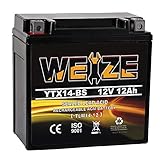
Weize YTX14 BS ATV Battery High Performance - Maintenance Free - Sealed AGM YTX14-BS Motorcycle Battery compatible with Honda Suzuki Kawasaki Yamaha scooter snowmobile

Mighty Max Battery YTX4L-BS - 12 Volt 3 AH, 50 CCA, Rechargeable Maintenance Free SLA AGM Motorcycle Battery

YTX14-BS Replacement For Suzuki Eiger 400 Battery (2002-2007) & For Suzuki King Quad 400 Battery - Fits LT-A400 Eiger 2WD, F Eiger 4WD, LT-A400F, F400F 400CC Four Wheeler Quad ATV - 12V 12AH
Top Battery Types for Maruti Suzukis (What to Choose & Why)
| Type | Best For | Pros | Watch‑outs | Typical Price (India) | Try |
|---|---|---|---|---|---|
| Flooded / Lead‑Acid (SMF) | Older Alto/800, WagonR, Celerio (non‑ISS) | Lowest cost, widely available | Lower cycle life vs EFB/AGM, sensitive to deep discharge | ₹4,500–₹9,000 | JIS 35B20 options |
| EFB | ISS/SHVS cars; frequent short trips | Better cycling, heat handling, charge acceptance | Costs more than flooded; still vented | ₹8,500–₹15,000 | 46B24 EFB |
| AGM | Electronics‑heavy trims, cold starts, rough roads | Sealed, spill‑proof, high CCA, robust cycling | Highest price; needs compatible charging profile | ₹12,000–₹20,000 | DIN60 AGM |
Maruti Suzuki Model-Specific Buying Tips
- Alto / Alto 800 / 800: Most use compact JIS 35B20 (L/R terminal depending on tray). Choose 35–40Ah, RC ≥ 60 minutes. ₹4,500–₹7,500.
- WagonR (K10/K12): Typically JIS 40B20L/R. If you run many accessories, consider EFB 40–45Ah. ₹5,500–₹9,500.
- Swift (Petrol): Commonly JIS 35B20/40B20 or DIN44 depending on generation. Prefer higher CCA if you do short trips. ₹6,000–₹11,000.
- Swift (Diesel, older DDiS): Often DIN60 with higher CCA. ₹9,000–₹14,000.
- Dzire: Shares Swift specs; verify terminal orientation (some trims use reverse terminals). ₹6,000–₹12,000.
- Baleno (incl. SHVS/mild‑hybrid): Look for EFB/AGM in DIN50–DIN60 classes; don’t downgrade. ₹10,000–₹16,000.
- Celerio: JIS 35B20/40B20. Economy pick with good RC is fine. ₹5,000–₹8,500.
- Ignis: JIS 35B20; premium trims benefit from EFB. ₹6,000–₹10,000.
- Ciaz (incl. SHVS): Many use DIN55–DIN60; EFB recommended for SHVS. ₹10,000–₹16,000.
- Ertiga / XL6 (mild‑hybrid): Usually DIN60 EFB; taxi duty benefits from AGM upgrade if compatible. ₹11,000–₹18,000.
- Vitara Brezza / Brezza: Often DIN60; choose higher CCA for headlights/aux usage. ₹9,500–₹15,000.
- S‑Cross (DDiS/1.5): DIN60 common; touring? consider AGM for durability. ₹10,000–₹16,000.
- Grand Vitara: Mild‑hybrid (SHVS) often DIN55–DIN60 EFB; Strong‑hybrid uses a traction pack plus a 12V aux—follow OE spec strictly (AGM/EFB). ₹11,000–₹20,000.
- Jimny: Typically DIN55; off‑roaders benefit from AGM for vibration resistance. ₹10,000–₹16,000.
- Gypsy (legacy): JIS 46B24; rugged AGM upgrade is popular. ₹8,000–₹14,000.
- Always check your owner’s manual/under‑hood label for exact size, terminal orientation (L/R), and hold‑down style before ordering.
Maruti Suzuki Battery Fitment Cheat Sheet (Most-Common Sizes)
| Model | Typical Size Code | Tech (OE) | Notes |
|---|---|---|---|
| Alto / 800 | JIS 35B20 (L/R) | Flooded | Compact tray; verify terminal side |
| WagonR | JIS 40B20 (L/R) | Flooded/EFB | Up‑spec to EFB for heavy city use |
| Swift (Petrol) | JIS 35B20 / 40B20 or DIN44 | Flooded/EFB | Gen‑dependent; check tray label |
| Swift (Diesel) | DIN60 | Flooded/AGM | Higher CCA important |
| Dzire | JIS 35B20 / DIN44–50 | Flooded/EFB | Terminal orientation varies |
| Baleno | DIN50–DIN60 | EFB/AGM (SHVS) | Don’t downgrade from EFB/AGM |
| Celerio | JIS 35B20 | Flooded | Value pick with good RC |
| Ignis | JIS 35B20 | Flooded/EFB | City use → consider EFB |
| Ciaz | DIN55–DIN60 | EFB (SHVS) | Confirm ISS compatibility |
| Ertiga / XL6 | DIN60 | EFB | Taxi duty → AGM upgrade ok if supported |
| Vitara Brezza / Brezza | DIN60 | Flooded/EFB | Aux load → choose higher RC |
| S‑Cross | DIN60 | Flooded/AGM | Touring → prefer AGM |
| Grand Vitara (Mild‑Hybrid) | DIN55–DIN60 | EFB | ISS demands EFB/AGM |
| Grand Vitara (Strong‑Hybrid) | DIN45–DIN55 (12V aux) | AGM/EFB | Follow OE only; traction pack is separate |
| Jimny | DIN55 | Flooded/AGM | Off‑road → AGM resists vibration |
| Gypsy | JIS 46B24 | Flooded/AGM | Rural use → check hold‑down |
Spec Targets: CCA, RC, and Warranty
CCA: Cold Cranking Amps RC: Reserve Capacity Tech: Flooded / EFB / AGM
- CCA: Meet or exceed OE CCA. Cold regions benefit from +50–100 CCA headroom.
- RC: More RC = longer support for lights, blower, and infotainment with the engine off.
- Technology: If OE was EFB/AGM for ISS/SHVS, don’t downgrade.
- Warranty: Target 30–48 months (free replacement period varies by brand/region).
- Terminal Orientation: Many JIS sizes come in L or R types; a mismatch won’t reach your cables.
Best Car Battery Brands for Maruti Suzuki & Where‑to‑Buy
| Brand | Why It’s Good | Where to Browse |
|---|---|---|
| Exide | Strong nationwide service network; good EFB options | Exide on Amazon |
| Amaron | Popular in hot climates; competitive warranties | Amaron on Amazon |
| SF Sonic | Value‑focused, related to Exide tech | SF Sonic picks |
| Livguard/Luminous | Balanced pricing; decent roadside presence | Livguard options |
| Bosch / Varta | Strong AGM/EFB portfolio | Bosch AGM |
- Authorised dealers: Good for installation, fitment checks, and warranty stamping.
- Online (Amazon/brand stores): Convenience and reviews—verify manufacturing date before accepting delivery.
- Core/old battery return: You may receive a buy‑back discount when exchanging your old battery—ask before checkout.
How to Check Freshness & Authenticity
- Look for the manufacture date code (month/year) on the top/label; prefer stock ≤ 90 days old.
- Inspect case and terminals for blemishes or acid stains; reject if present.
- Ask for a loaded voltage test (≥12.6V open‑circuit; healthy under a brief 100–150A load).
- Ensure warranty card is stamped with serial and fitment date.
- Buy from trusted sellers with clear return policies and installation support.
Car Battery Warranty Tips
- Clarify free replacement vs pro‑rata terms and roadside assistance coverage.
- Keep the invoice + warranty card in the glovebox; take a photo as a backup.
- For ISS/SHVS cars, use the correct tech (EFB/AGM) or warranty may be void.
- Record install date and odometer in your phone; set a reminder for 30–36 months.

ACDelco Gold 48AGM (88864541) 36 Month Warranty AGM BCI Group 48 Battery
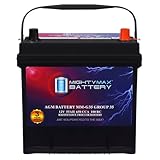
Mighty Max Battery MM-G35 Start and Stop Car BCI Group Size 35 12V 55Ah, 100RC, 650 CCA Rechargeable AGM Car Battery

Interstate Batteries Automotive Battery 12V 60Ah (Group Size 34) 740CCA SLI AGM Auto Replacement Battery for Cars, SUVs, Sedans, Trucks, Vans (MTX-34)
Maruti Suzuki Car Battery Installation Guide (DIY or Shop)
- Save radio presets and note clock settings; keep the car OFF with keys out.
- Open the bonnet and locate the battery; check hold‑down bracket and terminal orientation.
- If available, connect a memory saver to the OBD or 12V socket to preserve settings (optional).
- Wear gloves/eye protection. Loosen and remove the negative (–) terminal first, then the positive (+).
- Remove the hold‑down/brace and lift out the old battery. Keep it upright.
- Clean the tray and clamps; use a wire brush on corrosion; add an anti‑corrosion spray if you have one.
- Place the new battery in the same orientation; ensure cables comfortably reach without stretching.
- Tighten the hold‑down so the battery cannot move but do not over‑stress the case.
- Connect positive (+) first, then negative (–); tighten snugly.
- Start the engine and check that charging voltage reads ~13.8–14.7V; verify no warning lights.
- Reset clock/windows if needed; dispose/return the old battery for recycling/buy‑back.
- ISS/Hybrid notes: If your car came with EFB/AGM, have a shop register the new battery to the ECU/BCM if required by your model.
Maruti Suzuki Car Battery Maintenance & Longevity
- Drive at least 20–30 minutes per week to keep charge levels healthy.
- Use a smart charger if the car sits for long periods—AGM/EFB friendly mode preferred.
- Keep terminals clean and tight; apply protectant after cleaning.
- Avoid repeated deep discharges from accessories with engine off; higher RC helps.
- Before monsoons/road trips, do a load test and inspect alternator belt for slip/wear.
Signs You Need a New Battery
- Slow crank, especially after overnight parking.
- Electrical glitches (dim lights, infotainment resets) during idle.
- Battery case swollen/warped or acid smell.
- Repeated jump‑starts required within weeks.
- Battery age beyond 3–4 years (typical in Indian conditions).

YONHAN Battery Charger 10-Amp 12V and 24V Fully-Automatic Smart Car Battery Charger, Battery Maintainer Trickle Charger, and Battery Desulfator with Temperature Compensation

EZRED BMK1914 5-Piece Battery Maintenance Kit

LotFancy Battery Terminal Cleaners (2 pcs), Plus 12 pcs Battery Terminal Anti-Corrosion Fiber Washers (6 Red & 6 Green) for Car Marine Battery
Contact Maruti Suzuki Customer Service & Support
Maruti Suzuki Car Battery FAQs
How long should a Maruti Suzuki car battery last?
Typically 3–5 years with mixed city/highway use; frequent short trips, extreme heat, or heavy accessory use can shorten life to 2–4 years. Regular maintenance charging can extend it.
How much is a Maruti Suzuki car battery?
Approx. ₹4,000–₹7,500 for small hatchbacks (flooded/JIS 35B20), ₹7,500–₹12,000 for larger cars/SUVs or start-stop variants (EFB/AGM). Prices vary by brand, capacity, and warranty.
What battery type does Maruti Suzuki recommend for start-stop models?
Enhanced Flooded Battery (EFB) as a baseline; AGM is an upgrade for tougher duty cycles. Avoid downgrading from EFB/AGM to a basic flooded unit.
How do I know when my battery is failing?
Slow cranking, dim lights at startup, intermittent start-stop operation, electrical resets, or repeated low-voltage warnings are common signs.
Do I need to match the exact battery size and terminal layout?
Yes—use the correct case size (e.g., 35B20L/R, DIN-series where applicable), terminal orientation (L or R), and hold-down style so the battery seats and clamps safely.
Can I replace a flooded battery with an AGM?
Yes, AGM works as an upgrade if it matches size and ratings; ensure your charging system is healthy and follow any manufacturer guidance for registration or relearns.
What CCA and Ah ratings should I target?
Meet or exceed the original equipment specs shown in your owner’s manual; in colder regions, aim for +50–100 CCA above the minimum for easier winter starts.
Will a higher Ah battery damage my car?
No, a modest increase in capacity (Ah) is fine if the physical size and charging system compatibility are maintained. Extremely oversized batteries that don’t fit or clamp correctly are unsafe.
How should I maintain a Maruti Suzuki battery if I drive mostly short trips?
Use a smart maintainer monthly, keep terminals clean and tight, and take an occasional 30–40 minute drive to allow a full recharge.
Is installation DIY-friendly?
Often yes for top-mount batteries: disconnect negative first, then positive; swap the unit; reconnect positive first, then negative; preserve radio presets with a memory saver if desired.
The Bottom Line:
Match the size code and terminal layout first, then choose the right technology for your use (Flooded for basics, EFB for start‑stop, AGM for premium/harsh duty). Aim for strong RC, adequate CCA, and a 30–48‑month warranty from a reputable brand. When uncertain, bring your VIN or old battery to the dealer, and double‑check the tray label before you click “Buy.” For quick shopping, explore JIS 35B20, DIN60 EFB, and DIN60 AGM deals.
ACDelco Gold 48AGM (88864541) 36 Month Warranty AGM BCI Group 48 Battery
Mighty Max Battery MM-G35 Start and Stop Car BCI Group Size 35 12V 55Ah, 100RC, 650 CCA Rechargeable AGM Car Battery