Dodge builds everything from commuter-friendly minivans to supercharged muscle cars and heavy-duty trucks. That range means there’s no single “best Dodge battery” — the correct answer depends on engine size, electrical load, and whether your vehicle uses start-stop or has a ton of aftermarket electronics. This guide breaks down the best battery types for Dodge, fitment cheat sheets for common models (Charger, Challenger, Durango, Ram 1500, etc.), what specs actually matter (CCA, RC, warranty), and how to install and maintain your next battery the right way.
When you’re ready to buy, you can jump straight to searches for Group 94R AGM (common in Ram 1500 / Durango), Group 48/H6 AGM (popular in Charger / Challenger), or Group 51R (for smaller Dodge engines and some imports). These Amazon searches are a fast way to compare price, CCA, and warranty side-by-side without standing at the parts counter.
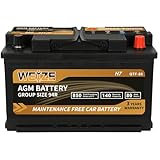




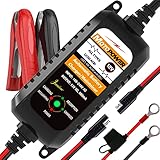

Table of Contents
- Quick Picks for Dodge Owners (By Use Case)
- Top Battery Types for Dodge (What to Choose & Why)
- Dodge Model-Specific Buying Tips
- Dodge Battery Fitment Cheat Sheet (Most-Common Sizes)
- Spec Targets: CCA, RC, and Warranty
- Best Car Battery Brands for Dodge & Where-to-Buy
- Dodge Car Battery Installation Guide (DIY or Shop)
- Dodge Car Battery Maintenance & Longevity
- Signs You Need a New Battery
- Contact Dodge Customer Service & Support
Quick Picks for Dodge Owners (By Use Case)
- Daily driver (Charger, Journey, Grand Caravan) with no start-stop: A quality flooded lead-acid or EFB with decent Reserve Capacity (RC). You’ll often be in Group 48/H6 or Group 34/78. Browse Group 48/H6 batteries or Group 34/78. Typical street price: ~$130–$220 (flooded), ~$170–$250 (EFB)
- Durango / Ram 1500 / Hornet with start-stop or heavy electronics: AGM is strongly recommended. Many late-model Dodges ship from the factory with AGM, especially trucks and SUVs with auto start-stop. Look at Group 94R AGM. ~$200–$350
- Hellcat / Scat Pack / high-output alternator builds: AGM helps with voltage stability under big stereo load, widebands, gauges, intercooler pumps, fans, etc. Many performance Chargers/Challengers use H6/H7 AGM. See H7/Group 94R AGM. ~$230–$380
- Short-trip / cold-climate commuter: You want high Cold Cranking Amps (CCA) and good charge acceptance for frequent restarts. That’s AGM territory. Compare high-CCA AGM batteries. ~$220–$350
- Older Dakota / pre-2010 Ram / older Caravan: These often take legacy BCI Group sizes like 65 or 34/78 (flooded). Budget flooded batteries are fine if you don’t have huge aftermarket load. Group 65 and Group 34/78 truck batteries can still be found with solid 3-year warranties. ~$120–$200
- Extra heat (Arizona / Texas / stop-and-go towing): Go EFB or AGM. They tolerate vibration and high under-hood temp better than cheap flooded cells. Compare EFB batteries.
- Winter-start reliability for 5.7L / 6.4L HEMI: Aim for the highest CCA you can fit in the same group size. Bigger HEMI + cold oil = harder crank. Check high-CCA H6 AGM options.
Weize Platinum AGM Battery BCI Group 94R - 12v 80ah H7 Size 94R Automotive Battery, 140RC, 850CCA, 36 Months Warranty, Dimensions 12.4" L x 6.89" W x 7.48" H
Amazon
ACDelco Gold 94RAGM (88864542) 36 Month Warranty AGM BCI Group 94R Battery
Amazon
Mighty Max Battery MM-H7 Start and Stop Car BCI Group Size 94R 12V 80AH, 140RC, 850 CCA Rechargeable AGM Car Battery
Amazon
Top Battery Types for Dodge (What to Choose & Why)
| Type | What It Is | Best For | Typical Price Range | Shop |
|---|---|---|---|---|
| Flooded Lead-Acid | Traditional serviceable design. Cheapest. Works fine in base Chargers, Journeys, older Rams without start-stop. | Budget daily driving, mild audio load, warmer climates. | $120–$200 | Group 34 / 34-78 flooded |
| EFB (Enhanced Flooded Battery) | Heavy-duty flooded with thicker plates and better cycling. Handles more discharge/recharge than basic flooded. | Stop-and-go commuters, Durango with 3-row HVAC demand, light start-stop systems. | $160–$260 | See EFB options |
| AGM (Absorbent Glass Mat) | Sealed, spill-resistant, high CCA, superior vibration control, high reserve capacity. Charges fast. Supports winches, subs, heated seats, radar sensors, etc. | Ram 1500 (especially with start-stop), Durango Tow N Go, Hellcat Charger/Challenger, cold climates, vehicles with multiple screens/cameras. | $200–$380 | Group 94R/H7 AGM |
| Dual AGM setup / Aux battery | Some newer trucks and SUVs run a main battery + an auxiliary (often also AGM) to stabilize voltage for start-stop and infotainment. | Ram trucks and some advanced start-stop SUVs that power accessories with engine OFF. | $350–$600 (for both) | Aux AGM batteries |
Dodge Model-Specific Buying Tips
- Charger / Challenger (V6, 5.7L, 6.4L, Hellcat): Most modern LX-platform cars use an H6/H7 AGM (BCI Group 48 or 94R). AGM is worth it here because of the electronics load (active exhaust valves, performance cooling fans, adaptive suspension modules). Expect ~$220–$350. Shop H6 AGM and H7/94R AGM.
- Durango (especially 3-row, Tow N Go, or start-stop): You’ll often see Group 94R AGM. The Durango is heavy, has multiple climate zones, and a lot of idle electrical draw. Don’t downgrade to cheap flooded; you’ll cook it early. ~$230–$360. Browse Durango-style 94R AGM.
- Ram 1500 (2019+ especially with eTorque / start-stop): Many trims run AGM main battery and sometimes an aux battery. Using flooded in an AGM slot will usually trigger low-voltage warnings and shorten life. Expect ~$250–$400 for a proper AGM main battery. See Ram 1500 AGM 94R.
- Grand Caravan / Journey (older non-start-stop vans): These often accept Group 34/78 or Group 27/27F depending on year/engine. You can still run a traditional flooded battery here if you’re cost-sensitive, typically ~$140–$200. Example search: Group 34 for Caravan.
- Hornet / smaller turbo 4-cyl models with start-stop: Treat them like a European crossover: they usually need EFB or AGM because the car restarts at every red light. Downgrading will kill a cheap flooded battery fast. ~$200–$320. Compare H5/H6 AGM.
- Older Dakota / older Ram without start-stop: You can still get away with Group 65 or 34/78 flooded if you’re on a budget. But if you’ve added off-road lights, winch, or upgraded audio, stepping up to AGM is smart. Flooded ~$130–$190, AGM ~$210–$300. Group 65 AGM truck batteries.
Dodge Battery Fitment Cheat Sheet (Most-Common Sizes)
| Dodge Model | Engine / Trim (Typical) | Common Battery Group | Tech (Stock) | Notes |
|---|---|---|---|---|
| Charger (2015+) | V6 / R/T / Scat Pack / Hellcat | H6 (Group 48) or H7 (Group 94R) | Often AGM | Performance trims prefer AGM for voltage stability under load. |
| Challenger (2015+) | V6 / 5.7L / 6.4L / Hellcat | H6 (Group 48) or H7 (Group 94R) | Often AGM | High-CCA AGM helps cold starts with thick oil in big HEMI engines. |
| Durango (2014+) | 3.6L / 5.7L / 6.4L Tow N Go | 94R / H7 | AGM or EFB | 3-row HVAC + start-stop = high cycling demand. |
| Ram 1500 (2019+) | 5.7L HEMI, eTorque, start-stop | 94R (main) + aux (AGM) | AGM | Never downgrade main or aux; will cause stop/start errors. |
| Grand Caravan (2011–2020) | 3.6L V6 | 34/78 or 27F (varies by year) | Flooded from factory | AGM upgrade is optional but nice if you run rear entertainment. |
| Journey (2009–2020) | 2.4L / 3.6L | Group 48/H6 in many trims | Flooded or EFB | Check polarity: some Journeys are tight on cable length. |
| Hornet | Turbo 4 w/ start-stop | H5 / H6 style Euro case | EFB or AGM | Treat as start-stop SUV; do not install standard flooded. |
| Dakota (older) | 3.7L / 4.7L | 65 or 34/78 | Flooded | AGM upgrade helps off-road vibration and winch loads. |
Spec Targets: CCA, RC, and Warranty
CCA: Cold Cranking Amps RC: Reserve Capacity Tech: Flooded / EFB / AGM
- CCA: Aim to match or beat the factory CCA spec on the label of your current battery. If you live where winters drop below freezing, going +50 to +100 CCA above stock helps the 5.7L and 6.4L HEMI crank faster on cold oil.
- RC (Reserve Capacity): RC tells you how long the battery can run lights, blowers, heated seats, and infotainment with the engine off. Big SUVs like Durango and road-trip vans like Grand Caravan benefit from higher RC.
- Technology Match: If your Dodge left the factory with EFB or AGM (common on start-stop Rams and newer Durangos), do not downgrade to standard flooded. The car was tuned for deep cycling and fast recharge.
- Warranty: Look for at least a 36-month free replacement style warranty on AGM and high-end EFB batteries. Some budget flooded units are 18–24 months; this is fine for older beaters but not ideal for a modern daily.
- Terminal Orientation & Height: Dodge engine bays can be tight. Group 48 (H6) and Group 94R (H7) have different dimensions and terminal locations. Reversing polarity by accident can fry modules immediately, so always match group size and “R” (reversed) orientation where applicable.
Best Car Battery Brands for Dodge & Where-to-Buy
| Brand / Line | Why Dodge Owners Buy It | Good For | Where to Look |
|---|---|---|---|
| AGM lines from Odyssey / NorthStar / XS Power | High CCA, very high RC, great for HEMI, audio builds, police/package Chargers. | Charger/Challenger performance and Ram trucks with winches/lighting. | Performance AGM batteries |
| Interstate / DieHard AGM | Widely available, solid warranties, usually direct-fit Dodge group sizes like H6/H7/94R. | Durango family haulers, Ram 1500 daily work trucks, Journey road trips. | 94R AGM |
| OEM/Mopar labeled batteries | Exact dimensions, venting, sensor mounts. Usually more expensive, but plug-and-play for start-stop systems. | Still under powertrain / electronic coverage, or anyone who wants zero hassle at the dealer. | Dodge / Ram dealership parts counter |
| Budget flooded (Energizer / EverStart / etc.) | Lower cost, decent for older Grand Caravan or Dakota that doesn’t use start-stop and doesn’t idle with AC for long periods. | Secondary vehicles, backup winter beater, or if you’re selling the truck soon. | Group 65 truck batteries |
- Big Box / Online (Amazon): Easy to compare CCA, RC, price, and warranty length across multiple brands in the same group size. You can filter Group 48/H6 or Group 94R AGM instantly and see reviews for real Dodge/Ram owners.
- Local Parts Store: They’ll install in the lot for many Dodge cars/SUVs. Useful if your battery is buried or requires a scan tool relearn.
- Dodge / Ram Dealer: Usually the most expensive, but they’ll code/register the new battery to the ECU if required on newer start-stop vehicles. This matters for smart charging and idle stop calibration.
How to Check Freshness & Authenticity
- Check the build date code: Batteries sit on shelves. Anything older than ~4–6 months is less attractive unless it’s been on a maintainer. Fresh is better.
- Look for tamper/reservoir seals: AGM batteries are sealed. If you see signs it was opened, swapped, or resealed, walk away.
- Scan for consistent branding: Fake labels happen. Make sure the brand logo, group size, and CCA rating look professionally printed and match the spec sheet.
- Compare weight: A legit AGM of the same group size usually weighs more than a bargain flooded cell because the plates are denser. If it feels suspiciously light, that’s a red flag.
Car Battery Warranty Tips
- Free replacement vs. pro-rated: A “36-month free replacement” warranty means if it fails at 30 months, you walk out with a new one at $0. After that, many brands go into pro-rate (you pay partial).
- Keep your receipt: Warranty almost always requires proof of purchase. Take a photo of the receipt and store it in your phone.
- Electrical mods matter: If you’re running a winch, air suspension, underbody lighting, or a 2,000W amp in your Ram, and the alternator can’t keep up, you may cook even a premium AGM early. That’s technically not a “defect.”
- Return core: Most retailers charge a “core” fee that you get back when you return your old battery. Bring the old one when you buy, or keep the receipt so you can come back and claim that core refund.
Mighty Max Battery MM-G35 Start and Stop Car BCI Group Size 35 12V 55Ah, 100RC, 650 CCA Rechargeable AGM Car battery
Amazon
ACDelco Gold 48AGM (88864541) 36 Month Warranty AGM BCI Group 48 Battery
Amazon
ACDelco Gold 94RAGM (88864542) 36 Month Warranty AGM BCI Group 94R Battery
Amazon
Dodge Car Battery Installation Guide (DIY or Shop)
- Safety first: Engine off, keys out, lights off. Wear eye protection and gloves. AGM is sealed but you’re still dealing with heavy current.
- Locate the battery: On many Dodges (Charger/Challenger especially), the main battery is in the trunk or under a trim panel, not always under the hood. Ram trucks typically keep it under the hood on the passenger side. Durango can hide it near the passenger fender or use an auxiliary battery.
- Keep memory alive (optional but nice): Use an OBD-II memory saver if you care about radio presets and window indexing. If you skip this, you may just need to reinitialize auto-up windows and steering angle calibration later.
- Disconnect negative (–) first: Loosen the negative terminal and move it aside so it can’t spring back. Then disconnect the positive (+).
- Remove hold-downs: Most Dodge trays use a clamp or bracket at the base. Take it off and lift the battery straight up. Batteries are heavy; lift with legs, not back.
- Drop in the new battery: Make sure it sits flat. Reinstall the hold-down so the battery can’t bounce (Ram trucks and Durangos see a lot of vibration).
- Connect positive (+) first, then negative (–): Tighten snugly. Loose terminals create voltage drop that will throw ABS, ESC, and Start/Stop warnings.
- Check for corrosion: If you see white/green buildup on cable ends, clean with a battery-terminal brush and apply dielectric protection to slow future corrosion.
- For start-stop Dodge / Ram: Some models need the new battery “registered” with a scan tool so the charging system knows its age/state-of-health. A dealer or good indie shop can do this in a few minutes. Skipping registration can shorten the new battery’s life because the alternator won’t charge it correctly.
- Test start + check dash: Start the engine. Watch for battery/charging warnings. Turn on headlights, HVAC fan, and infotainment to confirm stable voltage.
Dodge Car Battery Maintenance & Longevity
- Drive long enough to recharge: Short 5-minute trips (school drop-off, coffee run) never let the alternator top the battery off. Do a 20+ minute drive at least once or twice a week, or use a smart maintainer on weekends.
- Use a battery maintainer if parked long-term: Performance Dodges (Hellcat, Scat Pack) often sit in garages during winter. Hook up a low-amp AGM-friendly maintainer to avoid parasitic drain from alarm systems, remote start modules, and security cameras. See AGM trickle chargers.
- Inspect terminals quarterly: Loose or green/white corroded terminals cause dim lights, intermittent no-start, weird shifting behavior, and false CELs in Dodge ECUs.
- Heat is the killer: If you tow, idle with AC on, or live in brutal heat, expect shorter life. AGM and EFB handle heat cycling and vibration better than cheap flooded cells.
- Don’t deep-discharge: Running subs, lights, or tailgate TV with the engine off for an hour will nuke RC and shorten lifespan. If you tailgate a lot, consider a higher RC AGM or even a dual-battery setup in your Ram.
Signs You Need a New Battery
- Engine cranks slowly in the morning, especially on a cold day, and then “catches” on the second try.
- Start/Stop disabled message on the dash in Durango or Ram 1500 even though there’s no CEL. Low state-of-charge can auto-disable stop/start.
- Battery/charging icon briefly flashes, then disappears after startup. That’s the car begging you to test CCA under load.
- Headlights pulse or dim at idle with the blower motor on high, but get bright when you rev. Classic low-voltage sign.
- Random electronic gremlins (Uconnect rebooting, radio cutting out, ABS/ESC lights flickering). Dodge computers are voltage sensitive — a weak battery causes “ghost problems.”
LotFancy Battery Terminal Cleaners (2 pcs), Plus 12 pcs Battery Terminal Anti-Corrosion Fiber Washers (6 Red & 6 Green) for Car Marine RV
Amazon
MOTOPOWER MP00205A 12V 800mA Automatic Battery Charger, Maintainer, Trickle and Desulfator
Amazon
Battery Terminal Cleaner Tool Kit, 2-Pack Battery Post Wire Brush with Metal Case and 10 Anti-Corrosion Fiber Washers (5 Red & 5 Green) for Car, Truck, RV and Marine Batteries
Amazon
Contact Dodge Customer Service & Support
- Dodge Customer Care (Owner Support): Your Owner’s Manual or Uconnect system has the regional support number. You can also start at the official Dodge Customer Assistance page to confirm warranty status and get directed to the nearest authorized service center.
- Dodge / Ram Dealer Locator: The official Dodge and Ram sites include a dealer locator tool. Use Dodge Find a Dealer or Ram Find a Dealer to locate a service center familiar with your exact trim (Scat Pack, Hellcat, eTorque Ram, Tow N Go Durango, etc.). Ask if they perform battery registration for start-stop systems.
- Owner’s Manual & Wiring Diagrams: The factory manual shows battery location, group size, and fuse/ground layouts. On some Chargers/Challengers the battery is trunk-mounted with venting — routing those vents correctly matters for safety. You can access PDF manuals via the official FCA/Stellantis Mopar Owner’s Manual page for Dodge and Ram vehicles.
Dodge Car Battery FAQs
Can I upgrade from a standard flooded battery to AGM in my Dodge?
Yes, in most Dodge vehicles AGM is considered an upgrade. AGM (Absorbent Glass Mat) batteries handle higher electrical loads from modern infotainment, heated seats, and safety systems, and they recover faster after short-trip driving. Moving from a basic flooded battery to AGM is generally fine. What you should not do is downgrade: if your Dodge came with AGM or an Enhanced Flooded Battery (EFB) because of heavy electrical demand or start-stop, don’t put in a cheaper standard flooded battery. That can lead to weak starts, voltage dips, and warning lights.
Do I need a special battery for start-stop in my Dodge?
If your Dodge uses start-stop or an energy management/idle cut-off system (common on newer models for fuel/emissions), you should use at least an EFB and ideally AGM. Those chemistries are built to survive repeated restarts at red lights and deeper cycling. Installing a basic flooded battery in a start-stop Dodge usually shortens lifespan dramatically and can trigger start-stop not available messages.
How long should a Dodge car battery last?
Most Dodge batteries last around 3–5 years in normal use. Heat, short trips, and high electrical demand (A/C blasting at idle, lights, sound system, dash cams) can pull that down to 2–3 years. Highway-driven cars and trucks that get full alternator recharge and aren’t constantly idled can stretch closer to 5 years. If you live in extreme climates (very hot summers or below-freezing winters), expect the shorter end of that range.
How much is a Dodge car battery?
For most Dodge sedans and crossovers, you’re usually looking at about $100–$180 for a standard flooded battery. If your Dodge uses start-stop or just has a lot of electronics, EFB typically runs ~$140–$230. Premium AGM batteries, which are common in higher-load applications (performance trims, vehicles with a lot of accessories, or trucks with winches/lighting), tend to land around $180–$350. Larger H6/H7/H8 case sizes with higher Cold Cranking Amps (CCA) and bigger Reserve Capacity sit at the higher end.
What size battery does my Dodge need?
You need to match three things: the physical group size (H6, H7, H8, etc. in many Dodge SUVs/trucks, or smaller DIN/JIS sizes in compact applications), the terminal orientation (left vs right positive post), and the rated Cold Cranking Amps (CCA). The easiest way to confirm is to read the label on your current battery or check the owner’s manual. As a rule, meet or exceed the original CCA and Reserve Capacity — don’t go smaller just because a cheaper battery physically “fits.”
When should I replace the battery instead of just recharging it?
Replace it if the engine cranks slowly first thing in the morning, if voltage keeps falling below roughly 12.4V even after a long drive, or if you see random electrical weirdness: flickering interior lights, radio/nav rebooting, ABS/airbag/traction control lights popping on and off. At that point, the plates are usually sulfated or the battery is losing capacity. Jump-starting over and over is a temporary bandage, not a fix.
Does warranty matter when choosing a Dodge battery?
Yes. Look for a clear free-replacement period — often 24 to 36 months — rather than only pro-rated coverage after the first year. A stronger warranty usually means better internal plate construction, better vibration resistance (useful in performance trims and trucks), and higher cycle life under heat. If two batteries cost about the same but one gives you a longer no-questions-asked replacement window, pick that one.
Bottom Line
For most Dodge vehicles, the “best battery” is not just the one that physically fits — it’s the one that matches the electrical demands of your specific trim. A Durango or Ram 1500 with start-stop wants an AGM or EFB that can survive constant cycling. A Hellcat or Scat Pack wants high-CCA AGM stability for performance electronics. An older Caravan or Dakota can run a budget flooded Group 34/78 or 65, but upgrading to AGM will buy you better cold starts and vibration resistance.
3 fast rules to remember:
- Match the correct group size (H6, 94R, 34/78, etc.) so terminals land in the right place.
- Don’t downgrade an OE AGM/EFB Dodge to a cheap flooded cell, especially if you have start-stop.
- Prioritize CCA, RC, and warranty length instead of just grabbing the cheapest battery on the shelf.
When in doubt, search your exact group size on Amazon, compare CCA and warranty, and pick a fresh AGM from a reputable brand: Group 94R AGM for Ram / Durango or Group 48/H6 AGM for Charger / Challenger.
Best Car Battery for Dodge – Top Picks for Every Model