
Reliable cranking, clean voltage for aftertreatment electronics, and enough reserve to power sleepers and hotel loads — that’s what matters in a Kenworth battery. Your truck might be running a PACCAR MX-13, a Cummins X15, or an older CAT, but the story is the same: if the batteries sag, the truck won’t clear the dash, much less fire. This guide walks you through real-world battery picks for Kenworth tractors and vocational rigs, explains Group 31 (and when you should upgrade to AGM), shows you target CCA and reserve capacity numbers, and gives installation / maintenance tips to stretch life in harsh idle cycles. When you’re ready to shop, jump straight to heavy-duty commercial favorites like Group 31 AGM commercial batteries, standard Group 31 flooded starting batteries, or deep-cycle / hotel load options like Group 31 deep cycle.
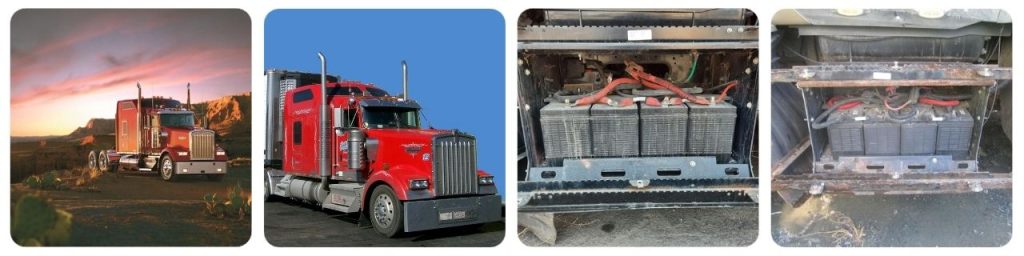
Table of Contents
- Quick Picks for Kenworth Owners (By Use Case)
- Top Battery Types for Kenworths (What to Choose & Why)
- Kenworth Model-Specific Buying Tips
- Kenworth Battery Fitment Cheat Sheet (Most-Common Sizes)
- Spec Targets: CCA, RC, and Warranty
- Best Battery Brands for Kenworth & Where-to-Buy
- Kenworth Battery Installation Guide (DIY or Shop)
- Kenworth Battery Maintenance & Longevity
- Signs You Need a New Battery
- Contact Kenworth Customer Service & Support
- Bottom Line
Quick Picks for Kenworth Owners (By Use Case)
- Over-the-road sleeper (T680/T680 Next Gen, W990) with hotel loads / APU: Go AGM Group 31 for high reserve capacity and deep-cycle tolerance. These handle fridge, bunk HVAC, inverters, and CPAP overnight without dipping below safe voltage. Browse Group 31 AGM heavy-duty. ~$260–$380 each
- Day cab / regional haul (T880, T800 vocational spec, dump/mixer): High-CCA flooded Group 31 starting batteries are usually fine if you’re not idling overnight. Look for 950–1100 CCA and good vibration resistance. See Group 31 flooded commercial. ~$150–$230 each
- Cold-climate start (northern fleets, oilfield W900/T800 in winter): Prioritize maximum CCA and low internal resistance — AGM wins here because it cranks hard even when it’s below freezing. Check high-CCA AGM Group 31. ~$280–$400 each
- Heavy PTO time / dump body up / crane / concrete pump (T880 vocational): You want deep-cycle Group 31 AGM or dual-purpose Group 31. Long PTO sessions mean alternator load + low RPM charging abuse. A true deep-cycle can take that and recover. Browse deep-cycle Group 31. ~$270–$400 each
- Medium-duty Kenworth (T270/T370/T380 service truck or rollback): Many run a pair of 12V Group 31 batteries. You can usually stay with standard flooded or Enhanced Flooded Battery (EFB) if you don’t idle for HVAC. See Group 31 EFB. ~$200–$300 each
- Show truck / chrome queen / W900 weekend rig: Consider AGM strictly for low self-discharge. Park it for weeks, come back, it still spins. AGM also resists acid spill and corrosion in polished battery boxes. Shop sealed AGM Group 31.
- APU or idle-reduction system with dedicated “hotel” bank: Use separate deep-cycle Group 31 AGM for the hotel bank and standard starting Group 31 batteries for cranking. Never mix old and new batteries in the same bank.

Mighty Max Battery MM-H7 Start and Stop Car BCI Group Size 94R 12V 80AH, 140RC, 850 CCA Rechargeable AGM Car Battery

Mighty Max Battery MM-H6 Start and Stop Car BCI Group Size 48 12V 70 AH, 120RC, 760 CCA Rechargeable AGM Car Battery

Automann 564.59846 Battery Box Cover Kenworth
Top Battery Types for Kenworths (What to Choose & Why)
| Type | What It Is | Best For | Typical Cost (USD) | Shop |
|---|---|---|---|---|
| Flooded Lead-Acid (Group 31 Starting) | Traditional serviceable or maintenance-free commercial battery. High CCA. Lowest upfront cost. | Day cabs, short-haul, warm climate, trucks that don’t idle overnight with inverters. | $150–$230 ea | See Group 31 flooded |
| EFB (Enhanced Flooded Battery) | Reinforced plates + improved electrolyte management. Better cycle life than basic flooded. | Medium-duty Kenworths that run liftgates, booms, or small inverters. Fleets wanting longer life without full AGM pricing. | $200–$300 ea | Browse Group 31 EFB |
| AGM (Absorbent Glass Mat) | Sealed, spill-proof, vibration resistant, high CCA, excellent recharge acceptance. Handles deeper discharge. | Sleeper tractors, idle-reduction / APU systems, extreme cold start regions, off-road vocational abuse. | $260–$400 ea | Shop AGM Group 31 |
| Deep-Cycle / Dual-Purpose Group 31 AGM | Built to deliver steady amps for long periods (bunk A/C, microwave, TV). Still capable of cranking if spec’d dual-purpose. | Hotel/bunk banks, RV-style sleepers, dedicated APU battery packs on T680/T880 vocational sleeper builds. | $270–$400 ea | Deep-cycle Group 31 |
Kenworth Model-Specific Buying Tips
- T680 / T680 Next Gen Sleeper: Most tractors run 3 or 4 x Group 31 in parallel. Spec high RC (reserve capacity) AGM so you can power bunk HVAC, inverters, and fridge without dropping below ~12.2V. Expect ~$800–$1,400 for a full set depending on brand.
- W900 Classic Long Hood: Chrome battery boxes love sealed AGM because there’s no acid mist to frost your polish or corrode steps. If you park for shows or weekends, low self-discharge AGM helps it crank after sitting. ~$260–$360 per battery.
- T880 Vocational / Dump / Mixer: Frequent PTO, high vibration, hot hydraulic oil right under the frame rails = brutal environment. Choose vibration-resistant commercial AGM or EFB with reinforced plates. Cheap batteries die early here, costing you tow time. ~$220–$350 per battery.
- T800 / Oilfield / Heavy Haul: Cold starts and long idles in remote sites mean CCA matters. Look for 950+ CCA rating per battery (many premium Group 31 AGMs will advertise 1100+ CCA). Consider carrying a spare, isolated with a battery disconnect switch. ~$300–$400 for top-tier AGM.
- T270 / T370 / T380 (rollback, service body, box truck): These medium-duty units often have liftgates, work lights, compressors, welders. That’s cycling, not just starting. EFB or dual-purpose AGM will outlast a basic flooded starting-only battery. ~$200–$320 each, usually 2-battery banks.
- Older Kenworth with mechanical CAT/Cummins: They’ll crank on almost anything, but don’t cheap out. A weak battery means slower crank RPM, which means hard cold starts and raw fuel wash. High-CCA flooded is OK if you run daily. If it sits for weeks, AGM resists sulfation better.
Kenworth Battery Fitment Cheat Sheet (Most-Common Sizes)
| Kenworth Model | Common Battery Group | Qty in Bank | Notes |
|---|---|---|---|
| T680 / T680 Next Gen | Group 31 (12V) | 3–4 in parallel | Often AGM for sleeper hotel load. Check for dedicated APU bank. |
| W900 / W990 | Group 31 (12V) | 3–4 in parallel | AGM recommended if mounted in side steps / exposed box. |
| T880 (dump / mixer / lowboy) | Group 31 (12V) | 3–4 in parallel | High vibration environment. Reinforced plates or AGM strongly recommended. |
| T800 (oilfield / heavy haul) | Group 31 (12V) | 3–4 in parallel | Spec high-CCA for cold starts. Watch cable corrosion from brine and salt. |
| T270 / T370 / T380 (medium-duty) | Group 31 (12V) | 2 (sometimes 3) | Some builds add a separate deep-cycle for liftgate/inverter. Don’t mix types in the same bank. |
| Legacy / vocational customs | Still usually Group 31 | Varies | Kenworth battery trays are basically standardized around Group 31 footprint because it’s industry standard for Class 6–8. |
Spec Targets: CCA, RC, and Warranty
CCA: Cold Cranking Amps
RC: Reserve Capacity
Type: Flooded / EFB / AGM
- CCA: For Class 8 Kenworth, aim for ~950+ CCA per Group 31 battery. In cold climates, going 100–150 CCA above the bare minimum gives faster spin and cleaner starts.
- RC (Reserve Capacity): RC is how long the battery can hold up loads with the engine off. Sleepers and PTO-heavy trucks want high RC (180+ min is common on premium AGM Group 31). More RC = longer fridge / APU runtime before no-start voltage.
- Technology: If the truck shipped with AGM hotel batteries or an idle-reduction system, do not downgrade to basic flooded. Downgrading kills runtime and can burn out alternators trying to recharge abused flooded cells.
- Warranty: Look for strong commercial warranty: ideally 24–36 months free replacement on AGM and 18–24 months on flooded. In fleet math, a longer warranty often pays for the price jump by avoiding a road call.
- Vibration resistance: Mixer, dump, logging, oil patch? A battery that can survive shaking is worth more than 50 extra CCA on the label.
Best Car Battery Brands for Kenworth & Where-to-Buy
| Brand / Line | Why Fleets Like It | Good For | Shop |
|---|---|---|---|
| Premium AGM Group 31 lines (often sold under names like NorthStar/X2, Odyssey, etc.) | Very high CCA, huge RC, fast recharge. Excellent for hotel loads and APUs. | T680 sleeper, W900 long-haul show rigs, frigid climates. | Search AGM Group 31 premium |
| Fleet-grade Flooded Group 31 (Interstate, Exide commercial, etc.) | Lower cost per unit, solid CCA. Easy to replace in sets across the fleet. | Day cabs, local/regional T880 dump, medium-duty rollback. | See commercial Group 31 |
| Deep-Cycle / Dual-Purpose Group 31 AGM (often marketed for marine/RV/commercial) | Thicker plates for repeated discharge / recharge. Perfect as a dedicated hotel bank. | APU bank, sleeper cab hotel loads, service trucks with inverters. | Dual-purpose Group 31 |
- Truck dealership / Kenworth dealer: OEM-spec batteries, correct venting hardware, core return handled on the spot. Usually higher price, but you know they fit the tray and cables.
- Truck stop / parts counter (24/7 roadside style): Fast swap if you’re stranded. Ask for production date code — don’t accept something that’s sat sulfating for 10+ months.
- Online (Amazon, etc.): Great for planned refresh on your own schedule. You can compare CCA and RC side by side. Look for listings like AGM Group 31 truck battery and check recent reviews from other CDL drivers.
How to Check Freshness & Authenticity
- Date code: Commercial batteries have a build code (letter = month, number = year). Newer is better. Anything older than ~6 months on the shelf is a red flag unless it’s been maintained on a tender.
- Matching set: All batteries in the same bank must be the same age, brand, and model. Mixing old + new forces the new one to constantly “carry” the weak one.
- Case / label quality: Watch for wavy heat-damaged cases, crooked top labels, or scratched-off serials. Don’t buy sketchy “new” batteries that look shop-worn.
- Voltage check: A healthy, rested AGM Group 31 should sit ~12.7–12.9V open-circuit. If it’s down in the low 12s before install, it’s already been abused.
Car Battery Warranty Tips
- Free replacement vs. prorated: You want as long a true free-replacement window as possible. Prorated warranties often make you pay most of the cost anyway.
- Commercial vs. RV wording: Some deep-cycle Group 31s are labeled “marine/RV” but are perfect for sleeper hotel loads. Check that the warranty doesn’t exclude “commercial trucking” if you’re putting it in a tractor that runs daily for hire.
- Proof of install: Keep the receipt in the truck binder or scan it. Roadside warranty swaps go smoother if you can show purchase date.
- Core policy: Most truck batteries have a core charge. Bring your old ones back in the same trip to get that money credited.

ACDelco Gold 48AGM (88864541) 36 Month Warranty AGM BCI Group 48 Battery
Mighty Max Battery MM-G35 Start and Stop Car BCI Group Size 35 12V 55Ah, 100RC, 650 CCA Rechargeable AGM Car Battery
Mighty Max Battery MM-H6 Start and Stop Car BCI Group Size 48 12V 70 AH, 120RC, 760 CCA Rechargeable AGM Car Battery
Kenworth Car Battery Installation Guide (DIY or Shop)
- Safety first: Park on level ground, parking brake on, key off, HVAC/loads off. Wear eye protection and gloves. These batteries are heavy (55–75+ lb each).
- Locate the bank: Most Kenworths mount the battery pack in an aluminum step box or frame-rail box on the driver side. Open the lid and inspect for corrosion, green fuzz, or loose hold-downs.
- Take pictures: Snap a clear photo of cable routing and jumper bars. Parallel banks can be confusing later if you forget which buss bar went where.
- Disconnect ground first: Loosen and remove the negative cables before the positive. This reduces the risk of shorting a wrench to frame ground.
- Remove old batteries: Pull them straight up if possible. Watch your back — use two hands or a lift strap.
- Clean the tray: Neutralize any acid residue with a baking-soda/water mix, then rinse and dry. Check for cracked or chafed cables.
- Drop in new matched set: All new, same brand/model/age. Do not install “just one” fresh battery with three tired ones in parallel; it will die early.
- Tighten hold-downs: Vibration kills batteries. Loose = early failure.
- Reconnect positive first, then negative last: Make sure terminal hardware is snug but not stripped. Coat connections with dielectric protectant or battery terminal spray to slow corrosion.
- Key on / test voltage: After install, key on but don’t crank. Watch dash voltage. Then start the truck and confirm alternator output is ~13.8–14.4V (AGM-friendly range). If voltage is low or spikes high, get charging system tested.
Kenworth Car Battery Maintenance & Longevity
- Minimize deep discharge: Don’t leave inverters, bunk heaters, or work lights running until the dash is below ~12V. Chronic deep cycling ruins starting batteries fast.
- Use an APU / idle management correctly: APU or battery HVAC is great, but only if you’re running proper deep-cycle AGM for that hotel load. Starting batteries alone aren’t designed to be your “mini power plant” overnight.
- Keep terminals clean: Corroded cables = voltage drop = hard starts that feel like “bad starter” but are actually just resistance in the cable lugs.
- Secure the bank: Off-road / jobsite / quarry vibration will literally shake plates loose. Check hold-down torque during PMs.
- Check alternator output: Chronic undercharge (<13.5V running) slowly sulfates even premium AGMs. Chronic overcharge (>14.8V) cooks them. Either condition kills battery life and can indicate a failing voltage regulator.
- Rotate long-idle trucks on a maintainer: If you park a W900 for winter, keep the batteries on an intelligent maintainer rated for AGM. Don’t rely on “start it once a month and rev it” — that’s actually worse because you never bring them back to full state of charge.
Signs You Need a New Battery
- Starter drags or engine rolls over slower than normal, especially first start of the morning.
- Voltage alarms or bunk power shutting off earlier than it used to when you’re parked.
- Dash throwing random low-voltage or aftertreatment sensor codes during cranking.
- Visible bulging case, acid smell, or wet/white corrosion around caps or vents (for flooded types).
- One battery in the bank is way hotter than the others after a run — that can indicate an internal short. Replace all batteries in that bank immediately.

YONHAN Battery Charger 10-Amp 12V and 24V Fully-Automatic Smart Car Battery Charger, Battery Maintainer Trickle Charger, and Battery Desulfator with Temperature Compensation

EZRED BMK1914 5-Piece Battery Maintenance Kit

LotFancy Battery Terminal Cleaners (2 pcs), Plus 12 pcs Battery Terminal Anti-Corrosion Fiber Washers (6 Red & 6 Green) for Car Marine Battery
Contact Kenworth Customer Service & Support
Your Kenworth dealer can scan for voltage-related fault history, test load each battery, and verify alternator output under load. They can also confirm the correct Group 31 spec for your exact VIN build (number of batteries, wiring, hotel bank vs. start bank, etc.). Use the official Kenworth Dealer Locator to find a nearby service location.
If you’re already down, most Kenworth dealers and many large truck stop chains can dispatch mobile service with replacement batteries and do an on-site swap/test. Contact details for your servicing dealer can be found via the same Kenworth Dealer Locator.
- Kenworth dealer locator (find nearest authorized service / parts)
- Operator / owner manual & electrical section for your model year (shows standard battery tray layout and cable routing)
- Warranty / roadside assistance contact from your purchase packet or lease agreement (often also referenced by your dealer found via the dealer locator)
Kenworth Car Battery FAQs
How long should a Kenworth car battery last?
Most Kenworth batteries last about 3–5 years in normal long-haul use. However, heavy commercial duty is tougher than normal passenger use: frequent idling for HVAC, hotel loads while parked, cold starts in winter, and running liftgates, inverters, telematics, and lights off the batteries can pull lifespan down to 2–3 years. Trucks that see consistent highway miles, regular alternator charging, and proper battery maintenance (clean terminals, correct charging voltage, no chronic parasitic draw when parked) can make it closer to 4–5 years. If you’re running APU or sleeper loads overnight on the batteries, expect to be on the shorter end of that range.
How much is a Kenworth car battery?
A heavy-duty Group 31 commercial battery for a Kenworth typically runs about $120–$200 per battery for a flooded starting battery and $200–$350 for premium AGM. Many Kenworth trucks use multiple batteries in parallel, so your real cost is often 2x or 3x that. AGM (Absorbent Glass Mat) costs more up front but handles vibration and deep cycling better, which matters in diesel rigs that idle overnight for powered accessories.
Can I upgrade from standard flooded to AGM in my Kenworth?
Yes, upgrading from flooded to AGM is common in heavy trucks. AGM tolerates vibration, recovers faster after deep discharge, and generally supports sleeper-cab electrical loads better. You should not downgrade in the opposite direction (AGM → basic flooded) if the truck relies on high auxiliary loads or idle-reduction systems that demand stable voltage. Also confirm your Kenworth’s charging system is within spec for AGM so you don’t overcharge.
Do I need deep-cycle style batteries for hotel loads in my Kenworth?
If you’re routinely powering A/C, bunk heater blowers, fridge, microwave, outlets, and inverters with the engine off or APU running, deep-cycle AGM or commercial “dual purpose” starting/deep-cycle batteries are worth it. Standard starting batteries are built for short bursts of high cranking amps, not long slow draws. Running sleeper loads off basic starting batteries will kill them early.
What size batteries does a Kenworth usually use?
Most Kenworth highway tractors run Group 31 commercial batteries with threaded stud terminals. You should match: (1) physical size so they fit the battery box, (2) stud/terminal style so the cables land correctly, and (3) Cold Cranking Amps (CCA) equal to or higher than factory, especially for cold-weather diesel starting. Your build sheet or current battery labels will confirm exact specs.
When should I replace Kenworth batteries instead of just charging them?
Replace instead of nurse them along if: the truck cranks slow in the morning even after a full charge, voltage sags hard when you run bunk accessories, or you’re seeing electronics glitches (ABS light flicker at start, dim cluster, inverter alarms). On a work truck, unreliable starting = lost time, and jump-start calls get expensive fast. If they’re near 3 years old and showing symptoms, it’s usually smarter to replace proactively.
Does warranty matter for a Kenworth battery?
Yes. Look for a clear free-replacement period (12–24 months on many commercial batteries, sometimes longer on AGM) rather than only pro-rated credit. A stronger warranty usually means heavier internal plates, better vibration resistance, and better cycle life under sleeper-cab loads. Because you’re often buying 2–4 batteries at once, good warranty terms can save hundreds over a year.
Bottom Line
ACDelco Gold 48AGM (88864541) 36 Month Warranty AGM BCI Group 48 Battery
Mighty Max Battery MM-G35 Start and Stop Car BCI Group Size 35 12V 55Ah, 100RC, 650 CCA Rechargeable AGM Car Battery