Mitsuoka builds some of the most distinctive cars on the road: retro British-style sedans like the Viewt, glamorous cruisers like the Galue, and hand-built exotics like the Orochi and Himiko. Underneath the custom bodywork, though, most Mitsuoka vehicles inherit engines, wiring, charging systems, and battery trays from mainstream donor cars (usually Nissan, Mazda, or Toyota). That’s good news. It means you don’t need a rare “Mitsuoka-only” battery. You just need the correct group size, cold cranking amps (CCA), and technology (Flooded vs EFB vs AGM) for the specific platform your Mitsuoka is based on. This guide explains how to choose the right battery for your Mitsuoka, what to upgrade if you run lots of accessories, how start-stop systems affect the choice, and where to buy.
When you’re ready to shop, you can jump directly to compatible searches like Group 51R AGM, JIS 55B24L / 46B24L style, or Group 24F AGM.
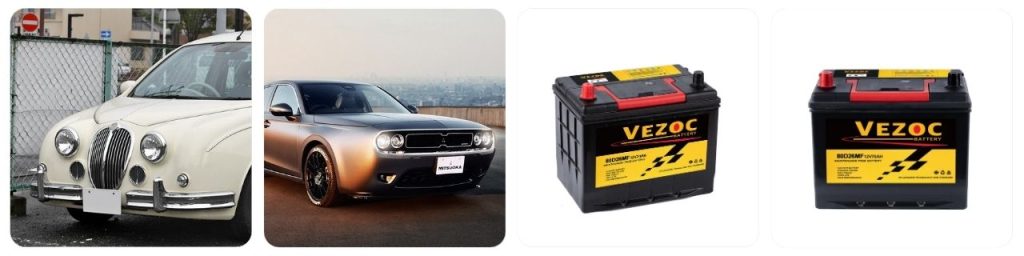
Table of Contents
- Quick Picks for Mitsuoka Owners (By Use Case)
- Top Battery Types for Mitsuokas (What to Choose & Why)
- Mitsuoka Model-Specific Buying Tips
- Mitsuoka Battery Fitment Cheat Sheet (Most-Common Sizes)
- Spec Targets: CCA, RC, and Warranty
- Best Car Battery Brands for Mitsuoka & Where-to-Buy
- Mitsuoka Car Battery Installation Guide (DIY or Shop)
- Mitsuoka Car Battery Maintenance & Longevity
- Signs You Need a New Battery
- Contact Mitsuoka Customer Service & Support
Quick Picks for Mitsuoka Owners (By Use Case)
- Daily driver / classic-look Mitsuoka Viewt or Galue (no start‑stop): Good flooded (lead-acid) or EFB with decent Reserve Capacity (RC). 55B24L / D23 / Group 24F sizes are common. Check 55B24L / 46B24L style batteries. ~$110–$200 flooded, $160–$240 EFB
- Himiko (Mazda MX‑5 / NC or ND roadster base): Many Himiko builds share the Miata’s compact battery footprint. An AGM Group 51R or Miata-style AGM is ideal for vibration resistance and trunk mounting. See 51R AGM options or Miata-specific AGM. ~$180–$300
- Orochi (large V6, high electrical load, show car usage): Go AGM for stronger cranking and better recovery from sitting on display with lights/audio on. Look at Group 24F AGM high-CCA batteries. ~$220–$350
- Premium / electronics-heavy builds (air suspension, custom audio, underglow): AGM (or EFB if start-stop equipped). AGM tolerates deep cycling better, charges faster, and resists vibration. Browse AGM best sellers. ~$200–$360
- Hot climate (desert, Middle East, SE Asia city traffic): Heat kills cheap flooded plates. Choose a thicker-plate EFB or AGM with high RC and good venting. Compare EFB batteries. ~$160–$260
- Cold climate / winter storage: Prioritize CCA (Cold Cranking Amps). AGM usually wins at low temps. See high-CCA AGM picks. +50–100 CCA above stock spec is smart
- Weekend cruiser that sits for long periods: AGM + maintainer. Pair an AGM with a smart trickle charger so sulfation doesn’t kill it. You can browse maintainers here: AGM-safe battery maintainers. Maintainers ~$25–$60

Mighty Max Battery MM-H6 Start and Stop Car BCI Group Size 48 12V 70 AH, 120RC, 760 CCA Rechargeable AGM Car Battery
![Mighty Max Battery MM-H4L Start and Stop Car BCI Group Size 140 Positive Terminal on Left Side [+ -] 12V 50 AH, 80RC, 570 CCA Rechargeable AGM Car Battery](https://m.media-amazon.com/images/I/41Tk24NKjsL._SL160_.jpg)
Mighty Max Battery MM-H4L Start and Stop Car BCI Group Size 140 Positive Terminal on Left Side [+ -] 12V 50 AH, 80RC, 570 CCA Rechargeable AGM Car Battery
Top Battery Types for Mitsuokas (What to Choose & Why)
| Type | Best For | Pros | Watch Out For | Typical Price |
|---|---|---|---|---|
| Flooded / Lead-Acid | Older Mitsuoka Viewt / Galue with basic electrical load | Lowest upfront cost, widely available in JIS sizes like 55B24L / 46B24L Shop 46B24L style |
Doesn’t love deep discharge, weaker in high heat or heavy audio setups | ~$100–$160 |
| EFB (Enhanced Flooded Battery) | Cars with mild start-stop or city driving, taxis/limo-style Galue usage | Better cycle life than standard flooded, handles frequent restarts and long idle with A/C | Heavier than flooded, a bit pricier; still vents acid, so mount upright | ~$160–$240 |
| AGM (Absorbent Glass Mat) | Himiko (roadster / Miata DNA), Orochi (V6 + electronics), custom audio builds | Sealed, spill-resistant, high CCA, high RC, tolerates vibration and deep cycling AGM 51R | AGM 24F |
More expensive; charging system must be healthy (alternator & voltage regulator) | ~$200–$360 |
| Deep-Cycle / Audio AGM | Show cars with underglow, air suspension compressors, subwoofers running engine-off | Massive reserve capacity, slow to drop voltage while parked at meets | Often physically larger; check fitment & terminal orientation before buying | ~$260–$450+ |
Mitsuoka Model-Specific Buying Tips
- Mitsuoka Viewt: Usually based on Nissan March/Micra platforms. These typically use compact JIS batteries like 46B24L / 55B24L with standard flooded or EFB tech. Target ~330–400+ CCA. Expect ~$120–$200 for a solid unit. Search 55B24L batteries.
- Mitsuoka Galue: Various generations are derived from Nissan Cedric/Gloria, Teana, or similar executive sedans. These sedans often use mid-size JIS D23 / DIN style or Group 24F equivalents. Look for higher RC (long-idle A/C, chauffeur duty). Budget $170–$260 for quality EFB or AGM if the car runs lots of interior electronics.
- Mitsuoka Himiko: Built on Mazda MX‑5/Miata underpinnings. Many use the Miata/MX‑5 style compact battery (sometimes in the trunk) or a Group 51R footprint in later donor cars. You want sealed AGM because of vibration and possible trunk mounting. Expect $190–$300. Browse Miata AGM batteries.
- Mitsuoka Orochi: Hand-built supercar using a Toyota/Yamaha V6. High compression starts + long display periods (showrooms, meets) = you want high CCA and deep reserve. A high-CCA AGM Group 24F or similar Toyota V6 upgrade is smart. Price range $220–$350. See Group 24F AGM options.
- Mitsuoka Ryugi / Buddy / other SUV-style conversions: Often sourced from Toyota or other Japanese crossovers. Many of these donor SUVs use start-stop capable EFB/AGM from the factory. Do not cheap out. Match the OE tech and spec. Expect $180–$300.
- Custom one-off / export build: Pop the hood and read the battery label: note size code (51R, 55B24L, 24F, etc.), CCA, and terminal orientation. Use that as your baseline and round up in CCA when possible.
Mitsuoka Battery Fitment Cheat Sheet (Most-Common Sizes)
| Mitsuoka Model | Typical Donor Vehicle | Common Battery Group / JIS Code | Notes | Shop Link |
|---|---|---|---|---|
| Viewt | Nissan March / Micra | 46B24L / 55B24L (JIS) | Small engine, tight bay. Flooded or EFB works for city use. | 55B24L search |
| Galue / Galue Limousine | Nissan luxury sedan / Teana / Cedric lineage | JIS D23 / Group 24F style | Choose higher RC if you idle with A/C on for passengers. | Group 24F picks |
| Himiko | Mazda MX‑5 / Miata | Group 51R AGM or Miata trunk AGM | Must be sealed AGM for safety and vibration. | 51R AGM search |
| Orochi | Custom chassis / Toyota V6 hardware | Group 24F AGM (high CCA) | Performance + show lighting → AGM strongly recommended. | High-CCA 24F AGM |
| Ryugi / Buddy (SUV-style conversions) | Often Toyota hybrid / crossover base | EFB or AGM, JIS 55D23L / DIN style | Some trims have start-stop → keep EFB/AGM, don’t downgrade. | EFB search |
Spec Targets: CCA, RC, and Warranty
CCA: Cold Cranking Amps RC: Reserve Capacity Tech: Flooded / EFB / AGM
- CCA (Cold Cranking Amps): This is starting power in cold weather. Aim to meet or beat the CCA spec printed on your factory battery. For winter climates, going +50–100 CCA above stock gives easier starts and less strain on the starter motor.
- RC (Reserve Capacity): RC tells you how long the battery can feed lights, infotainment, blower fan, etc. with the engine off. High RC matters for Mitsuoka show cars that sit with parking lamps and interior lighting on.
- Technology: If your donor platform came with EFB or AGM (common in newer start-stop cars, hybrids, and premium builds), do not downgrade to a cheaper flooded battery. The car’s charging strategy expects the higher-spec chemistry.
- Warranty Length: In most markets, the sweet spot is 24–36 months free replacement for flooded/EFB and 36+ months for AGM. A longer warranty usually signals thicker plates and better vibration resistance.
- Terminal Orientation: JIS batteries often end in L or R (for left/right positive terminal). North American “Group” sizes sometimes add R (like 51R) to indicate reversed posts. Buy the wrong orientation and your cables may not reach.
Best Car Battery Brands for Mitsuoka & Where-to-Buy
| Brand / Line | Why People Choose It | Good For | Amazon Search |
|---|---|---|---|
| AGM performance lines (Odyssey, XS Power, etc.) | Very high CCA and RC, built for performance / audio / show cars | Orochi, high-end Galue limo builds, demo cars with lights on for hours | Performance AGM |
| Premium AGM / EFB from major OEM suppliers | Balanced price vs. durability, OE-style fitment in Group 24F, 51R, 55B24L, etc. | Daily-driven Mitsuoka in normal climates that still want longevity | Shop EFB |
| Budget Flooded / “Standard” JIS batteries | Lowest cost, easy to find, fine for light electrical loads | Older Viewt or cars that only do sunny weekend drives | 46B24L |
- Local parts store / dealer: Fast warranty swaps, install help, core return handled for you. Slightly higher price, but you walk out running.
- Online (Amazon-type sellers): Great for finding oddball sizes like 51R AGM or 55B24L without calling five stores. Check seller rating and return policy. Example searches: 51R AGM, Group 24F AGM.
- Audio/custom shops: Best if you run compressors, air suspension, or upgraded sound. They’ll spec high-RC AGM or add a secondary battery/isolator if needed.
How to Check Freshness & Authenticity
- Date code: Batteries ship with a build date stamp (letter for month + number for year, or YY/MM). Choose something built in the last 3–6 months, not a “new” battery that’s been sitting sulfating on a shelf for a year.
- Seals / Caps: Flooded batteries should have intact vent caps, no acid residue. AGM should be fully sealed, no cracks in the case.
- Terminals: Look for clean, untarnished lead posts. Deep scratches or tool marks can indicate returns/refurbs.
- Branding / Label: Compare the label font, logo, and safety icons to official product photos. Suspicious spelling or crooked stickers = walk away.
Car Battery Warranty Tips
- Ask if the warranty is free replacement or pro-rated credit. Free replacement is more valuable.
- Get written proof (invoice or digital receipt) with install date and odometer, especially for higher-end AGM units.
- If you buy online, keep the packaging and receipt. Some brands require you to ship or present a voltage/CCA test printout for claims.
- Do not let the battery sit discharged. A deeply drained AGM that’s never recharged promptly can void warranty.

ACDelco Gold 48AGM (88864541) 36 Month Warranty AGM BCI Group 48 Battery
Mighty Max Battery MM-G35 Start and Stop Car BCI Group Size 35 12V 55Ah, 100RC, 650 CCA Rechargeable AGM Car Battery

ACDelco Gold 94RAGM (88864542) 36 Month Warranty AGM BCI Group 94R Battery
Mitsuoka Car Battery Installation Guide (DIY or Shop)
- Save memory if needed: Newer donor cars may lose radio presets, window auto-up, or ECU idle learn. If you care, hook up a small 12V memory saver to the OBD port before disconnecting the main battery.
- Shut off everything: Ignition off, lights off, doors closed. Let the car sit 2–3 minutes so modules go to sleep.
- Disconnect negative (-) first: Loosen the black/negative terminal and remove it from the post. Tuck it so it can’t spring back and touch.
- Disconnect positive (+): Remove the red/positive clamp. Be careful not to ground your wrench on body metal.
- Remove hold-down / bracket: Mitsuoka styling may add covers, but underneath it’s a normal tray and clamp. Take note of any spacers or shims.
- Lift battery straight up: They are heavy; keep it level if it’s flooded so you don’t slosh acid.
- Clean the tray and terminals: Use a battery brush or baking-soda/water solution (avoid getting liquid inside the new battery!). Dry everything.
- Drop in the new battery: Match orientation: positive-to-positive side. Make sure it sits flat in the tray and that the hood can still close without touching posts.
- Reinstall hold-down: Tighten just enough so the battery can’t move. Don’t overtighten and crack the case.
- Reconnect positive (+) first, then negative (-): Tight, but not so tight you deform the clamps.
- Start the car and check voltage: Engine running should show roughly 13.8–14.5V at the terminals for most Nissan/Mazda/Toyota donor platforms. If it’s way lower or higher, get the alternator tested.
- Recycle the old battery: Turn in your old core locally. You’ll usually get a core-charge refund.
Mitsuoka Car Battery Maintenance & Longevity
- Drive it, don’t just display it: Mitsuoka cars are often treated like art pieces. Long periods of just sitting will slowly drain even a high-end AGM. A 20–30 minute drive weekly keeps the alternator topping off the charge.
- Use a smart maintainer: For garage queens, clip on a regulated maintainer (AGM-compatible) rather than letting voltage sag for months. Browse AGM smart maintainers.
- Watch for corrosion: White/green fuzz on clamps = acid vapor or loose fit. Clean it and apply a light battery terminal protectant.
- Check parasitic draw: Aftermarket ambient lighting, tracking devices, or audio amps can create a slow drain. If the car is dead after 3–4 days parked, get a parasitic draw test.
- Heat management: In very hot climates, park in shade. Heat cooks electrolyte, especially in basic flooded batteries.
Signs You Need a New Battery
- Slower crank, especially first start of the day or after sitting 48 hours.
- Headlights dim noticeably when idling at a stoplight with A/C on.
- Dash warnings like “Battery”, “Charging System”, or repeated start-stop disable messages.
- Swollen/ballooned battery case (overheating or overcharging).
- Measuring below ~12.2V after resting overnight (fully charged healthy AGM should sit ~12.6–12.8V).

YONHAN Battery Charger 10-Amp 12V and 24V Fully-Automatic Smart Car Battery Charger, Battery Maintainer Trickle Charger, and Battery Desulfator with Temperature Compensation

EZRED BMK1914 5-Piece Battery Maintenance Kit
MOTOPOWER MP00205A 12V 800mA Automatic Battery Charger, Maintainer, Trickle and Desulfator
Contact Mitsuoka Customer Service & Support
To get official specs (including the original battery size and cold cranking amp rating) for your exact Mitsuoka build, you generally have two good paths:
1. Mitsuoka dealer / distributor: Mitsuoka sells mostly through limited distributors and boutique showrooms. Your dealer can confirm which donor chassis your specific car is built on (for example, “2008 March facelift” vs “2012 March,” or “JDM MX-5 NC” vs “ND”), which directly determines the correct battery group. Start from the official Mitsuoka site at mitsuoka-motor.com (or your regional Mitsuoka distributor’s site) and use their contact or dealer information pages.
2. The donor brand’s service department (Nissan / Mazda / Toyota): Ask them for the OEM battery group, CCA, and RC for the donor VIN. Since many Mitsuoka conversions keep the original engine bay, tray, and charging system, that OEM spec is usually the right starting point. Use the official owner/support pages for each brand, such as Nissan, Mazda, and Toyota, then navigate to your region’s service or customer care section.
You can also check:
- Owner’s manual / delivery booklet that shipped with your Mitsuoka (often includes the donor car’s manual).
- Dealer or importer website “contact us” form for parts ordering and maintenance questions (usually linked from the main Mitsuoka or regional distributor site).
- Local Mitsuoka enthusiast clubs and forums for real-world fitment photos and upgraded AGM recommendations.