
Polestar EVs and the Polestar 1 plug‑in hybrid use a conventional 12‑volt auxiliary battery to power control modules, door locks, lights, and to boot high‑voltage systems. When that 12V gets weak, you’ll see warnings, random errors, and slow wake‑ups. This guide explains which battery tech works best in a Polestar, common sizes, how to install with EV safety in mind, and how to maintain the 12V so you avoid inconvenient service visits. When you’re ready to shop, explore curated searches for H6/LN3 AGM, H7/LN4 AGM, and 12V AGM best‑sellers.
Table of Contents
- Quick Picks for Polestar Owners (By Use Case)
- Top Battery Types for Polestars (What to Choose & Why)
- Polestar Model‑Specific Buying Tips
- Polestar Battery Fitment Cheat Sheet (Most‑Common Sizes)
- Spec Targets: CCA, RC, and Warranty
- Best Car Battery Brands for Polestar & Where‑to‑Buy
- Polestar Car Battery Installation Guide (DIY or Shop)
- Polestar Car Battery Maintenance & Longevity
- Contact Polestar Customer Service & Support
- Polestar Car Battery FAQs
Quick Picks for Polestar Owners (By Use Case)
- Polestar 2 daily driver: AGM 12V with high Reserve Capacity (H6/LN3 common). See H6 AGM options. ~$190–$320
- Polestar 3 / 4 (electronics‑heavy SUVs): AGM with high charge acceptance (H7/LN4 common). Browse H7 AGM. ~$220–$360
- Polestar 1 (PHEV): AGM auxiliary is preferred for stability and deep‑cycle tolerance. Try AGM 12V searches. ~$200–$350
- Cold climate owners: Prioritize higher CCA AGM. High‑CCA AGM picks.
- Short‑trip / infotainment‑heavy use: AGM with larger RC to buffer frequent wake cycles. Compare AGM by RC.
- Budget replacement (mild climates): EFB can work if OE was EFB, but do not downgrade from AGM. EFB choices. ~$160–$260
- Lightweight/track‑day curious: LiFePO4 12V is tempting, but only if expressly approved for your model and BMS—most owners should stick with AGM. LiFePO4 examples.

Mighty Max Battery MM-H7 Start and Stop Car BCI Group Size 94R 12V 80AH, 140RC, 850 CCA Rechargeable AGM Car Battery

Mighty Max Battery MM-H6 Start and Stop Car BCI Group Size 48 12V 70 AH, 120RC, 760 CCA Rechargeable AGM Car Battery

BCI Group 48 Car Battery, 12V 70Ah Size H6 Automotive Battery Premium Maintenance Free AGM Batteries, 760CCA, 120RC, 36 Months Warranty
Top Battery Types for Polestars (What to Choose & Why)
| Type | Best For | Pros | Watch‑outs | Typical Price | Shop |
|---|---|---|---|---|---|
| AGM (Absorbent Glass Mat) | Most Polestar owners; cold climates; lots of electronics | High RC & CCA, low self‑discharge, vibration‑resistant, good for frequent wake cycles | Heavier than LiFePO4; needs correct charging profile | $200–$360 | AGM best‑sellers |
| EFB (Enhanced Flooded) | Budget‑minded in mild climates when OE wasn’t AGM | Better cycling than standard flooded; lower cost than AGM | Lower performance vs AGM in heavy accessory/short‑trip scenarios | $160–$260 | Compare EFB |
| LiFePO4 (12V drop‑in) | Weight savings, occasional track; only if BMS‑compatible and approved | Very light, stable voltage, fast charge acceptance | May confuse vehicle charging strategy; cold‑temp limitations; verify approval | $300–$700 | LiFePO4 options |
Polestar Model‑Specific Buying Tips
- Polestar 2 (2021–present, EV): Most trims are happy on an AGM in the H6/LN3 range with robust RC. Verify dimensions and terminal orientation before purchase. Budget: $200–$320. Shop H6/LN3 AGM.
- Polestar 3 (2024–present, EV): Electronics‑rich SUV—favor higher‑capacity AGM (often H7/LN4). Budget: $230–$360. Shop H7/LN4 AGM.
- Polestar 4 (2024–present, EV): Similar guidance to Polestar 3; select a premium AGM with strong RC for short‑trip/urban use. Budget: $230–$360. Compare H7 AGM.
- Polestar 1 (2019–2021, PHEV): Choose a high‑quality AGM; trunk‑mounted layouts benefit from vibration‑resistance and sealed design. Budget: $220–$350. H6 AGM candidates.
- Software/BMS note: Polestars generally do not require coding after a like‑for‑like AGM change, but use the vehicle’s service/transport mode and follow reconnection procedures to avoid DTCs.
Polestar Battery Fitment Cheat Sheet (Most‑Common Sizes)
| Model | Years | Likely Size (EU/US) | Polarity | Notes | Shop |
|---|---|---|---|---|---|
| Polestar 2 | 2021–present | H6 / LN3 (aka Group 48) | Standard | Confirm physical tray/hold‑down and height before ordering | Group 48/H6 picks |
| Polestar 3 | 2024–present | H7 / LN4 (aka Group 94R) | Reverse 94R typical | Higher capacity helpful for short‑trip city use | 94R/H7 options |
| Polestar 4 | 2024–present | H7 / LN4 (check tray) | Reverse typical | Match venting and height; verify cables reach naturally | H7/LN4 AGM |
| Polestar 1 (PHEV) | 2019–2021 | H6 / LN3 (check spec) | Standard | Trunk‑mount: sealed AGM preferred | H6/LN3 AGM |
Spec Targets: CCA, RC, and Warranty
CCA: Cold Cranking Amps
RC: Reserve Capacity
Tech: EFB / AGM / LiFePO4
- CCA: Meet or exceed OE; cold regions benefit from +50–100 CCA above minimum.
- RC: Higher RC helps with frequent wake cycles, accessories, and short trips.
- Technology: If the car shipped with AGM, replace with AGM.
- Warranty: Target 36–48 months free replacement when available.
- Fitment details: Verify height and terminal position (e.g., 94R reverse‑polarity).
Best Car Battery Brands for Polestar & Where‑to‑Buy
| Brand | Why It’s Good | Typical Lines | Shop |
|---|---|---|---|
| Varta / Bosch | Strong AGM lines in EU sizes; consistent specs | AGM, EFB | Varta H6 · Bosch H7 |
| Exide | Broad OE presence, good RC/CCA balance | AGM, EFB | Exide AGM H6 |
| Odyssey | Premium AGM with high CCA and deep‑cycle capability | Performance AGM | Odyssey Group 48 |
| Interstate / DieHard | Easy nationwide availability; solid warranties | AGM, EFB | Group 48/H6 · Group 94R/H7 |
| Optima | Sealed spiral‑cell AGM; rugged build | YellowTop (deep‑cycle), RedTop (starting) | Optima YellowTop |
- Dealers: OE‑spec parts and software support; highest price.
- Independent shops: Can test 12V and HV isolation; mid‑range price; install guarantee.
- Online + mobile install: Convenient; verify fresh stock and return policy.
How to Check Freshness & Authenticity
- Look for a date code sticker or stamp; prefer units manufactured within the last 3–6 months.
- Packaging should be sealed, terminals capped, and case free of swelling or cracks.
- Measure open‑circuit voltage on arrival (AGM ~12.8V full). Recharge before install if below ~12.6V.
- Buy from reputable sellers; retain invoice and serial for warranty.
Car Battery Warranty Tips
- Favor 36–48 months free‑replacement terms; read pro‑rated fine print.
- Keep purchase proof and test reports; many claims require a printout.
- Avoid deep discharges; repeated dead‑battery events can void coverage.

ACDelco Gold 48AGM (88864541) 36 Month Warranty AGM BCI Group 48 Battery
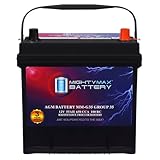
Mighty Max Battery MM-G35 Start and Stop Car BCI Group Size 35 12V 55Ah, 100RC, 650 CCA Rechargeable AGM Car Battery

ACDelco Gold 94RAGM (88864542) 36 Month Warranty AGM BCI Group 94R Battery
Polestar Car Battery Installation Guide (DIY or Shop)
- Prep & safety: Park safely, open hood or trunk (location varies). Wear eye protection and gloves.
- Service/transport mode: Use the vehicle menu to put the car in service/transport mode (prevents systems from waking while you work).
- Memory support: If you use a memory saver, connect it to the designated under‑hood posts. Many EV owners skip this; the car will relearn, but you may reset clocks/profiles.
- Access the 12V battery: Remove covers/trim as needed. Photograph cable routing and hold‑downs.
- Disconnect: Negative (–) first, then positive (+). Isolate cables so they cannot spring back.
- Remove old battery: Release the hold‑down, lift straight up. Batteries are heavy—use a strap.
- Install new battery: Place in tray, confirm it sits flat. Refit hold‑down with factory hardware.
- Reconnect: Positive (+) first, then negative (–). Tighten to spec; do not overtighten.
- Vent & secure: If applicable, connect vent tube. Ensure cables have natural slack and no strain.
- Wake the car: Exit service mode, lock the car for several minutes to allow modules to sleep, then unlock and power up. Clear any transient alerts after a short drive.
Polestar Car Battery Maintenance & Longevity
- Regular driving: EVs still need the 12V topped up; long periods parked can deplete it.
- Smart charging: If storing, maintain with an AGM‑compatible smart charger via the designated posts. Avoid generic trickle chargers that overcharge.
- Keep clean: Ensure terminals are tight and free of corrosion; lightly coat with dielectric grease.
- Software updates: Accept OTA updates—they can improve energy management and sleep behavior.
- Temperature: Extreme heat shortens life; park in shade or a garage when possible.
Signs You Need a New Battery
- Random “12V battery low” or “Electrical system” warnings, especially after short trips.
- Slow wake‑up or unresponsive keyless entry after sitting overnight.
- Measurable voltage sag under small loads (lights, HVAC) compared to spec.
- Battery age 3–5+ years, especially in hot climates or with frequent short use.

YONHAN Battery Charger 10-Amp 12V and 24V Fully-Automatic Smart Car Battery Charger, Battery Maintainer Trickle Charger, and Battery Desulfator with Temperature Compensation

EZRED BMK1914 5-Piece Battery Maintenance Kit
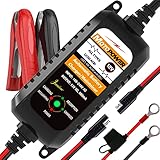
MOTOPOWER MP00205A 12V 800mA Automatic Battery Charger, Maintainer, Trickle and Desulfator
Contact Polestar Customer Service & Support
- Polestar Official Site
- Polestar Support & Help Center
- Contact Polestar
- Dealer / Space Locator
- Owner’s Manuals
Polestar Car Battery FAQs
What “battery” does Polestar use—12V or high‑voltage?
Polestar vehicles have two: a 12V auxiliary battery that powers accessories/ECUs and a high‑voltage (HV) traction battery that drives the motors. Maintenance and lifecycles differ.
How long should a Polestar car battery last?
The 12V battery typically lasts ~4–6 years depending on climate and usage. The HV traction battery is generally warranted for ~8 years/100,000 miles (160,000 km) to a capacity threshold; real‑world degradation is usually gradual.
How much is a Polestar car battery?
A 12V replacement usually costs about $150–$300 (plus installation/coding if required). HV battery replacement is much more expensive and rarely needed; diagnose and pursue warranty options first.
How do I know if my 12V battery is failing?
Symptoms include warning messages at start‑up, slow wake/boot behavior, repeated accessory power loss, or needing frequent jump‑starts. Have the 12V battery load‑tested and check parasitic draw.
Can I replace the Polestar 12V battery myself?
It’s possible for experienced DIYers, but follow isolation procedures, preserve settings with a memory saver, and use an AGM‑compatible charger. Observe proper venting and terminal torque.
Does frequent DC fast charging harm the HV battery?
High DCFC use can increase heat and aging over time. Mitigate by charging to your daily limit (e.g., 70–80%), preconditioning before fast charges, and minimizing sessions at very high states of charge.
What’s the best state‑of‑charge (SoC) for daily use?
For longevity, keep regular SoC around 30–80%. Use higher charges (90–100%) when you need maximum range, ideally driving soon after reaching 100%.
Why did my Polestar show reduced power or limited features in cold weather?
Cold temperatures reduce available HV power and 12V performance. Precondition the cabin/battery while plugged in and avoid full‑throttle until the pack warms.
How do software updates affect battery health?
OTA updates can improve thermal management, charging curves, and range estimation. Keep your vehicle on the latest software and calibrate by occasionally charging from low to high SoC under guidance.
Should I use a battery maintainer?
If your Polestar sits for weeks, an AGM‑safe 12V maintainer on approved points helps. For the HV pack, store around 40–60% SoC and avoid extreme hot/cold exposure.
Bottom line: For most Polestar owners, a quality AGM in H6/LN3 (Polestar 2) or H7/LN4 (Polestar 3/4) with strong RC and a 36–48‑month warranty is the safest, most reliable choice. Verify dimensions, polarity, and venting before purchase, install in service mode, and keep the 12V topped up during long parking periods.