
The right battery makes a Porsche feel like a Porsche — fast crank, clean voltage, zero random “Visit Workshop” warnings. Whether you daily a Macan in traffic, weekend a 911, or road-trip a Cayenne with every screen and accessory lit up, battery choice matters for reliability and for the health of sensitive electronics. Modern Porsches use energy-hungry comfort systems, start-stop tech, intelligent charging, and in many cases two-stage battery monitoring. That means you can’t just grab a cheap generic lead-acid and hope for the best.
This guide walks you through Porsche battery types (AGM vs EFB vs flooded), model-specific fitment, what spec numbers actually matter, signs of a dying battery, and how to replace it without upsetting the car’s control modules. You’ll also find size cheat sheets and buying links for popular Porsche group sizes like H6 / Group 48, H7 / Group 94R, and H8 / Group 49 that fit 911 / Cayman / Cayenne / Macan / Panamera. When you’re ready to compare prices, you can browse Group 48 / H6 AGM options, Group 94R / H7 AGM batteries, and Group 49 / H8 AGM.

Table of Contents
- Quick Picks for Porsche Owners (By Use Case)
- Top Battery Types for Porsches (What to Choose & Why)
- Porsche Model-Specific Buying Tips
- Porsche Battery Fitment Cheat Sheet (Most-Common Sizes)
- Spec Targets: CCA, RC, and Warranty
- Best Car Battery Brands for Porsche & Where to Buy
- Porsche Car Battery Installation Guide (DIY or Shop)
- Porsche Car Battery Maintenance & Longevity
- Signs You Need a New Battery
- Contact Porsche Customer Service & Support
- Bottom Line
Quick Picks for Porsche Owners (By Use Case)
-
Daily driver (Cayenne, Macan, Panamera) with start-stop:
Go AGM in the correct DIN/H size (often H7 / H8). These vehicles depend on high charge acceptance during start-stop cycles. See H7 / Group 94R AGM and H8 / Group 49 AGM. ~$220–$380 -
Sports car (911, Cayman, Boxster) weekend use:
High-quality AGM H6 / Group 48 with strong Cold Cranking Amps (CCA) for reliable starts after sitting. Try Group 48 / H6 AGM. ~$200–$320 -
Older air-cooled / early water-cooled 911 (no start-stop, simpler electronics):
Quality flooded or AGM with high Reserve Capacity (RC). You can often run a robust H6/H7 form factor. See Group 48. ~$140–$240 (Flooded), $200–$320 (AGM) -
Short-trip / accessory-heavy (heated seats, air suspension, audio upgrades):
AGM is preferred because it tolerates partial charging better and resists vibration. Browse top AGM batteries. ~$220–$380 -
Extreme heat (desert / hot summers):
Look for an AGM or EFB with high RC and strong heat resistance. Cayenne / Macan owners usually land in H7-H8. Compare EFB batteries. ~$180–$300 -
Cold climate / winter starts:
Prioritize higher CCA. Bigger case sizes like H8 (Group 49) often have 900+ CCA. See high-CCA AGM. ~$230–$400 -
Porsche with battery in trunk / frunk:
AGM strongly recommended because it’s sealed and minimizes vented acid vapors in enclosed compartments. For most mid-2010s+ Porsche sports cars, that’s an H6/H7 AGM.

Weize Platinum AGM Battery BCI Group 49-12v 95ah H8 Size 49 Automotive Battery, 160RC, 900CCA, 36 Months Warranty, Dimensions 13.9" L x 6.89" W x 7.48" H

1AUTODEPOT BCI Group 49 Car Battery, 12V 95Ah Size H8 Automotive Battery Premium Maintenance Free AGM Batteries, 900CCA, 160RC

Mighty Max Battery MM-H6 Start and Stop Car BCI Group Size 48 12V 70 AH, 120RC, 760 CCA Rechargeable AGM Car Battery
Top Battery Types for Porsches (What to Choose & Why)
| Type | Best For | Why It Matters on a Porsche | Typical Price | Shop |
|---|---|---|---|---|
| Flooded / Lead-Acid | Older 911 / Boxster without start-stop or heavy electrical load | Cheaper, decent CCA, but lower vibration resistance and shorter life under high accessory load | $140–$220 | Group 48 flooded |
| EFB (Enhanced Flooded Battery) | Some vehicles with mild start-stop or higher accessory usage | Stronger cycling than basic flooded, better recovery from partial state-of-charge, good RC | $180–$300 | Search EFB |
| AGM (Absorbent Glass Mat) | Most late-model Porsche (Macan, Cayenne, Panamera, 991/992 911, 718 Cayman/Boxster) | High CCA, excellent vibration resistance, fast recharge, supports start-stop and high draw at idle. Factory spec for most modern Porsches | $220–$400 | AGM Group 49 / H8 |
| Auxiliary / Support Battery | Some Panamera, Cayenne, and Taycan use a secondary 12V support battery | Stabilizes electronics during start-stop and while the main battery is under load. Must match OE chemistry | $120–$250 | 12V AGM support batteries |
Porsche Model-Specific Buying Tips
- 911 (997/991/992): Most use an H6 (Group 48) or H7 (Group 94R) AGM. Expect ~760–900 CCA. Budget $220–$330 for a quality AGM. Check height/length so the frunk bracket clamps correctly. See Group 48 AGM.
- Boxster / Cayman (987, 981, 718): H6 / Group 48 AGM is typical. These cars sit a lot, so self-discharge tolerance matters. A strong AGM helps avoid low-voltage steering/airbag warnings. Plan on $200–$300.
- Macan: Commonly H7 (Group 94R) AGM. High Reserve Capacity is important because of HVAC, cameras, infotainment, and start-stop. ~$240–$360. Shop Group 94R AGM.
- Cayenne: Big SUV, big electrical load. Often H8 / Group 49 AGM, sometimes plus an auxiliary battery depending on generation and options. Look for 900+ CCA, high RC. $260–$400. Browse Group 49 AGM.
- Panamera: Similar story to Cayenne: large AGM main battery (often H8/Group 49) and sometimes a secondary support battery. Don’t cheap out here — voltage stability affects chassis control modules, suspension, comfort systems. $260–$400 main / $120–$200 aux.
- Taycan: EV traction battery is high-voltage, but it still has a 12V support/aux battery (AGM or Li-based depending on build). That 12V battery boots the low-voltage systems. Treat it like any other Porsche: match chemistry and spec, do not downgrade. $150–$300 for the 12V unit.
- Classic / air-cooled (964, 993, etc.): Check polarity layout and physical dimensions. Some classics used dual-battery setups up front. If you’re restoring, consider an AGM upgrade in the correct physical form so you reduce acid spill risk. $180–$300.
Porsche Battery Fitment Cheat Sheet (Most-Common Sizes)
| Porsche Model (Common Generations) | Typical Battery Group / DIN Size | Chemistry from Factory | Notes |
|---|---|---|---|
| 911 (997 / 991 / 992) | H6 / Group 48 or H7 / Group 94R | AGM | Mounted in frunk. Needs venting line or sealed AGM |
| Boxster / Cayman (987 / 981 / 718) | H6 / Group 48 | AGM | High CCA improves cold starts after storage |
| Macan (all trims) | H7 / Group 94R | AGM | Start-stop equipped; do not downgrade |
| Cayenne (955/957/958/9Y0 etc.) | H8 / Group 49 main | AGM | Some versions also have aux battery for comfort/start-stop |
| Panamera | H8 / Group 49 main + possible aux | AGM | Aux battery supports electronics during start-stop |
| Taycan | 12V AGM / Li aux (varies) | AGM or Li (support battery) | Critical for powering control modules before HV pack wakes |
| Classic air-cooled 911 | Varies (often DIN H4/H5 style or custom dual setup) | Flooded originally | AGM retrofit is common for safety and stability |
Spec Targets: CCA, RC, and Warranty
RC: Reserve Capacity
Tech: Flooded / EFB / AGM
- CCA: Match or exceed Porsche’s original spec. In cold climates, aiming for +50 to +100 CCA above stock gives more reliable cold starts and quicker cranking.
- RC (Reserve Capacity): Higher RC = longer runtime for HVAC, air suspension compressor, parking cameras, and infotainment while idling or during start-stop. SUVs (Cayenne, Macan) benefit from big RC.
- Technology: If the car shipped with AGM or EFB, keep it AGM/EFB. Downgrading can confuse the charging strategy, reduce lifespan, and trigger energy management alerts.
- Warranty: Shoot for 36+ months free replacement (or regional equivalent). For high-end AGM in a Porsche, 3+ years coverage is normal and worth paying for.
- Terminal orientation & height: Porsche trays often only accept specific DIN case heights. For example, H6 vs H7 vs H8 are similar style but not identical length/height. A “close enough” fit that doesn’t clamp is not acceptable in a performance chassis.
Best Car Battery Brands for Porsche & Where to Buy
| Brand Tier | Why People Buy It | Good Use Case | Shop |
|---|---|---|---|
| Premium AGM brands (often made by big OEM suppliers) | High CCA, strong RC, good vibration resistance, long warranty | Modern Porsche with start-stop (Macan, Cayenne, Panamera) | Search 94R AGM |
| Performance AGM / high-end Euro fitment | Exact DIN case sizes (H6/H7/H8), often direct OEM replacement spec | 911 / Cayman / Boxster owners who want drop-in fit with OE vents | H6 / Group 48 AGM |
| EFB / mid-tier enhanced flooded | Lower cost than AGM but tougher than basic flooded | Older Porsche without factory AGM but with lots of accessories | Shop EFB |
| Basic flooded / value | Lowest upfront price, widely available | Classic air-cooled or budget track toy with minimal electronics | Group 48 flooded |
- Buy online (Amazon): Easiest way to match group size (H6 / H7 / H8) and compare CCA / RC specs side by side. You can pre-shop here: Group 49 AGM for Cayenne / Panamera.
- Buy locally (Porsche dealer or Euro specialist shop): More expensive, but you’ll usually get correct spec and they can register the new battery in the car’s system when needed.
- Pros: Dealer/OEM batteries are guaranteed fit and chemistry. Aftermarket AGM often gives equal or better performance for less money.
- Cons: Super cheap generic batteries can “fit” but have the wrong vent style, wrong height, or low RC. That can cause electrical gremlins in a Porsche faster than in a basic commuter car.
How to Check Freshness & Authenticity
- Date code: Look for a manufacturing date sticker or embossed code. Anything older than ~6 months on the shelf is less attractive, especially for AGM.
- Case condition: Avoid cases with bulges, cracks, or acid residue around the vents/terminals.
- Correct labeling: The label should match your required group size (H6, H7, H8, etc.) and chemistry (AGM vs EFB). Random stickers or missing specs are red flags.
- Weight check: Within the same group size, a legit high-RC AGM will usually be heavier than a cheap flooded battery. Super light “AGM” in a large size is suspicious.
- Seller reputation: Stick with known retailers, Porsche dealers, or trusted online sellers with plenty of verified reviews.
Car Battery Warranty Tips
- Free replacement window: Aim for 36+ months on premium AGM. Anything under 24 months for a high-end Porsche battery is weak.
- Pro-rated after: Many brands offer reduced credit after the free period. Keep the receipt in the glovebox or in your phone photos.
- Installation proof: Some warranties require proof of proper installation or battery registration on vehicles with battery management systems.
- Voltage abuse: Letting the battery die repeatedly (storage, parasitic draw) can void coverage. A maintainer is cheaper than a denied warranty claim.

ACDelco Gold 48AGM (88864541) 36 Month Warranty AGM BCI Group 48 Battery
Mighty Max Battery MM-H6 Start and Stop Car BCI Group Size 48 12V 70 AH, 120RC, 760 CCA Rechargeable AGM Car Battery

ACDelco Gold 94RAGM (88864542) 36 Month Warranty AGM BCI Group 94R Battery
Porsche Car Battery Installation Guide (DIY or Shop)
- Save memory if possible: Connect a memory saver / OBD saver to maintain voltage during the swap. This helps preserve radio presets, seat memory, and window calibration. (Optional but nice.)
- Access the battery: On most modern Porsche sports cars, it’s in the front trunk under trim panels. On SUVs and Panamera it may be under the cargo floor or rear seat. Remove covers carefully — many are clipped, not screwed.
- Disconnect negative first: Loosen the negative (–) terminal and move it aside so it can’t spring back. Then disconnect the positive (+). This prevents accidental shorting.
- Remove hold-down / bracket: Porsche uses specific clamps or crossbars. Keep the hardware organized. These brackets are critical to stop battery movement under hard braking / cornering.
- Lift battery out safely: AGMs are heavy. Use both hands and keep your back straight. Watch for vent tubes.
- Drop in the new battery: Make sure it sits fully flat in the tray, not rocking. Reconnect/route any vent hose if equipped.
- Reinstall hold-down: Torque it snug so the battery cannot slide, but don’t overtighten to the point of cracking the case.
- Reconnect positive first, then negative: Positive (+) on, tighten. Negative (–) on, tighten. Ensure terminals are fully seated — loose terminals cause voltage dips and random warning lights.
- Check for dash warnings: Start the car. Expect maybe a temporary steering angle or TPMS warning that clears after driving a short distance.
- Battery registration (if required): Some late-model Porsche systems “learn” the battery’s age and capacity. After replacing, many shops (and dealer service) can tell the car “new battery installed” via diagnostic tool. If your car expects this and you skip it, charging may be suboptimal.
Porsche Car Battery Maintenance & Longevity
- Use a maintainer if the car sits: Weekend 911 or garage-kept Cayman? Keep it on an intelligent AGM-compatible trickle/float charger. See AGM battery maintainers.
- Limit short, no-charging trips: Lots of 5-minute drives with HVAC blasting will undercharge even a brand-new AGM. Take a longer (20+ minute) drive occasionally to top it off.
- Keep terminals tight and clean: Loose terminals = voltage drops = Christmas tree dashboard.
- Watch parasitic drains: Dash cams, radar detectors, aftermarket amps, and comfort features can slowly kill the battery over days. Hardwire accessories with ignition-switched power or dedicated battery-saver modules.
- Heat kills batteries: If you live in a hot climate, parking in shade or a garage meaningfully extends life.
Signs You Need a New Battery
- Slower crank than normal, especially first start of the day.
- Random “System Fault,” “Start/Stop Disabled,” or chassis stability / PASM / PDCC error messages that disappear after driving a bit. Low voltage can trigger ghost codes.
- Headlights dim noticeably at idle with A/C, fans, and steering input.
- Voltage under ~12.3V after sitting overnight (AGM at rest should usually be ~12.6V+).
- Visible corrosion or swelling of the case.
- Battery is 4–6+ years old with no record of replacement — many Porsche owners are surprised how “fine” the car felt right up until it wasn’t.

NOCO E404 12.25 Oz Battery Terminal Cleaner Spray and Corrosion Cleaner with Acid Detector
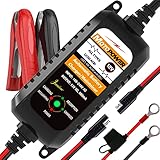
MOTOPOWER MP00205A 12V 800mA Automatic Battery Charger, Maintainer, Trickle and Desulfator

LotFancy Battery Terminal Cleaners (2 pcs), Plus 12 pcs Battery Terminal Anti-Corrosion Fiber Washers (6 Red & 6 Green) for Car Marine Battery
Contact Porsche Customer Service & Support
- Reach out to your local authorized Porsche Center’s service department (find one using the official Porsche Dealer Locator). Ask specifically: “Does my model require battery registration after replacement?”
- Use the Contact / Support section on the official Porsche website (navigate to Customer Care / Contact Us). They can confirm correct battery spec by VIN.
- Use the Dealer Locator on Porsche’s site to find the nearest Porsche Approved service center for installation, coding, and proper recycling of the old battery.
- Request the service advisor to print or email you the most recent battery test (many dealers use a handheld tester that reports State of Health and CCA). Keep that for warranty records.
Porsche Car Battery FAQs
Can I upgrade from a standard flooded battery to AGM in my Porsche?
Yes, upgrading to AGM (Absorbent Glass Mat) is common and often recommended for modern Porsche models. Porsche vehicles draw a lot of electrical power for ECUs, comfort modules, start-stop systems, and accessories even while parked. AGM batteries handle deep cycling and repeated partial discharge better than basic flooded lead-acid. The rule of thumb: you can upgrade flooded → AGM, but you should not downgrade AGM → basic flooded, especially on cars with start-stop, PASM, rear-axle steering, or high infotainment load.
Do I need a specific battery for Porsche start-stop systems?
Yes. If your Porsche uses automatic start-stop or intelligent energy management, you should be running either an EFB (Enhanced Flooded Battery) or AGM, and most mid/high-end Porsche models leave the factory with AGM. Downgrading to a cheaper conventional flooded battery can trigger charging system warnings, shorten lifespan, and cause weak restarts in traffic. Match or exceed the original technology.
How long should a Porsche car battery last?
Most Porsche batteries last around 3–5 years in normal use. High electrical demand at idle (A/C, sound system, suspension lift, active spoilers), short trips where the battery never fully recharges, and long periods of storage without a maintainer can cut that down to 2–3 years. A Porsche that’s driven regularly on longer highway runs and kept on a smart maintainer when parked can see 5+ years out of a quality AGM.
How much is a Porsche car battery?
Expect roughly $200–$400 USD for a high-quality AGM battery in common Porsche fitments (H6, H7, H8 group sizes, etc.). Larger high-capacity AGM units for performance models, or OEM-branded Porsche batteries sourced through a dealer, can land closer to $400–$500 installed. EFB batteries for start-stop equipped base models can sometimes be a little cheaper than top-tier AGM, but they’re still typically above $180.
What size battery does my Porsche need?
You need to match three things: physical group size (often European DIN sizes like H6 / Group 48, H7 / Group 94R, H8 / Group 49), terminal orientation (polarity), and spec (AGM or EFB). On Porsches, space in the frunk/battery bay can be tight, so height and length matter. The easiest way to confirm is to read the label on the current battery or check the owner’s manual/parts catalog for your exact model year before buying.
When should I replace instead of just recharging or jump-starting?
If you’re seeing repeated low-voltage warnings, slow cranking after the car sits overnight, random module faults (PSM errors, air suspension faults, infotainment rebooting), or the resting voltage keeps sagging below ~12.4V even after a long drive or tender charge, it’s time to replace. Continually jump-starting a weak Porsche battery can stress control units and is not a long-term plan.
Does warranty matter when choosing a Porsche battery?
Absolutely. Look for a clearly stated free replacement period (often 36 months on premium AGM) rather than purely pro-rated coverage. A stronger warranty usually signals thicker internal plates, better vibration resistance, and higher cycle life — all important in performance cars that see heat, vibration, and heavy electrical draw.
Bottom Line
The best battery for a Porsche is not just “the one that fits the hole.” It’s the one that matches chemistry (usually AGM), supports start-stop and high electrical load, physically locks into the OEM tray, and delivers enough CCA/RC for your climate and driving style. For 911 / Cayman / Boxster, that’s typically an H6 (Group 48) AGM. For Macan, often H7 (Group 94R) AGM. For Cayenne and Panamera, usually H8 (Group 49) AGM with big RC and sometimes an auxiliary support battery. Spending a little more up front on the correct AGM and keeping it maintained with a smart charger is cheaper than chasing electrical gremlins later.