From humid equatorial heat in Kinshasa to dust and corrugations on provincial roads, DRC driving punishes weak batteries. This guide shows how to choose the right type and size, what prices to expect (USD/CDF), the best places to buy, and practical maintenance tips for Congolese conditions—plus quick links to compare AGM, EFB, popular smart chargers, and heavy‑duty jumper cables.
Table of Contents
- Quick Picks (By Use Case)
- Car Battery Types in Congo Comparison
- Car Battery Size & Fitment Size Congo
- Best Car Battery Brands in Congo
- Where to Buy Car Battery in Congo
- Buying Car Battery in Congo Guide and Tips
- Car Battery Congo FAQs
Quick Picks (By Use Case)
- Daily commuter (no idle stop/start): Quality Flooded (SMF) or EFB. Compare Group 35 or 24F options. Typical spend: ~US$90–US$180.
- Vehicles with idle stop/start (newer SUVs/sedans): EFB (value) or AGM (premium). Browse EFB or AGM. ~US$140–US$320.
- 4×4, mining roads, and up‑country trips: AGM starting battery or dual setup (starter + deep‑cycle for fridges/lights). See 12V deep‑cycle AGM and pair with a DC‑DC charger.
- Short‑trip city use (lots of electronics): AGM recommended; keep topped with a smart maintainer.
- Audio/performance builds: High CCA and Reserve Capacity AGM. Check high‑reserve AGM.
- Hybrids/EV auxiliaries (12V): Use exact spec (often AGM) and maintain with an OBD2 memory saver during swaps.

ACDelco Gold 48AGM (88864541) 36 Month Warranty AGM BCI Group 48 Battery
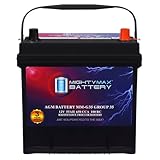
Mighty Max Battery MM-G35 Start and Stop Car BCI Group Size 35 12V 55Ah, 100RC, 650 CCA Rechargeable AGM Car battery
Car Battery Types in Congo Comparison
| Type | Best For | Pros | Watch‑outs in DRC | Shop/Compare |
|---|---|---|---|---|
| Flooded/SMF (Lead‑acid) | Older vehicles, budget replacements | Lowest upfront cost, widely available | Less vibration‑proof; hates deep discharge in traffic jams | Browse flooded |
| EFB | Idle stop/start systems, ride‑share city cars | Better cycle life vs flooded; decent value | Must match OE spec if car had ISS | Compare EFB |
| AGM | Premium SUVs, 4x4s, high electrical loads | High CCA, spill‑proof, vibration resistant, fast recharge | Higher price; needs correct charging voltage | Shop AGM |
| Deep‑cycle (AGM/GEL) | Auxiliary setups (fridge, winch, lights) | Long reserve capacity, rugged | Not ideal as sole starter; use in dual systems | 12V deep‑cycle |
| Start‑ready LiFePO4* | Weight‑sensitive builds | Very light, high cycle life | Expensive; cold‑crank limits; ensure BMS/vehicle compatibility | Advanced options |
Car Battery Size & Fitment Size Congo
| Common Size (Code) | Where Seen | Dimensions (approx.) | Notes | Shop Link |
|---|---|---|---|---|
| JIS 46B24L/R | Japanese imports (Toyota, Nissan compacts) | ~237×127×200 mm | Check L vs R terminals | 46B24L / 46B24R |
| JIS 55D23L/R | Mid‑size sedans/SUVs | ~232×173×225 mm | Often EFB/AGM on newer ISS cars | 55D23L |
| JIS 65D26 / 80D26 | Hilux, Prado, Fortuner | ~260×173×225 mm | Great for 4×4—consider AGM | D26 AGM |
| DIN/EN L2 (H5), L3 (H6) | European models (VW, BMW, Mercedes) | L2 ~242×175×190; L3 ~278×175×190 | Register coding on some German cars | H6/L3 |
| BCI Group 35 / 24F / 65 | US imports (Ford, GM) | Varies by group | Mind terminal orientation | Group 24F |
Best Car Battery Brands in Congo
- Bosch: Widely distributed across Africa; reliable CCA and vibration resistance. Expect ~US$140–US$260 for mid‑sizes. Compare Bosch AGM.
- Exide: Good value in Flooded/EFB; common fitments for Asian and European cars. ~US$110–US$220. See Exide options.
- Mutlu: Popular Turkish brand seen in DRC; solid durability. ~US$120–US$200 for common sizes.
- VARTA: Premium AGM/EFB for German vehicles. ~US$170–US$320. Browse VARTA AGM.
- Rocket/Global: Robust Asian fitments at competitive prices.
- Delkor: Known for longevity and strong warranties where available.
- Willard: South African brand; good for rough‑road vibration.
Where to Buy Car Battery in Congo
- Japan Motors Africa (Kinshasa – Gombe)
- Avenue Colonel Lusaka 3854, Gombe, Kinshasa
- Contact: +243 971 692 553, info@japanmotors.cd
- Hours: Mon–Sat business hours (call ahead)
- CFAO Motors RDC (Kinshasa – Poids Lourds)
- 17 Avenue des Poids Lourds, Kinshasa
- Contact: Dealer network; service & parts desk can source batteries
- Hours: Mon–Fri; Sat a.m. (varies)
- Auto Lubumbashi (Head Office)
- 100, Chaussée Laurent‑Désiré Kabila, Lubumbashi
- Contact: +243 995 411 888, info@auto-lubumbashi.com
- Hours: Mon–Sat (check by phone)
- Pandey Auto Garage (Lubumbashi)
- Route Likasi, Kimbembwe, Lubumbashi
- Contact: +243 893 410 03, info@pandeyautogarage.com
- Hours: Mon–Sat
- Grands Lacs Motors (Goma)
- Avenue Ishasha, Goma, Nord‑Kivu
- Contact: +243 997 421 927
- Hours: Mon–Sat
- TotalEnergies Service Stations (Multiple Cities)
- Examples: Ave Kasa‑Vubu (Moulaert), Limete, Ndjili, etc.
- Contact: Local station numbers; many open early–late
- Hours: Often 05:00–00:00; varies by station
Buying Car Battery in Congo Guide and Tips
- Match technology to your car: If your vehicle came with EFB/AGM (common on newer European/Japanese models), replace like‑for‑like. Downgrading can disable idle stop/start and shorten life.
- Look for high CCA and RC: Hot climates and rough roads reward batteries with strong Cold Cranking Amps and Reserve Capacity. For SUVs/4x4s, prioritize vibration‑resistant AGM.
- Check alternator health: A weak alternator kills new batteries. Ask the shop to test charging voltage (13.8–14.7V typical for lead‑acid) and verify with a multimeter.
- Mind electrical loads: Winches, fridges, amplifiers? Consider dual‑battery with a DC‑DC charger and deep‑cycle auxiliary.
- Protect against short trips: Urban Kinshasa driving can undercharge batteries. Use a smart maintainer monthly.
- Check date codes: Prefer stock manufactured within the last 6–9 months. Ask the seller to read the stamp.
- Warranty matters: Seek 12–24 months with clear terms. Keep the receipt; some brands offer pro‑rata replacement.
- Carry emergency gear: Jump starter, cables, and a terminal brush.
- Installation basics: Use memory saver on modern cars, tighten clamps to spec, and coat terminals with protective spray.
Car Battery Congo FAQs
How much does it typically cost to replace and install a car battery in Congo?
Expect roughly US$90–US$180 for quality flooded/EFB and US$140–US$320 for AGM in major cities. Basic installation/testing is often included or ~US$5–US$20 depending on shop and vehicle.
What’s the typical car battery warranty in Congo?
Most reputable brands offer 12–24 months. Some dealers provide pro‑rata credit toward a replacement if failure occurs after the free‑replacement period—keep your stamped receipt.
How are car batteries recycled in Congo?
Return your old battery to the retailer or service station—many accept trade‑ins for recycling. Scrap dealers also collect spent lead‑acid units. Never dump; lead and acid are hazardous.
Can I upgrade from flooded to AGM?
Yes—if the battery size and terminals match and the vehicle’s charging system supports AGM voltages. Some European cars require battery registration via scan tool after replacement.
How do I know my battery is failing?
Slow cranking, dimming lights at idle, repeated jump‑starts, swollen case, or voltage below ~12.2V after resting indicate a weak battery.
What tools help batteries last longer in Congo conditions?
A smart maintainer, quality jumper cables, terminal brush, and dielectric/protective spray. Consider a compact jump starter for up‑country trips.
Which is better for short trips—EFB or AGM?
AGM generally copes better with frequent starts and partial state‑of‑charge, but EFB is good value if it matches the vehicle’s original spec.
Do I need to replace both batteries on a dual‑battery 4×4?
Replace the failed unit with the same type/capacity, and test the isolator/DC‑DC charger. Starter and auxiliary batteries can be different types when properly isolated.
What size battery fits my car?
Check the owner’s manual, the label on your current battery, or ask a dealer with your VIN. Our fitment table lists popular sizes in DRC.
Where can I compare prices online?
Local shops mostly quote by phone/WhatsApp. For specs and benchmarks, compare on Amazon: AGM, EFB, smart chargers.
Bottom line:
Choose the right tech (EFB/AGM for ISS and heavy‑electrical cars), match the exact size and CCA, and buy from a dealer that will test your car before and after installation. In DRC conditions, AGM often pays for itself in durability—especially for 4x4s and city cars with short trips.