
Long-haul sleeper, quarry-duty dump, or stop-and-go refuse—Mack trucks punish batteries with vibration, parasitic loads, APUs, liftgates, and overnight “hotel” power. The right battery bank means confident cranking at dawn, stable voltage for ECMs and aftertreatment, and fewer no-start calls. This guide breaks down heavy-duty battery tech (flooded vs AGM vs deep-cycle), the most common BCI group sizes for Mack platforms, and exactly what to prioritize for your use case. You’ll also get a fitment cheat sheet, brand guidance, warranty tips, and step-by-step install instructions tailored to multi-battery packs. Ready to compare? Jump straight to curated searches for Group 31 AGM, Group 31 Flooded, and 8D AGM.
Table of Contents
- Quick Picks for Mack Owners (By Use Case)
- Top Battery Types for Macks (What to Choose & Why)
- Mack Model-Specific Buying Tips
- Mack Battery Fitment Cheat Sheet (Most-Common Sizes)
- Spec Targets: CCA, RC/Ah, and Warranty
- Best Heavy-Duty Battery Brands for Mack & Where-to-Buy
- Mack Battery Installation Guide (DIY or Shop)
- Mack Battery Maintenance & Longevity
- Signs You Need a New Battery
- Contact Mack Customer Service & Support
Quick Picks for Mack Owners (By Use Case)
- Day cab, fair-weather, minimal hotel loads: 2× or 3× Group 31 Flooded starting batteries (≈ $120–$190 each). Compare Group 31 flooded options.
- Sleeper with APU / hotel loads (fridge, HVAC, inverter): Mix of AGM deep-cycle Group 31 or a dedicated APU bank. Better cycle life and vibration resistance (≈ $220–$380 each). See Group 31 AGM.
- Severe vibration (construction, logging, off-road quarry): AGM Group 31 with robust internal bonding; add a tray isolator/hold-downs (≈ $250–$400). Browse HD AGM picks.
- Extreme cold starts: Higher-CCA AGM Group 31 (900–1150 CCA each), add engine block heater; consider 3× vs 2× batteries (+$80–$150 vs flooded). High-CCA Group 31.
- Refuse / vocational with frequent key cycles & PTO: AGM Group 31 or hybrid pack (start + deep-cycle) to handle frequent starts and low-RPM charging. Deep-cycle Group 31.
- Legacy chassis with large trays (rare): 4D/8D cans if still fitted; otherwise convert to multiple Group 31 for serviceability. 8D AGM.
- Budget fleet refresh: Flooded Group 31 with routine load-testing and tight torque on clamps; replace as sets. Compare prices.

Mighty Max Battery MM-H7 Start and Stop Car BCI Group Size 94R 12V 80AH, 140RC, 850 CCA Rechargeable AGM Car Battery

AJC Battery Compatible with Wonderlanes Mack Dump Truck 2902 2906 12V 12Ah Ride-On Toy Battery

Raymax AGM Car Battery H6 Group 48 – 12V 760 CCA | 70Ah | Maintenance-Free Auto Battery for Cars, Trucks & SUVs, Deep Cycle, Start-Stop Ready, Cold Weather Performance | Size: 10.98"L x6.89"W x7.48"H.
Top Battery Types for Macks (What to Choose & Why)
| Type | Best For | Pros | Watch-outs | Typical Cost | Shop |
|---|---|---|---|---|---|
| Flooded Lead-Acid (Starting) | Warm climates, day cabs, lower hotel loads | Lowest upfront cost; widely available | Lower vibration & cycle life; electrolyte maintenance on serviceable caps | ~$120–$190 ea. | Group 31 flooded |
| AGM (Absorbed Glass Mat) Starting | Cold starts, high vibration, modern electronics | High CCA, sealed/spill-proof, excellent vibration resistance | Higher price; needs proper charging voltage | ~$220–$350 ea. | AGM Group 31 |
| AGM Deep-Cycle | APU/inverter hotel loads, liftgates, reefers (aux banks) | Superior cycle life; low self-discharge | Heavier; confirm alternator set-point (14.4V ±) | ~$250–$400 ea. | Deep-cycle G31 |
| EFB (Enhanced Flooded) | Frequent starts where AGM budget is tight | Improved cycle/vibration vs flooded | Still not as robust as AGM; availability varies in HD sizes | ~$180–$260 ea. | EFB Group 31 |
| 4D / 8D Commercial | Legacy trays, high reserve requirements | Very high capacity per case | Heavy; harder to service roadside | ~$280–$600 ea. | 8D options |
Mack Model-Specific Buying Tips
- Anthem (2018+ highway): Most run 2–3× Group 31 in parallel. Sleeper/APU spec: prioritize AGM deep-cycle mix for hotel loads. Expect $240–$360 each.
- Pinnacle (CHU/CXU): Regional haul day cabs do fine with 2× high-CCA flooded; sleepers prefer 3× AGM. Budget $120–$350 each.
- Granite (Mack construction): Severe vibration—AGM is worth it. Add anti-vibration trays/foam spacers. $220–$380 each.
- LR / TerraPro (refuse): Frequent restarts & PTO at idle; choose AGM starting plus at least one AGM deep-cycle if you power hydraulics/inverters. $250–$400 each.
- Anthem/Granite with idle-shutdown: If drivers rely on in-cab power, consider adding a separated deep-cycle bank via an isolator to protect starting batteries. Isolators run $60–$200. 12V isolators.
- MD Series (medium duty): Usually still Group 31, but verify tray size and cable reach. Some fleets spec 2×; vocational upfit may need 3× for liftgates. $150–$350 each.
- Cold-region fleets: Choose ≥1000 CCA per battery, keep a block heater and smart 12V charger on hand.
Mack Battery Fitment Cheat Sheet (Most-Common Sizes)
| Platform | Common Tray Setup | Typical Battery | Per-Battery CCA | Notes |
|---|---|---|---|---|
| Anthem (Highway) | 2–3 in parallel (12V) | Group 31 AGM or Flooded | 900–1150 CCA | Sleeper: prioritize AGM, consider one deep-cycle in mix |
| Pinnacle (Regional) | 2–3 in parallel (12V) | Group 31 Flooded (day cab) / AGM (sleeper) | 850–1000 CCA | Frequent starts → AGM improves life |
| Granite (Construction) | 3 in parallel (12V) | Group 31 AGM | 950–1150 CCA | High vibration—AGM + beefy hold-downs |
| LR / TerraPro (Refuse) | 3 in parallel (12V) | Group 31 AGM starting + deep-cycle support | 950–1150 CCA | Hotel/PTO loads; consider isolator |
| MD Series (Medium Duty) | 2 in parallel (12V) | Group 31 Flooded or AGM | 800–1000 CCA | Upfit may demand higher RC/Ah |
| Legacy Trays | 1× large can (12V) | 4D / 8D AGM/Flooded | N/A (see Ah) | Convert to multiple G31 for easier roadside swaps |
Spec Targets: CCA, RC/Ah, and Warranty
CCA: Cold Cranking Amps
RC/Ah: Reserve Capacity / Amp-hours
Tech: Flooded / EFB / AGM
- CCA: Meet or exceed OE spec; cold fleets benefit from +100–200 CCA per battery.
- RC/Ah: Higher Ah or RC supports hotel loads and PTO use without deep discharging the start bank.
- Technology: AGM shines in vibration, deep cycling, and cold starts; EFB is a step up from flooded where AGM isn’t in budget.
- Warranty: Target 24–48 months commercial; read pro-rated terms carefully.
- Quantity & wiring: Most Macks are parallel 12V banks—replace as a complete set to avoid imbalance.
Best Heavy-Duty Battery Brands for Mack & Where-to-Buy
| Brand/Line | Why It’s Good | Best Use | Shop |
|---|---|---|---|
| Odyssey / EnerSys (e.g., 31-PC2150) | High-CCA AGM, excellent cycle life, robust against vibration | Cold starts, sleepers, construction | Search Odyssey G31 |
| X2Power / NorthStar-derived | Premium AGM, fast recharge, strong reserve | APU/inverter hotel loads | Search X2Power G31 |
| Interstate HD (31-S, 31-AGM) | Ubiquitous dealer support, solid value | Fleet standardization | Interstate G31 |
| Exide RoadForce / Sprinter | Competitive commercial flooded & AGM lines | Regional haul | Exide G31 |
| Genuine Mack / Volvo Group parts | OE-matched specs, easy dealer warranty | Warranty simplicity | Compare Group 31 |
- Where to buy: Mack dealers (fast core returns), heavy-duty parts counters, battery specialists, travel centers (TA/Petro), and online (Amazon).
- Pro tip: Standardize across fleet (same group, posts, and torque spec) to speed roadside swaps and reduce inventory.
How to Check Freshness & Authenticity
- Decode the date stamp (sticker or heat-stamped). Prefer manufacturing dates within the last 3–6 months.
- Inspect for matching date codes across all batteries in the bank.
- Measure open-circuit voltage (12.6–12.8V AGM at rest). Reject units <12.4V without a proper charge and retest.
- Check case/label integrity, correct terminal type (SAE Stud/Threaded), and include new hardware.
- Buy from reputable sellers; beware unusually low pricing and missing serials.
Car Battery Warranty Tips
- Keep the invoice & install log with date codes and volt readings.
- Many commercial warranties are pro-rated; understand months 0–12 vs 13–36.
- Warranty is often void if mixed chemistries/ages in one bank—replace all at once.
- Log alternator set-point and parasitic draw at install; this protects claims later.

ACDelco Gold 31AGMT (88866292) 24 Month Warranty Heavy Duty AGM BCI Group 31 Battery

ACDelco Gold 48AGM (88864541) 36 Month Warranty AGM BCI Group 48 Battery

OPTIMA Batteries High Performance 34/78 RedTop Sealed AGM Car, Truck, and SUV Starting Battery, 800 CCA, Dual SAE and GM Terminals, Maintenance Free, Versitile Mounting
Mack Battery Installation Guide (DIY or Shop)
- Specify & stage parts: Verify group size (usually G31), quantity (2–3), stud hardware, and hold-downs. Pre-charge new batteries to full.
- Park safely & retain memory: Key off, chock wheels. If needed, use a regulated memory saver on the cab side.
- Disconnect order: Negative first across the bank, then positive. Photograph cable routing and buss bars.
- Remove & clean: Pull old units, neutralize any acid, wire-brush lugs, and inspect cables for corrosion/green creep.
- Tray & clamp check: Replace cracked trays/straps. Add anti-vibration pads where applicable.
- Install new bank: Place all batteries from the same batch/date. Connect in parallel for 12V (positives common, negatives common). Torque to manufacturer spec (often 8–12 N·m on posts, 15–20 N·m on studs—verify).
- Protect & dress: Apply terminal protector; secure cables with strain relief; ensure no chafe points.
- Reconnect order: Positive first, then negative. Confirm no sparks/arcing.
- Charge & test: Top-off with a smart charger to absorption; perform a load test and starter draw/voltage-drop test.
- ECU relearns: Start engine, verify alternator output (≈14.2–14.7V for AGM), clear any low-voltage faults, and check idle shutdown/APU operation.
Mack Battery Maintenance & Longevity
- Monthly: measure resting voltage, inspect clamps, and retorque hardware.
- Quarterly: load test each battery; replace the entire bank if one is weak.
- Control parasitic draw (target < 50–80 mA when parked long-term). Track with an inline ammeter.
- Use a maintainer during extended downtime; consider solar trickle for outdoor yards.
- Heat kills batteries: keep trays shielded from exhaust, and ensure airflow around the pack.
- Vibration control: renew trays/isolators; AGM pays for itself in severe-service applications.
Signs You Need a New Battery
- Slow crank, especially after short stops or overnight in mild weather.
- In-cab electronics brownout when cranking; clock or radio resets.
- Repeated low-voltage codes; alternator “OK” but bank fails load test.
- Visible case swelling, venting odor, corrosion creep on cables.
- Batteries are mixed ages—one failure cascades quickly in a parallel bank.

LotFancy Battery Terminal Cleaners (2 pcs), Plus 12 pcs Battery Terminal Anti-Corrosion Fiber Washers (6 Red & 6 Green) for Car Marine RV
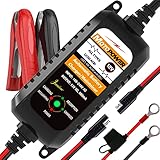
MOTOPOWER MP00205A 12V 800mA Automatic Battery Charger, Maintainer, Trickle and Desulfator

YONHAN Battery Charger 10-Amp 12V and 24V Fully-Automatic Smart Car Battery Charger, Battery Maintainer Trickle Charger, and Battery Desulfator with Temperature Compensation
Contact Mack Customer Service & Support
Mack Car Battery FAQs
How long should a Mack car battery last?
Most Mack vehicle batteries last around 3–5 years in normal service. Heavy-duty commercial use (idling with lights, HVAC blowers, liftgates, telematics, hotel loads) can shorten that to 2–3 years because the battery is constantly cycling instead of just starting the engine. If the truck sees mostly highway mileage and gets a proper full charge on longer runs, 5+ years is possible. You should test resting voltage and cranking performance at least once a season; slow cranks on cold mornings or repeated low-voltage warnings are early signs it’s time to replace instead of hoping it survives another winter.
How much is a Mack car battery?
For standard automotive-style starting batteries that might be used in lighter Mack-branded vocational pickups or service vehicles, expect roughly $150–$250 for a quality AGM (Absorbent Glass Mat) or heavy-duty flooded lead-acid unit with good Cold Cranking Amps (CCA). For true class 6/7/8 Mack truck applications that often use larger, commercial-grade group sizes in pairs or banks, individual batteries commonly run about $180–$300 each depending on CCA rating, vibration resistance, and whether they’re AGM or traditional flooded. Going AGM or another premium vibration-resistant design usually costs more up front but tends to last longer under diesel vibration and accessory load, which can save money over time.
Can I upgrade from a standard flooded battery to AGM in my Mack?
Yes, moving from a basic flooded battery to AGM is generally considered an upgrade for Mack vocational and road tractors. AGM batteries handle vibration better, recover faster after deep accessory draw (work lights, PTO equipment, sleeper cab loads), and are sealed, which helps in rough job sites. What you should not do is downgrade a system that expects AGM or a high-reserve commercial battery to a bargain flooded unit — that can lead to shorter life, slow cranking in the cold, and voltage dips that upset sensitive electronics.
What size battery does my Mack need?
You need to match the physical group size, terminal style, and CCA spec listed for your Mack’s engine and electrical package. Many medium/heavy trucks run multiple large commercial batteries in parallel to deliver both high cranking amps for big diesel starters and long reserve for lights and in-cab systems. The safest move is to read the label on the existing batteries (group code and CCA) or check the Mack service manual for your exact model/year. Swapping in the wrong group size can cause cable strain, loose mounting, or under-spec cold start performance.
When should I replace the battery instead of just recharging it?
Replace instead of nurse it along if: (1) the truck cranks noticeably slower after sitting overnight, especially in cold weather; (2) voltage drops under load even after a long drive or external charge; (3) you’re seeing random electrical glitches (dash resets, dim work lights, power windows slowing); or (4) the case is swollen, leaking, or shows heavy corrosion. Repeated jump-starts on a big diesel cost you downtime and can stress starters and cables — at that point, a proactive replacement is cheaper than a roadside service call.
Does warranty matter when choosing a Mack battery?
Yes. Look for a solid free-replacement window (often 24–36 months for heavy-duty commercial batteries) rather than only pro-rated coverage. A strong warranty usually means heavier internal plates, better vibration resistance, and higher cycle life under hotel loads and PTO usage. For fleet vehicles, track installation dates so you can rotate batteries on a schedule before failure strands a truck on a job site or at a weigh station.
ACDelco Gold 48AGM (88864541) 36 Month Warranty AGM BCI Group 48 Battery
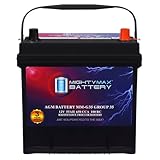
Mighty Max Battery MM-G35 Start and Stop Car BCI Group Size 35 12V 55Ah, 100RC, 650 CCA Rechargeable AGM Car battery
