If your Iveco key fob has started working only at close range, needs repeated button presses, or no longer unlocks the vehicle consistently, the fix is often just a simple battery replacement. In many Iveco remotes, the coin battery is a CR2032, although some fob versions can vary by model year, region, and key design, so the safest move is always to open the fob and match the battery code printed on the old cell. This guide covers what battery an Iveco key fob usually uses, how to choose the right replacement, how to replace it step by step, common remote problems after a battery swap, and when it makes more sense to replace the full Iveco key fob instead of just the battery.
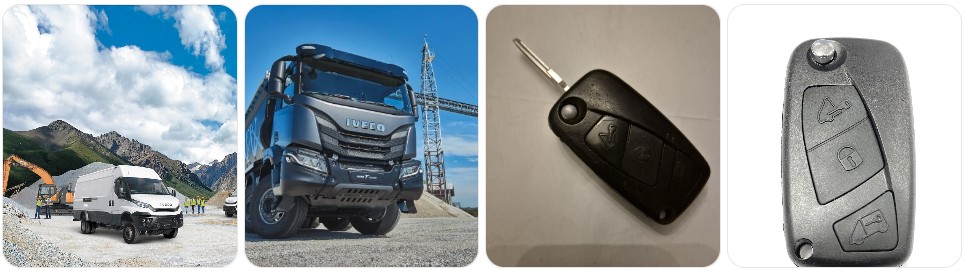
Buy Key Fob Battery Replacement for Iveco
When buying an Iveco key fob battery replacement, the most important thing is matching the battery code already inside your remote. For many Iveco key fobs, especially common Iveco Daily remote styles, the battery is often a CR2032 3V lithium coin cell. That said, Iveco has used different key shells and remote layouts over the years, so you should still confirm the battery number on the old battery before ordering. If you want to compare options first, you can browse Iveco key fob battery replacements, or go straight to CR2032 replacements for Iveco key fobs if your original battery is marked CR2032.
- CR2032 replacement battery: This is the most common starting point for many Iveco remote keys and smart-style fobs. It is a 3V lithium coin battery that is easy to find and usually inexpensive. A practical option is to compare CR2032 replacement batteries that fit many Iveco key fobs. Typical price: about $5 to $14 for a multi-pack.
- Name-brand CR2032 batteries: If your Iveco is a work van or truck that sees daily use, it can be worth buying a quality battery with better shelf life and more consistent performance. Compare options like Panasonic CR2032, Energizer CR2032, or similar replacements. Typical price: about $6 to $15 depending on quantity and brand.
- Iveco key fob shell and battery kits: If the remote still works but the case is cracked, worn, or the buttons are torn, it can make sense to replace the shell and battery at the same time. Browse Iveco key fob shell and battery kits for combined repair options. Typical price: about $10 to $25.
- Spare battery packs for fleet use: If you manage multiple Iveco vehicles, it can be smart to keep extra batteries on hand for driver remotes. Multi-packs from a trusted brand are often the easiest way to avoid downtime when a key suddenly stops responding.

CR2032 Key Fob Replacement Batteries, Universal Fit, Pack of 2

Key Fob Battery Replacement for Jeep Dodge Ram Chrysler CR2032 Batteries

CR2032 Key Fob Battery Replacement (2 Pack)
Iveco Key Fob Battery Replacement by Model
- Iveco Daily key fob battery replacement: This is the most commonly searched Iveco remote battery swap, and many Iveco Daily fobs use a CR2032. Because the Daily has been sold with several remote designs across different years and markets, it is still best to open the fob and confirm the code on the old battery. If you want to compare options first, browse Iveco Daily battery options.
- Iveco Eurocargo key fob battery replacement: Eurocargo remotes can look similar to other Iveco commercial-vehicle keys, but battery fit can still vary by remote style. If the buttons feel weak or the range has dropped, start by matching the old coin cell and checking the shell for wear.
- Iveco S-Way key fob battery replacement: Modern S-Way remote keys often follow the same general coin-cell replacement process as other Iveco remotes. A fresh, correctly installed battery is usually the first fix to try when the lock/unlock range becomes inconsistent.
- Iveco T-Way key fob battery replacement: Since T-Way vehicles are often used in tougher work environments, it is a good idea to inspect the key fob for dirt, moisture, or cracked clips while replacing the battery. Remote shell damage can easily be mistaken for a simple battery problem.
- Iveco Stralis key fob battery replacement: Depending on the key design, Stralis remotes may use the same CR2032 battery commonly found in other Iveco keys. Before ordering, compare the shape of the remote and confirm the battery marking once opened.
- Iveco Trakker key fob battery replacement: For trucks used on rough roads or job sites, vibration and dirt can shorten battery life or affect battery contact inside the fob. If you are already opening the remote, it is worth checking the battery contacts and case seal carefully.
To choose the right replacement key fob battery for Iveco, do not rely only on the vehicle model name. Iveco has used different fob housings and button layouts over time, and two remotes for the same vehicle line may not always be identical inside. The best approach is to open the remote, read the number stamped on the old battery, and buy the exact same size from a reliable brand. If the housing is worn, you may also want to compare Iveco replacement key fob shells while you are replacing the battery so the remote feels solid again after reassembly.
How to Replace a Iveco Key Fob Battery
- Gather the tools and battery first. You will usually need your Iveco key fob, the correct replacement battery, and a small flathead screwdriver or plastic pry tool. To avoid marking the case, many people wrap the screwdriver tip with tape. You can compare a small flathead screwdriver, a precision screwdriver set, and plastic pry tools if you do not already have them.
- Remove the emergency or mechanical key if your Iveco fob has one. Many Iveco remotes have a small release point that lets you slide or pull out the backup key blade. This often exposes the seam where the fob opens.
- Find the opening notch or seam. Look closely around the edge of the remote, especially near the key slot or side seam. Most Iveco fobs separate at a visible join line rather than requiring screws to be removed first.
- Open the fob carefully. Insert the small flathead screwdriver or pry tool into the seam and twist gently. Work slowly so you release the clips without cracking the shell. Do not force the housing open, especially if the plastic feels brittle.
- Check the old battery code before removing it. Once the remote is open, look at the battery and confirm the printed size, which is often CR2032 on many Iveco remotes. This is the most important step because it confirms the exact replacement you need.
- Lift out the old battery gently. Use your fingernail, the corner of a plastic tool, or the screwdriver tip very carefully. Avoid bending the metal battery contact or scratching the circuit board.
- Install the new battery in the same orientation. Match the positive and negative sides exactly as the old battery was installed. In most cases, the positive (+) side faces upward, but you should still copy the original layout rather than guessing.
- Inspect the inside of the fob before closing it. Check for dust, moisture, cracked clips, loose buttons, or worn rubber pads. If the case is damaged, a new battery alone may not fully solve the problem.
- Snap the housing back together evenly. Align both halves carefully and press around the edges until the clips click back into place. Reinsert the backup key blade if your Iveco key has one.
- Test the remote functions. Stand near the vehicle and check lock, unlock, cargo-area or rear-door release if equipped, and panic or auxiliary buttons if present. If the fob still does not work properly, reopen it and confirm the battery size, orientation, and contact pressure.
Common Iveco Key Fob Problems
- Iveco key fob still does not work after battery replacement: The most common causes are the wrong battery type, the battery installed upside down, weak contact at the battery clip, or damage inside the remote case.
- Remote range is very short: If the fob only works when you are very close to the vehicle, the battery may be weak, old stock, or low quality. A fresh name-brand CR2032 replacement battery is often the first thing to try.
- Buttons feel soft, split, or worn out: This is common on heavily used commercial-vehicle remotes. In that case, a replacement shell may fix the problem without needing a completely new electronic fob.
- Case clips will not stay closed: If the housing no longer snaps together tightly, the battery can shift inside the remote and cause intermittent operation. That usually points to shell wear rather than a battery defect.
- Battery drains faster than expected: If a new battery dies quickly, the fob may have an internal fault, moisture damage, or a button that is sticking and constantly drawing power.
- Mechanical key works but buttons do not: That usually means the issue is isolated to the remote electronics, battery, or contacts rather than the physical lock hardware on the vehicle.
- The fob works sometimes and not others: Intermittent function is often caused by loose battery contact, a damaged shell, dirt inside the case, or a battery that is not seated flat.

Keymall Car Key fob Shell Case Replacement For RAM ProMaster 1500 2500 3500 City 2015-2019 for Fiat 500 Ducato 3 Buttons,Just The Key Shell

Ysbxitu 3 Buttons Metal Remote Key Fob Cover Fit for Fiat Keyless Smart Key Case with Keychain Fit for Fiat 500 500L STILO Linea for IVECO Daily for Citroen Key Protection Cover -Short Chain Black
Battery Replacement vs New Key Fob for Iveco
For most Iveco owners, battery replacement is the right first step because it is inexpensive, fast, and often restores normal remote performance right away. If the buttons still work occasionally, the lock or unlock range has dropped, or the fob only responds after repeated presses, a fresh replacement battery is usually the most sensible first fix. This is especially true when the shell is still in good condition and the remote has not been dropped or exposed to moisture.
A new Iveco key fob makes more sense when the remote has cracked plastic, missing buttons, water damage, broken battery contacts, or no response even after installing the correct new battery. If the electronics still work but the outer case is worn, a shell-only replacement can often save money. But if the remote board itself has failed, you may need a complete fob replacement and, depending on the Iveco model, key cutting or programming. In practical terms, try the battery first, consider a replacement shell if the case is damaged, and move to a complete key fob only when the remote itself is no longer reliable.
Iveco Key Fob FAQ
What battery does a Iveco key fob use?
Many Iveco key fobs use a CR2032 lithium coin battery, but the exact battery can vary by remote style, model year, and market. The safest way to confirm is to open the fob and match the number printed on the old battery.
Can I replace a Iveco key fob battery myself?
Yes. In most cases, Iveco key fob battery replacement is a simple DIY job that only takes a few minutes and requires the correct coin battery plus a small screwdriver or pry tool.
Why is my Iveco key fob not working after changing the battery?
The most common reasons are the wrong battery size, incorrect battery orientation, poor contact at the battery clip, or damage inside the case. Reopen the remote and verify the battery number and placement carefully.
Will changing the battery erase Iveco key fob programming?
No, a normal battery replacement does not usually erase the key fob programming. If the remote stops working afterward, the issue is more likely related to battery fit, orientation, or a separate fault inside the fob.
How long does an Iveco key fob battery last?
Battery life depends on usage, storage conditions, and battery quality, but many key fob batteries last around two to four years before range and reliability begin to drop.
Should I replace the whole Iveco key fob or just the battery?
If the remote only has weak range or inconsistent button response, start with the battery. If the shell is broken, the buttons are missing, or the remote still does not work with a correct new battery, then a shell replacement or full new key fob may be the better option.
Can a damaged Iveco key fob shell cause battery-related symptoms?
Yes. A cracked or loose shell can let the battery shift inside the remote, which can cause intermittent operation that feels like a dead battery even when the battery itself is still good.
What tools do I need to replace an Iveco key fob battery?
A small flathead screwdriver or plastic pry tool, plus the correct replacement coin battery, is enough for most Iveco key fob battery changes.