
Whether you’re driving an Encore GX commuter, a three-row Enclave, a sporty Regal GS, or a classic Park Avenue that refuses to die, this guide will walk you through the best battery types for Buick, the most common group sizes, and what actually matters (CCA, RC, AGM vs flooded, start-stop compatibility). You’ll also get model-specific buying tips, DIY install steps, and maintenance habits that make a modern Buick battery last 4–6 years instead of 2. When you’re ready to shop, you can jump straight into relevant Amazon searches like Group 47 / H5 AGM, Group 48 / H6 AGM, and Group 94R AGM. Those three cover a big chunk of late-model Buicks with turbo 4-cylinders, V6 SUVs, and stop/start systems.
Table of Contents
- Quick Picks for Buick Owners
- Top Battery Types for Buicks (What to Choose & Why)
- Buick Model-Specific Buying Tips
- Buick Battery Fitment Cheat Sheet (Most-Common Sizes)
- Spec Targets: CCA, RC, and Warranty
- Best Car Battery Brands for Buick & Where-to-Buy
- Buick Car Battery Installation Guide (DIY or Shop)
- Buick Car Battery Maintenance & Longevity
- Signs You Need a New Battery
- Contact Buick Customer Service & Support
Quick Picks for Buick Owners (By Use Case)
- Daily driver, no start-stop (older LaCrosse, Lucerne, Park Avenue, etc.): Standard flooded lead-acid (good) or Enhanced Flooded Battery EFB (better) with strong Reserve Capacity (RC). Check Group 65 batteries and Group 34 batteries. ~$130–$220 (Flooded), $180–$260 (EFB)
- Modern Buick with start-stop (Encore GX, Envision, Enclave, late Regal): You want AGM or high-spec EFB designed for start-stop. Do not downgrade to cheap flooded; you’ll cook it in under a year. Shop Group 47/H5 start-stop batteries or Group 48/H6 AGM. ~$190–$340
- Heavy electronics / short-trip / winter climate (heated seats, HUD, big infotainment, etc.): AGM is best for higher charge acceptance and better low-temp cranking. See AGM best sellers. ~$210–$360
- Hot climate, lots of idling (A/C blasting in traffic): Favor higher RC and heat-tolerant plate design (AGM or EFB). Compare EFB car batteries. ~$180–$300
- Older full-size Buick sedans with big V6/V8 (LeSabre, Roadmaster, Riviera): High-CCA flooded group sizes (often 65 / 78) are fine unless you’ve added amps/subwoofers. Browse high CCA Group 65. ~$150–$230
- Enclave Avenir / premium trims with rear-seat entertainment, cooled seats, etc.: Go AGM in the OE size (often Group 48/H6 or 94R depending on year). See Group 94R AGM. ~$230–$380
- “I don’t want to think, I just want the best and longest warranty”: Name-brand AGM in the correct group size with at least a 3-year free replacement. Search premium AGM warranty picks.

ACDelco Gold 94RAGM (88864542) 36 Month Warranty AGM BCI Group 94R Battery

Key Fob Battery Replacement for Buick, 2PCs CR2032 Batteries for Car Remote Key for Allure Cascada Encore Envision Lacrosse Regal Verano 2013-2020 CR 2032

ACDelco Gold 48AGM (88864541) 36 Month Warranty AGM BCI Group 48 Battery
Top Battery Types for Buicks (What to Choose & Why)
| Battery Type | Best For | Why It Matters for Buick | Typical Price (USD) | Shop |
|---|---|---|---|---|
| Flooded Lead-Acid (standard) | Older Buicks without start-stop, basic audio, mostly highway miles | Lowest cost, decent CCA. Works fine for classic 3.8L V6 or pushrod V8 cars where voltage demand is simple | $120–$200 | Group 65 / 78 search |
| EFB (Enhanced Flooded Battery) | Light start-stop systems, newer 4-cyl turbo Buicks, city commuters | Stronger plate design than flooded, better for partial-state-of-charge driving (lots of short trips) | $160–$260 | Start-stop EFB |
| AGM (Absorbent Glass Mat) | Start-stop SUVs, Enclave/Envision with lots of electronics, cold climates, premium trims | Handles vibration better, higher CCA in cold weather, recharges fast after stop/start cycles, supports rear-seat entertainment, heated steering wheel, etc. | $200–$360 | Group 48 / H6 AGM picks |
| AGM (High Capacity / High RC) | Large Buick crossovers (Enclave Avenir), towing packages, winter emergency reliability | Extra Reserve Capacity (RC) means you can sit with HVAC and lights on while parked without instantly killing the battery | $250–$380 | 94R high-RC AGM |
Buick Model-Specific Buying Tips
- Buick Encore / Encore GX: Most trims use compact batteries (often Group 47/H5). Many newer Encore GX models include start-stop, so AGM or EFB is strongly recommended. Budget ~$190–$300. Search Group 47 AGM.
- Buick Envision: Turbo 4-cyl engine + luxury electronics (heated seats, cameras, sensors). Often Group 48/H6. Choose AGM with high CCA (≥700 CCA is common). Expect ~$210–$340. See Group 48/H6 AGM.
- Buick Enclave (incl. Avenir): Larger V6 and 3-row load means high RC matters. Later Enclave generations often use Group 48/H6 or even Group 94R-style batteries depending on equipment. AGM is preferred for stability under rear climate control + start-stop. ~$230–$380. Browse Group 94R AGM.
- Buick Regal / Regal GS: Sportier tune, sometimes start-stop, lots of infotainment draw. Typically a mid-size European-style H5/H6 footprint. Don’t cheap out; these cars are sensitive to voltage dips and can toss ABS/traction control warnings if the battery is weak. ~$200–$320.
- Buick LaCrosse (newer gens with eAssist / start-stop): Some trims have mild-hybrid style stop/start. These must run an AGM or designated start-stop battery. ~$220–$350. If your LaCrosse has eAssist, assume AGM until proven otherwise.
- Classic Buick sedans (LeSabre, Century, Park Avenue, Roadmaster, Riviera, Lucerne): Usually large under-hood battery bays that take North American group sizes like 65, 75, 78. You mainly care about Cold Cranking Amps (CCA) and warranty. ~$140–$220 for a solid 650+ CCA flooded, more if you voluntarily upgrade to AGM for audio systems. Search Group 78 batteries.
- Winter states / Canada owners: If the car struggles below freezing, step up one tier in CCA (ex: from ~650 CCA OE spec to ~750–800 CCA replacement). That alone can be the difference between starting or calling roadside at 6am.
Buick Battery Fitment Cheat Sheet (Most-Common Sizes)
| Buick Model | Typical Group Size | Tech (OE / Recommended) | Notes | Shop Size |
|---|---|---|---|---|
| Encore / Encore GX | Group 47 / H5 | EFB or AGM if start-stop | Tight tray. Heat shielding is common. Don’t upsize without checking hood clearance. | H5 options |
| Envision | Group 48 / H6 | AGM strongly preferred | Lots of electronics. Weak battery = random dash warnings and camera glitches. | Shop H6 AGM |
| Enclave (incl. Avenir) | Group 48 / H6 or 94R (varies by year) | AGM / high RC | 3-row SUV with rear climate and start-stop, so voltage stability matters. | Shop 94R AGM |
| Regal / Regal GS | Group 47 / H5 or Group 48 / H6 depending on engine | AGM if equipped w/ start-stop | Performance trims draw high current from stereo, steering, and sport suspension modules. | Group 47 AGM |
| LaCrosse (later gens w/ eAssist) | Often H5 / H6 style aux-friendly start-stop battery | AGM only | The mild hybrid/stop-start system expects deep-cycle behavior. | Start-stop H6 |
| Lucerne / LeSabre / Park Avenue / Roadmaster / Century (older RWD/FWD sedans) | Group 65 / 75 / 78 / 34 | Flooded OK (AGM optional upgrade) | These engines love high CCA. Voltage stability is less picky than on newer Buicks. | Group 78 High CCA |
Spec Targets: CCA, RC, and Warranty
CCA: Cold Cranking Amps
RC: Reserve Capacity
Tech: Flooded / EFB / AGM
- CCA (Cold Cranking Amps): Always meet or beat the factory CCA spec. For northern climates or if your Buick sits outside overnight, aim +50 to +100 CCA over stock to keep winter starts reliable.
- RC (Reserve Capacity): Higher RC means your Buick can run headlights, blower fan, heated seats, and infotainment in traffic without instantly draining. SUVs with rear climate (Enclave) benefit the most.
- Battery Tech: If your Buick came with EFB or AGM because of start-stop, do not downgrade to basic flooded. Downgrading can shorten life dramatically and cause annoying “Battery Low Voltage” messages.
- Warranty: Target at least 36 months free replacement (U.S./Canada norm). Premium AGM lines often advertise 3-year free replacement plus prorated afterward. Longer warranty usually correlates with thicker plates and better build.
- Terminal Orientation / Group Fit: Buick uses both North American groups (65/78) and European “H” sizes (H5/H6/H7). Polarity reversed = cables won’t reach. Always match the group number, not just “12V”.
Best Car Battery Brands for Buick & Where-to-Buy
| Brand Line | Why Buick Owners Like It | Typical Tech | Warranty (Free Replacement) | Shop |
|---|---|---|---|---|
| ACDelco Gold / Professional | GM’s in-house brand. Direct-fit for Buick trays and venting, very OE-correct specs. | Flooded, EFB, AGM | Commonly ~30–42 mo on premium lines | ACDelco AGM for Buick |
| Optima / premium AGM brands | High CCA, very vibration-resistant. Good for SUVs and rough roads, or owners who run lots of accessories. | AGM only | Often ~36 mo | Optima AGM search |
| DieHard Platinum / Platinum AGM | Strong cold-weather cranking and very solid warranties, popular with Enclave/Envision owners in snowy states. | AGM / High RC | Commonly ~36 mo | DieHard H6 AGM |
| Interstate / EverStart Maxx tier | Budget-friendly, decent CCA. Works well in older Buicks without start-stop. | Flooded / EFB | 24–36 mo typical | Group 78 / 65 |
- Buy online for delivery / pickup: Amazon and big-box auto retailers make it easy to filter by year/make/model. Try searches like Buick Enclave H6 AGM battery.
- Dealer service department: You’ll often get an ACDelco AGM that matches GM spec exactly, plus install/programming if required. You pay more, but it’s plug-and-go.
- Local parts store: Good if you want them to test/confirm your alternator and do a free install.
How to Check Freshness & Authenticity
- Date code: Batteries are stamped with build dates (letter+number or MM/YY). Fresher is better. Try to buy something built within the last 3–6 months, not last year’s leftover.
- Seals and caps: No cracks, no signs of leaking acid. On AGM, case should be clean and evenly sealed.
- Brand labeling: Real ACDelco / Optima / DieHard will have consistent printing, QR codes, and proper safety markings. If the label looks re-stuck or generic, skip it.
- Voltage check: A healthy new AGM should read ~12.6V–12.8V at rest. Significantly lower could mean it sat on a shelf too long.
Car Battery Warranty Tips
- Free replacement vs prorated: A “36-month free replacement” is stronger than “18 months free + prorated after.” Buick owners who keep cars 5+ years benefit from longer free replacement windows.
- Paperwork / receipt: Keep a digital copy of your receipt in your glove box or email. Stores will deny warranty without proof.
- Electrical mods: Aftermarket subs, dashcams, extra lighting, etc. can void or weaken claims if they think you’re deep-discharging the battery constantly. If you’ve added accessories, choose AGM with high RC and document the install was fused correctly.
ACDelco Gold 48AGM (88864541) 36 Month Warranty AGM BCI Group 48 Battery
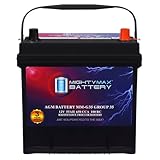
Mighty Max Battery MM-G35 Start and Stop Car BCI Group Size 35 12V 55Ah, 100RC, 650 CCA Rechargeable AGM Car Battery

Interstate Batteries Automotive Battery 12V 41Ah 435CCA (Group Size 51R) SLI AGM Auto Replacement Battery for Cars, SUVs, Sedans, Trucks, Vans (MTX-51R)
Buick Car Battery Installation Guide (DIY or Shop)
- Save radio/seat memory (optional but nice): Some newer Buicks will lose presets or clock settings when power drops. You can plug in a 12V memory saver through the OBDII port or cigarette lighter before disconnecting. If you skip this, you just reprogram later.
- Open hood and locate battery: Most Buicks keep it under the hood with a plastic cover. Some older sedans place it under a brace near the fender. A few GM platforms hide auxiliary/start-stop batteries in the trunk or under rear seats — check first.
- Wear eye protection and gloves: Even sealed AGM can vent under stress, and old flooded batteries can spit acid if cracked.
- Disconnect negative (-) first: Loosen the negative terminal and move it aside so it can’t spring back. Then remove the positive (+). This prevents accidental shorts.
- Remove hold-down bracket: Buick trays usually have a bottom or side clamp. Take it off so you can lift the battery straight out. Batteries are heavy (35–50+ lbs), so lift with both hands.
- Clean terminals and tray: Use a battery terminal brush or a little baking soda/water paste on corrosion (blue/green fuzz). Dry fully.
- Drop in the new battery (correct group size): Make sure the terminals line up exactly where the cables expect them to be. If they don’t, you may have the wrong group number even if the voltage is 12V.
- Reinstall hold-down: The battery cannot move. Buick crossovers see a lot of vibration and bouncing. A loose battery can crack internally, killing it early.
- Reconnect positive (+) first, then negative (-): Tighten firmly. Wiggle each terminal — it should not rotate by hand.
- Start the engine and check the dash: Look for charging voltage around ~14V with the engine idling. Most Buicks will stabilize somewhere in the mid/high 13s once the alternator settles. Clear any “Battery Saver Active” or “Service Battery Charging System” messages if they linger after a few minutes.
- For start-stop Buicks: Some models “learn” battery state of charge. After replacement, take a 15–20 minute mixed drive (city + light highway) so the BCM/alternator can re-baseline the new battery. If you notice odd idle-stop behavior for the first day, that’s normal.
Buick Car Battery Maintenance & Longevity
- Drive long enough: Lots of 2–5 minute trips = undercharged battery. Give the car a 20+ minute drive at least once a week so the alternator can top things off.
- Keep terminals tight and clean: Corroded or loose terminals raise resistance, which freaks out Buick’s voltage monitoring and can cause flickering screens.
- Use an intelligent maintainer if you store the car: If you park your Buick for weeks (vacation home, winter storage), hook up a smart AGM-compatible charger/maintainer. Browse AGM smart maintainers.
- Watch heat: Heat kills. If you live in a hot climate, parking in shade or a garage dramatically improves lifespan vs baking under direct hood temps day after day.
- Don’t deep drain: Leaving interior lights on overnight can permanently weaken even a premium AGM. If it happens, recharge with a proper charger instead of just jump-starting and hoping.
Signs You Need a New Battery
- Slow crank in the morning (engine turns over lazy, especially when cold).
- Start-stop stopped working and never engages anymore, even with long drives. The car may silently disable it when the battery can’t handle it.
- “Battery Saver Active,” “Service Battery Charging System,” dimming headlights at idle, radio rebooting when you roll windows up, random ABS/traction control lights that clear after restart. Low voltage = weird Buick dash gremlins.
- Visible swelling, bulging case, acid smell, or cracked terminals.
- Battery is 4+ years old (AGM) or 3+ years old (flooded) in harsh climates — you’re on borrowed time.

YONHAN Battery Charger 10-Amp 12V and 24V Fully-Automatic Smart Car Battery Charger, Battery Maintainer Trickle Charger, and Battery Desulfator with Temperature Compensation

LotFancy Battery Terminal Cleaners (2 pcs), Plus 12 pcs Battery Terminal Anti-Corrosion Fiber Washers (6 Red & 6 Green) for Car Marine Battery

Tworider 12 pcs Battery terminal cleaner tool kit, battery brush, Wash Cleaning Battery Wire Brush Post Battery Cable Cleaner Dirt Corrosion Brushes Hand Tool Car Battery Cleaner Tool
Contact Buick Customer Service & Support
For official assistance (including warranty questions, TSBs about “Service Charging System,” or to confirm the correct OE group size and spec for your exact VIN), you can contact Buick Customer Assistance via the Buick Owner Center or speak with your local Buick/GMC dealer service department, which you can find using the Buick Locate a Dealer or GMC Certified Service Dealer Locator. They can:
- Run your VIN and tell you the exact original battery group, technology (flooded / EFB / AGM), and cold cranking amps spec.
- Check if your alternator or voltage regulator is throwing stored codes, which can masquerade as a “bad battery.”
- Perform a proper load test and state-of-health test on your current battery.
- Install and register a new AGM or start-stop battery if your model requires BCM relearn or configuration.
You can also ask the dealer parts counter to print out the OE battery spec and warranty terms before you buy. This is extremely useful if you’re deciding between a cheaper flooded option and a pricier AGM in the same group size.
Buick Car Battery FAQs
Can I upgrade from a standard flooded battery to AGM in my Buick?
Yes, upgrading to AGM is generally considered an improvement for most Buick models. AGM (Absorbent Glass Mat) batteries handle higher electrical loads, recover faster after short trips, and tolerate deeper discharge cycles better than basic flooded batteries. This matters in modern Buicks with lots of electronics (infotainment, heated seats, cameras, active safety). The safe rule is: you can upgrade from flooded → AGM, but you should not downgrade from AGM → standard flooded if the vehicle was designed for AGM or Enhanced Flooded Battery (EFB), especially on Buicks equipped with stop/start.
Do I need a special battery for stop/start (idle stop) in my Buick?
If your Buick has automatic engine stop/start, you should be running at least an EFB (Enhanced Flooded Battery) or AGM. Those chemistries are built to survive many more restart cycles per day. Dropping in a cheaper standard flooded battery on a stop/start Buick can lead to weak restarts at traffic lights, dash warnings, and early battery failure. If your Buick came with AGM from the factory, stay with AGM.
How long should a Buick car battery last?
Most Buick batteries last around 3–5 years in normal mixed driving. Lots of short trips, hot-climate idling with A/C on, or heavy accessory load (seat heaters, stereo, lights while parked) can shorten that to 2–3 years. Highway-heavy usage where the alternator keeps the battery fully charged, plus occasional maintenance charging in winter, can stretch life past 5 years. If you’re on your original battery at 4+ years, it’s smart to start testing it yearly.
How much is a Buick car battery?
You’ll typically see about $110–$170 for a basic flooded lead-acid battery in older/non–stop-start Buicks, roughly $150–$220 for EFB in Buicks with idle stop/start, and around $200–$350 for AGM in newer/high-electrical-load models. Larger H6/H7/H8 style cases with higher Cold Cranking Amps (CCA) and longer Reserve Capacity will sit at the top of those ranges, especially if they include a longer free-replacement warranty.
What size battery does my Buick need?
Buicks commonly use European-style case sizes like H5, H6, H7, or North American BCI group sizes depending on model and year. The exact fit (length, height, terminal position) and required CCA rating are listed in your owner’s manual and printed on the current battery label. Always match the physical group size and make sure the positive and negative posts are on the correct sides, because cables in Buick engine bays are usually cut to length with little slack.
When should I replace the battery instead of just recharging it?
Replace the battery if the car cranks slowly in the morning, you repeatedly see voltage under ~12.4V after normal driving, you get random electrical glitches (radio rebooting, dim interior lights, ABS/airbag/check engine warnings that clear after a jump), or you’ve already needed a jump-start more than once in a short period. At that point, the internal plates are usually sulfated or worn and the battery won’t recover long-term.
Does warranty matter when choosing a Buick battery?
Absolutely. Look for a clear free-replacement period of 24–36 months (or longer on premium AGM) instead of only pro-rated credit. A stronger warranty usually means better internal plate construction, heat resistance, and cycle life. That’s important for Buicks with stop/start, heated features, and lots of standby draw because those systems work the battery harder than older, simpler cars.
The Bottom Line
Buick batteries are not “one size fits all.” A 20-year-old Park Avenue can live happily on a good flooded Group 65 with strong CCA, while a newer Enclave with start-stop and rear climate control really needs an AGM Group 48/H6 or Group 94R with high RC or you’ll chase warning lights forever. Always match:
- Correct group size (physical fit + terminal layout)
- Correct tech (flooded vs EFB vs AGM)
- OE or higher CCA and RC
- A warranty you’re comfortable with
Once you’ve got those boxes checked, you can confidently grab something in the right group from a reputable brand. To browse quickly by size, start with:
Group 47 / H5 AGM,
Group 48 / H6 AGM, and
Group 94R AGM.
Those three searches cover the majority of modern Buicks on the road today.
ACDelco Gold 48AGM (88864541) 36 Month Warranty AGM BCI Group 48 Battery
Mighty Max Battery MM-G35 Start and Stop Car BCI Group Size 35 12V 55Ah, 100RC, 650 CCA Rechargeable AGM Car Battery