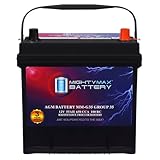
When temperatures plunge, chemical reactions slow and cranking amps drop—exactly when engines are hardest to turn. Picking a battery engineered for winter (higher CCA, low internal resistance, robust grid alloys) is the difference between a confident cold start and a stranded morning. This guide covers what matters in sub-zero conditions, how to size CCA/Ah, and which chemistries and brands hold voltage when it’s frigid.
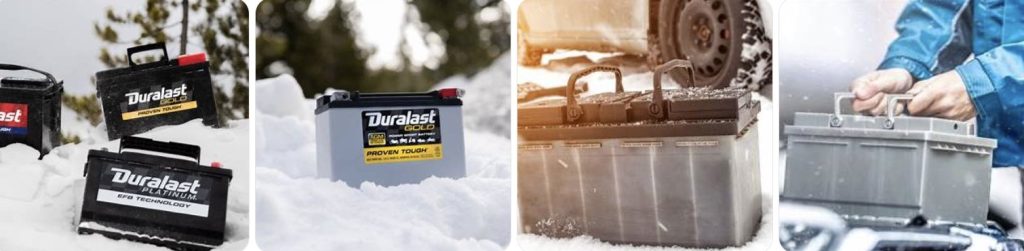
Table of Contents
- Quick Picks (By Vehicle & Climate)
- Cold-Weather Factors That Matter
- Battery Types for Winter (Pros & Cons)
- Cold-Weather Battery Comparison
- Sizing for the Cold: CCA, Ah, RC
- Common Cold-Weather Fitments & Groups
- Best Brands for Cold Climates
- Installation & Setup (Step-by-Step)
- Winter Battery Care & Longevity
- Handy Cold-Weather Accessories
- FAQs
Quick Picks (By Vehicle & Climate)
- Compact & sedans to −10 °C (14 °F): High-CCA AGM in your OEM group size; compare high-CCA AGM options.
- SUVs & crossovers to −20 °C (−4 °F): AGM with strong Reserve Capacity for heaters/HVAC on idle. Shortlist Group H6/48 AGM and H7/94R AGM.
- Trucks & diesels to −30 °C (−22 °F): Big-case AGM (Group 65/31/49) or dual-battery diesel setups. Browse Group 65 AGM, Group 31 AGM.
- Start-stop vehicles: EFB (budget) or AGM (best) with start-stop profile. Compare EFB and AGM start-stop batteries.
- Extreme winters < −30 °C / northern trips: Premium AGM with the highest CCA in class, plus a smart maintainer if the car sits.

OPTIMA® Batteries High Performance 35 REDTOP® Sealed AGM Battery

OPTIMA Batteries High Performance 34/78 RedTop Sealed AGM Car, Truck, and SUV Starting Battery, 800 CCA, Dual SAE and GM Terminals, Maintenance Free, Versitile Mounting
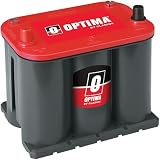
OPTIMA® Batteries High Performance 25 REDTOP® Sealed AGM Battery
Cold-Weather Factors That Matter
-
CCA (Cold Cranking Amps)
- Represents starting current at −18 °C (0 °F). In winter, aim to meet or exceed OEM CCA by 50–100 if space permits.
- See high-CCA AGM lists.
-
Reserve Capacity (RC)
- Minutes a battery can sustain 25A at 80 °F. More RC = longer support for lights/defrosters/HVAC during idle.
-
Internal resistance & plate design
- AGM’s tight mat separators lower resistance, improving cold cranking and recovery between attempts.
-
Chemistry & temperature tolerance
- AGM handles cold better than flooded. Lithium (LiFePO₄) needs warm-up or special BMS below ~0 °C.
- If choosing lithium for weight, ensure low-temp BMS.
-
Charging system health
- Weak alternators exaggerate winter issues. Keep a battery/alternator tester on hand.
-
Parasitic loads
- Dash cams/telematics drain faster in the cold. Consider a maintainer if you park outside.
Battery Types for Winter (Pros & Cons)
| Type | Pros in Cold | Trade-offs | Best Use |
|---|---|---|---|
| AGM (Absorbent Glass Mat) — browse AGM | High CCA, low resistance, good recovery; leak-proof; vibration resistant. | Heavier, pricier than flooded; prefers proper charging voltage. | Most winter drivers; start-stop; SUVs/trucks with heaters and big loads. |
| EFB (Enhanced Flooded) — shop EFB | Better cycling than standard flooded; decent cold performance for the price. | Lower CCA per size vs AGM; voltage sags sooner under heavy loads. | Budget start-stop or mild winters down to ~−10 °C. |
| Flooded/SMF — see flooded options | Lowest cost; readily available. | More voltage sag in cold; lower CCA; potential acid spill if flipped. | Light winters, budget replacements. |
| LiFePO₄ (12.8V) — lithium with low-temp BMS | High power/weight; flat voltage; fast recharge. | Must warm or use self-heating BMS below ~0 °C; charging limits in deep cold. | Weight-sensitive builds, extreme duty with proper BMS/DC-DC charging. |
Cold-Weather Battery Comparison
| Metric | AGM | EFB | Flooded | LiFePO₄* |
|---|---|---|---|---|
| Cranking at −18 °C | Excellent | Good | Fair | Excellent (if warm/BMS allows) |
| Voltage stability for heaters/HVAC | Very good | Good | Fair | Very good |
| Tolerance to repeated cold starts | High | Medium-High | Medium | High (within BMS limits) |
| Cost | $$–$$$ | $$ | $ | $$$ |
| Good picks | H7/94R AGM | Start-stop EFB | Group 35 flooded | Self-heating LiFePO₄ |
OPTIMA® Batteries High Performance 35 REDTOP® Sealed AGM Battery
OPTIMA Batteries High Performance 34/78 RedTop Sealed AGM Car, Truck, and SUV Starting Battery, 800 CCA, Dual SAE and GM Terminals, Maintenance Free, Versitile Mounting
OPTIMA® Batteries High Performance 25 REDTOP® Sealed AGM Battery
Sizing for the Cold: CCA, Ah, RC
-
1) Hit the right CCA
- Target OEM CCA + 50–100 where fitment allows. High-compression/diesel may need 800–1000+ CCA in large groups.
- Search by group with high CCA: Group 35 AGM, Group 65 AGM, Group 49/H8 AGM.
-
2) Don’t ignore RC/Ah
- More RC sustains blowers/defrosters at idle and supports repeated starts.
- If you run heated seats/steering and short trips, consider higher-RC models: high-reserve AGM.
-
3) Climate multiplier (rule-of-thumb)
- Mild (≥ −10 °C): OEM CCA is fine.
- Cold (−20 to −10 °C): OEM + ~10–15% CCA.
- Severe (< −20 °C): OEM + ~20–30% CCA, or move up one group size if it fits.
-
4) Start-stop owners
- Stick with EFB/AGM as equipped—do not downgrade. Compare AGM start-stop.
Common Cold-Weather Fitments & Groups
| Vehicle Class | Common Group | Winter Note | Shop |
|---|---|---|---|
| Compact/Small sedan | 35, 47(H5), 51R | Choose AGM if you run lots of accessories at idle. | Group 35 AGM • H5/47 AGM • 51R AGM |
| Midsize/SUV | 48(H6), 49(H8), 94R(H7) | High CCA + RC helps long defrost cycles. | H6/48 AGM • H7/94R AGM • H8/49 AGM |
| Truck/Diesel | 65, 31, 49(H8) | Consider dual batteries; check cable condition. | Group 65 AGM • Group 31 AGM |
| Start-Stop (many modern cars) | EFB/AGM in OEM group | Replace like-for-like or upgrade EFB → AGM. | EFB • AGM |
Best Brands for Cold Climates
- Premium AGM lines: Known for high CCA and stout RC across H6/H7/H8 groups—compare H7/94R high-CCA and H8/49 high-CCA.
- Value AGM: Solid winter performance without premium pricing—see Group 35 AGM value.
- EFB Start-Stop ranges: Good budget choice if you must stick with EFB—browse EFB start-stop.
- LiFePO₄ (low-temp BMS): For weight-sensitive builds, ensure a heated/low-temp BMS—compare self-heating lithium.
OPTIMA® Batteries High Performance 35 REDTOP® Sealed AGM Battery
OPTIMA Batteries High Performance 34/78 RedTop Sealed AGM Car, Truck, and SUV Starting Battery, 800 CCA, Dual SAE and GM Terminals, Maintenance Free, Versitile Mounting
OPTIMA® Batteries High Performance 25 REDTOP® Sealed AGM Battery
Installation & Setup (Step-by-Step)
- Verify fitment & polarity: Check group size, terminal orientation, hold-down style, and cable reach.
- Test the old system: Before removal, note resting voltage and run a quick battery/charging test.
- Disconnect safely: Negative clamp off first, then positive. Remove old battery; clean tray.
- Prep terminals: Wire-brush corrosion; add anti-corrosion washers.
- Install new battery: Seat firmly, attach hold-down, connect positive then negative, torque to spec.
- Register (if needed): Many start-stop cars need battery registration/reset; use an OBD scanner with registration.
- Confirm charge voltage: Engine running, expect ~13.8–14.6V. Low/high indicates alternator or sensor issues.
- Cold-start test: After first night outside, confirm cranking speed and voltage drop.
Winter Battery Care & Longevity
- Keep it topped: Short commuters should use a smart maintainer weekly.
- Limit parasitics: Unplug OBD dongles/dash cams or wire to ignition via add-a-fuse.
- Insulate wisely: In very cold regions, a battery blanket or block heater helps morning starts.
- Clean & tight: Winter expansion/contraction loosens clamps—re-torque after a week.
- Test quarterly: Check SOH/SOC before deep winter with a CCA tester.
Handy Cold-Weather Accessories
- Jump starter: Carry a compact 2000A pack for emergencies—see 2000A jump starters.
- Maintainer with cold mode: Keeps AGM healthy in freezing temps—browse cold-mode chargers.
- Terminal protection: Reduce corrosion with terminal protectors.
FAQs
How much extra CCA do I need for winter?
Many drivers benefit from +50–100 CCA above OEM in cold regions; severe winters can justify +20–30% if it fits your tray.
Is AGM always better than flooded in the cold?
For most cases, yes—AGM offers higher CCA per size and better voltage stability at low temps.
Do I need a bigger alternator for winter?
Usually no, but frequent short trips with high accessory loads can keep SOC low. A maintainer offsets that.
Can I use LiFePO₄ in freezing temperatures?
Only if the pack/BMS supports low-temp operation or self-heating. Otherwise you must warm the pack before charging/starting.
Why does my new battery still crank slowly in the morning?
Cold oil is thicker and parasitic loads may have drained SOC overnight. Verify alternator output and consider a maintainer or battery blanket.