
Whether you daily a GAC GS4, drive the bigger GS8 with tons of electronics, or run a GA4/GA6 as a fuel-saving commuter, the battery you choose decides how confidently the car cranks on hot mornings, how stable your voltage is with headlights + AC at idle, and how long the start‑stop system (if equipped) lasts before throwing a warning light. Below is a complete buyer’s playbook: battery chemistries (Flooded vs EFB vs AGM), quick picks by use case, model-specific shopping notes for popular GAC sedans and SUVs, and DIY install / care. When you’re ready to compare live prices, you can jump straight to AGM automotive batteries, EFB start-stop batteries, or compact Asian/JIS sizes like 55D23L / 55D23R.
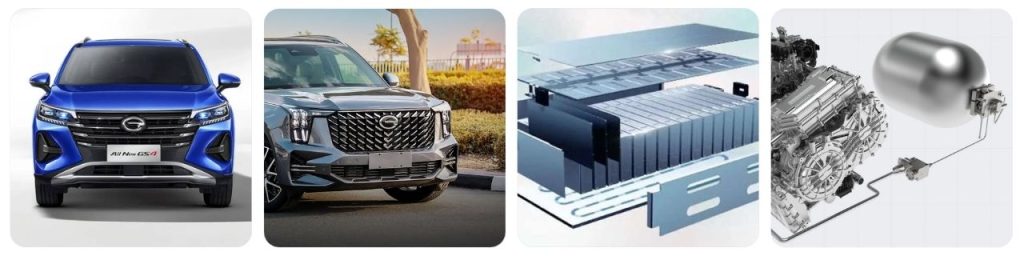
Table of Contents
- Quick Picks for GAC Owners
- Top Battery Types for GACs (What to Choose & Why)
- GAC Model-Specific Buying Tips
- GAC Battery Fitment Cheat Sheet (Most-Common Sizes)
- Spec Targets: CCA, RC, and Warranty
- Best Car Battery Brands for GAC & Where-to-Buy
- GAC Car Battery Installation Guide (DIY or Shop)
- GAC Car Battery Maintenance & Longevity
- Contact GAC Customer Service & Support
Quick Picks for GAC Owners (By Use Case)
- Daily GS4 / GA4 commuter, no start-stop: A quality Flooded (a.k.a. standard lead-acid) or EFB with decent Reserve Capacity (RC). Look at common Asian/JIS 55D23 or 60B24 sizes. Browse 55D23L batteries. Typical budget: ~US$100–$180 Flooded / ~$150–$220 EFB
- GAC with idle start-stop (Eco idle / smart stop): You need at least EFB (good) and ideally AGM (best). Do not downgrade from AGM/EFB to a normal flooded battery or you’ll shorten battery life and possibly trigger start-stop errors. See EFB start-stop batteries and AGM start-stop upgrades. ~US$160–$320
- Premium GS8 / EMKOO / EMPOW with lots of electronics & short-trip city use: AGM. Absorbent Glass Mat batteries accept charge faster from the alternator, tolerate deep cycling from power-hungry infotainment, and resist vibration. Check AGM options. ~US$200–$350
- Hot climate / stop-and-go AC all day: Favor higher Reserve Capacity and heat-tolerant plates. EFB and AGM generally handle heat and repeated partial discharges better than basic flooded. Compare high-RC EFB batteries.
- Cold climate / winter starts: Prioritize CCA (Cold Cranking Amps). AGM tends to outperform regular flooded at low temps. Look at high-CCA AGM batteries.
- Performance / audio upgrades (GS5, GS8): Go AGM with a high RC spec or consider a dual-battery audio setup (main + auxiliary AGM). High RC helps if you run subwoofers or park with the sound system on. See AGM audio-friendly batteries.
- Backup / emergency spare for road trips: A compact, lightweight lithium jump starter is cheaper and easier to carry than a second physical battery. Browse portable jump starters. ~US$60–$150
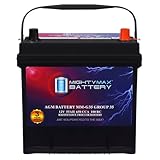
Mighty Max Battery MM-G35 Start and Stop Car BCI Group Size 35 12V 55Ah, 100RC, 650 CCA Rechargeable AGM Car Battery

Autocessking H5 Group Size 47 Start and Stop AGM Automotive Battery, 12V 60Ah, 680 CCA, 100 RC Rechargeable Car Battery

OPTIMA Batteries High Performance 34/78 RedTop Sealed AGM Car, Truck, and SUV Starting Battery, 800 CCA, Dual SAE and GM Terminals, Maintenance Free, Versitile Mounting
Top Battery Types for GACs (What to Choose & Why)
| Type | How it works | Best for | Pros | Cons | Price Range |
|---|---|---|---|---|---|
| Flooded Lead-Acid (a.k.a. “wet cell”) | Traditional liquid electrolyte. Standard in many entry-level GA/GS trims without start-stop. | Older / base GAC models, normal driving, mild climates. | Lowest cost; easy to find almost anywhere. You can shop generic sizes like 55D23L. | Weak under heavy electronics load; hates deep discharge; shorter lifespan if you do short trips only. | ~US$90–$180 |
| EFB (Enhanced Flooded Battery) | Upgraded flooded design with stronger plates and improved charge acceptance. Built for light start-stop duty. | Mid/high trims of GA4/GA6/GS4 that use idle stop-start for fuel savings. | Better cycle life than basic flooded; handles frequent restarting in traffic; usually plug-and-play upgrade. | Costs more than flooded; still not as deep-cycle-tolerant as AGM. | ~US$150–$240 |
| AGM (Absorbent Glass Mat) | Electrolyte is held in fiberglass mats. Sealed, spill-resistant, vibration-resistant, high power output. | GS8 / EMKOO / EMPOW / tech-heavy trims with lots of electronics, high audio demand, or harsh climate. | Excellent cold-crank; high Reserve Capacity; survives deep discharge better; recharges fast after short city hops. Browse AGM start-stop. | Heavier and usually the most expensive; some charging systems expect AGM and may over/undercharge cheaper flooded replacements. | ~US$200–$350 |
| 12V Auxiliary / Backup Packs (Lithium jump boxes) | Not a full-time battery. Portable lithium booster you keep in the trunk. | Road trips, remote areas, winter backup. | Let you self-jump even if the main battery is dead; also charge phones, tire inflators, etc. See compact jump starters. | Doesn’t replace a weak battery long-term; needs to be topped up every few months. | ~US$60–$150 |
GAC Model-Specific Buying Tips
- GAC GS4 / GS4 Plus (compact SUV): Most trims without advanced start-stop accept a standard flooded or EFB in a JIS-style case (often 55D23L or similar). Expect ~US$120–$200. If your dash clearly shows an “idle stop” function and it frequently shuts the engine off at traffic lights, lean toward EFB or AGM ~US$170–$260 instead of basic flooded. Check terminal orientation: many GAC 1.5T engines use left-positive (“L”).
- GAC GS5 / GS7 / GS8 (larger SUVs): Heavier electrical load: bigger infotainment screens, ambient lighting, power tailgate, more sensors. These benefit from higher Reserve Capacity and robust vibration resistance, so AGM is usually the safe bet. AGM also cranks better on cold mornings with a 2.0T engine. Budget ~US$220–$320 for a quality AGM. Browse large SUV AGM batteries.
- GAC GA4 / GA6 (sedans): Daily commuters can typically run a mid-size flooded or EFB case size similar to 46B24 / 55D23. If you sit in traffic with AC and headlights on, pay attention to Reserve Capacity (RC) and go EFB. You’ll usually land in the US$130–$200 range. See 46B24L EFB batteries.
- GAC EMPOW / EMKOO (sporty compact / crossover): These newer models lean on electronics, drive modes, and often idle start-stop to hit fuel economy targets. They’re happiest on EFB minimum, AGM ideal. If you hear the cooling fan and infotainment still blasting after engine-off in traffic, that’s RC demand: choose higher RC, not just higher CCA. ~US$180–$300 for a solid AGM. Check compact AGM start-stop batteries.
- Older/imported GAC models or taxis / ride-hailing use: If you’re doing constant short trips, night driving, and heavy AC, you’re cycling the battery hard. Upgrading from basic flooded to EFB (for about +US$40–$60 more) can literally double usable life. That upgrade usually pays for itself in downtime avoided.
GAC Battery Fitment Cheat Sheet (Most-Common Sizes)
| GAC Model | Typical 12V Battery Group / JIS Size | Polarity / Terminals | Factory Tech | Notes |
|---|---|---|---|---|
| GA4 / GA6 (sedan) | 46B24L / 55D23L style (similar to Group 35 length-wise) | Often “L” (positive on left when facing posts) | Flooded or EFB (start-stop trims) | Measure height clearance under hood before choosing taller aftermarket AGM. |
| GS3 / GS4 / GS4 Plus | 55D23L / 60B24L class | Left-positive common, but verify; some export specs use R | Flooded on base, EFB on Eco start-stop | Start-stop icon on dash = do not cheap out. Match EFB/AGM. |
| GS5 | Similar mid-size JIS battery (55D23 / 60B24 or equivalent) | Check cable reach before swapping orientation | EFB in many trims | Higher RC helps if you idle with headlights + AC + phone charging. |
| GS7 / GS8 | Larger case (often close to Group 24F / 27F / DIN H6-H7 equivalents depending on market) | Standard top posts | EFB or AGM from factory in higher trims | These SUVs love AGM for stability during accessory load and cold starts on 2.0T engines. |
| EMPOW / EMKOO | Compact start-stop-friendly size (often 46B24 / 55D23 class) | Usually left-positive | EFB or AGM | Go AGM if you drive mostly short inner-city hops; it recharges faster. |
Spec Targets: CCA, RC, and Warranty
RC: Reserve Capacity
Tech: Flooded / EFB / AGM
- CCA (Cold Cranking Amps): Match or exceed your OEM CCA. If you live in cold winters, aim for +50 to +100 CCA above stock for easier morning starts.
- RC (Reserve Capacity): RC matters for GAC SUVs that sit idling with headlights, high-beam DRLs, AC blower on high, charging phones, and using infotainment. Higher RC means the voltage stays stable without dipping into “battery low” warnings.
- Battery tech: If the car came with EFB or AGM (often true for start-stop GAC trims), stay with that grade or upgrade to AGM. Never go backwards to a standard flooded battery; you’ll stress it out fast and may lose start-stop function.
- Warranty: Look for ~36 months free replacement (or the best local equivalent). Some no-name batteries advertise long “pro-rated” warranties that are mostly marketing. Real coverage = free replacement, not partial credit.
- Terminal orientation: Many GAC 1.5T engines use left-positive layouts. Accidentally buying the mirror image (right-positive) can make your cables too short to reach safely. Always compare before checkout.
Best Car Battery Brands for GAC & Where-to-Buy
| Brand / Line | Why People Choose It | Good For | Where to Browse |
|---|---|---|---|
| AGM premium lines (Exide AGM, Bosch AGM, etc.) | High CCA, great Reserve Capacity, sealed design. | GS8 / EMKOO / EMPOW with lots of electronics, cold climates, heavy audio use. | See AGM batteries |
| EFB start-stop lines (Varta Blue Dynamic EFB, etc.) | Tuned for frequent restart cycles in traffic. Often OE-style in modern start-stop GAC sedans/SUVs. | GA4 / GA6 / GS4 trims with idle stop-start fuel-saving mode. | Shop EFB |
| Standard Flooded / Lead-Acid (regional brands) | Lowest up-front cost and easy availability almost everywhere. | Older/non-start-stop GAC models where you just need reliable cranking. | Common 55D23 sizes |
| Portable lithium jump starters (NOCO, Tacklife, etc.) | Pocket-sized emergency backup that can jump a dead battery by itself. Also USB power bank. | Road trips, winter driving, off-hours ride-hailing shifts. | Jump starter search |
- Local parts stores / service centers: Fast testing + installation, and if something goes wrong under warranty you can walk back in physically.
- Online (Amazon, etc.): Great for comparing AGM vs EFB vs Flooded across brands and checking real-world reviews. You can also look at dimensions (length × width × height) and terminal layout photos before buying. Example searches: compact AGM battery, Asian/JIS case batteries.
- Dealer / authorized GAC service: Usually the most expensive, but you’ll get the exact OE spec (correct polarity, venting, and start-stop rating) plus they can reset any battery-monitoring sensor if your model uses one.
How to Check Freshness & Authenticity
- Date code: Every battery has a production code (month/year). Pick the newest build you can. A battery that sat on a hot shelf for 10+ months is already aging.
- Factory seal / caps: Flooded batteries often ship with covers or caps. Avoid anything that looks refilled, resealed, or leaked acid residue near the posts.
- Brand labeling & QR: Major brands laser-print batch info and often include scannable authenticity codes. Sketchy stickers or misspelled labels are a red flag.
- Voltage check: A healthy new 12V lead-acid battery at rest should read around 12.5–12.8V. If your seller will test it in front of you, even better.
Car Battery Warranty Tips
- Free replacement period: This is the real value. A “36-month free replacement” promise means if it dies in month 20, you walk out with a new one for $0.
- Pro‑rated after: After the free period, many brands only give partial credit. Ask how that math works; sometimes it’s barely worth the hassle.
- Paperwork / receipt: Keep a photo of your invoice and the battery serial in your phone. Warranty is useless if you can’t prove purchase date.
- Installation note: Some sellers require they install/test the battery to activate warranty. Let them do it; it protects you later.

ACDelco Gold 48AGM (88864541) 36 Month Warranty AGM BCI Group 48 Battery
Mighty Max Battery MM-G35 Start and Stop Car BCI Group Size 35 12V 55Ah, 100RC, 650 CCA Rechargeable AGM Car Battery

Interstate Batteries Automotive Battery 12V 41Ah 435CCA (Group Size 51R) SLI AGM Auto Replacement Battery for Cars, SUVs, Sedans, Trucks, Vans (MTX-51R)
GAC Car Battery Installation Guide (DIY or Shop)
- Turn engine OFF, remove key/fob from cabin, switch all lights and accessories off. Safety first.
- Open the hood and locate the battery. Many GAC models have it front-left of the engine bay under a small plastic cover.
- Take a photo of the battery before touching anything. Capture cable routing, tie-down bracket, and any small breather/vent tube if present (AGM is sealed, flooded may vent).
- Disconnect negative (-) terminal first. Loosen the clamp bolt and wiggle it off. Tuck it aside so it cannot spring back and touch the post.
- Disconnect positive (+) terminal second. Expect a red cover and sometimes fuse links or sensors attached.
- Undo the battery hold-down / bracket. Keep all hardware in a cup so you don’t lose it in the engine bay.
- Lift the old battery straight up. They’re heavy; use both hands and keep your back straight.
- Drop in the new battery. Make sure the posts are oriented exactly like the original (left-positive vs right-positive matters). If it doesn’t sit flat in the tray, you probably bought the wrong case size/height.
- Reinstall the hold-down bracket snugly. The battery should not slide or rock. GAC SUVs in particular create a lot of vibration over rough roads.
- Reconnect positive (+) first, then negative (-) last. Tight = secure, but don’t overtighten and crack the clamp.
- If your model uses intelligent battery sensors or a start-stop system, some trims may benefit from a “battery registration” or ECU reset so charging and idle-stop behave correctly. Dealers and higher-end shops can do this with a scan tool. It’s optional in some trims but required in others.
- Start the car. Watch for abnormal warning lights (battery/charging symbol, start-stop error). If everything is normal and cranking sounds strong, you’re good.
GAC Car Battery Maintenance & Longevity
- Drive long enough to recharge: Repeated 5-minute hops (cold start, short drive, engine off) starve the battery. Give it a solid 20–30 minute highway or outer-ring-road run at least once a week so the alternator can top it off.
- Keep terminals clean: White/blue fuzz around the posts = corrosion = resistance = hard starts. Brush it off gently and apply dielectric grease or a terminal protector ring.
- Secure the hold-down: A loose battery vibrates, sheds active material from the plates, and dies early. On SUVs like GS8 this is critical.
- Watch voltage at rest: A healthy resting battery (engine off overnight) should usually read above ~12.4V. If you’re below that consistently, you may have a parasitic drain or a failing cell.
- Use a maintainer if parked long-term: If you won’t drive for 2+ weeks, connect a smart trickle charger / maintainer rated for AGM or EFB. See AGM-friendly maintainers.
Signs You Need a New Battery
- Slow crank or “rrrrr… rrr…” sound in the morning, especially after the car sat overnight.
- Headlights noticeably dim at idle but brighten when you rev slightly.
- Start-stop disabled and the dash says the function is unavailable / charging. The system often turns itself off when the battery can’t handle repeated restarts anymore.
- Random infotainment or sensor glitches after startup that disappear after driving a few minutes. Low voltage at start can confuse modules.
- The battery case is bloated, leaking, or smells like rotten eggs (sulfur). Replace immediately.

YONHAN Battery Charger 10-Amp 12V and 24V Fully-Automatic Smart Car Battery Charger, Battery Maintainer Trickle Charger, and Battery Desulfator with Temperature Compensation

LotFancy Battery Terminal Cleaners (2 pcs), Plus 12 pcs Battery Terminal Anti-Corrosion Fiber Washers (6 Red & 6 Green) for Car Marine Battery

Tworider 12 pcs Battery terminal cleaner tool kit, battery brush, Wash Cleaning Battery Wire Brush Post Battery Cable Cleaner Dirt Corrosion Brushes Hand Tool Car Battery Cleaner Tool
Contact GAC Customer Service & Support
- Your GS4 / GS8 / GA6 shows persistent battery, alternator, or start-stop warning lights after installing a new battery of the correct spec.
- Your smart key / push-button start is acting weird even after a fresh battery and healthy key fob battery.
- You suspect the vehicle needs a battery monitoring system reset or software update.
- Check the official GAC Motor / Trumpchi global site for regional hotline numbers and email support. Start at gac-motor.com and look for “After Sales” or “Customer Care” in your market.
- Use the official dealer / service center locator on GAC Motor’s site to find an authorized workshop. The “Find a Dealer” / “Dealer Network” tools are linked from the global site at GAC Motor. Dealers can scan the car for DTCs (diagnostic trouble codes) and perform battery registration on newer start-stop systems.
- Most regional distributors also list WhatsApp / WeChat service contacts and 24/7 roadside assistance numbers on their local landing pages, accessible via the country selector on gac-motor.com. Those lines can arrange towing or jump-start help if you’re stranded.
SGAC Car Battery FAQs
Can I upgrade from a standard flooded battery to AGM in my SGAC?
Yes, in most cases AGM is an upgrade. AGM batteries handle more electrical load, recharge faster, and tolerate deep discharge better than conventional flooded batteries. The important rule is: you can move from flooded → AGM, but you should not move from AGM → basic flooded on vehicles that rely on high electrical stability (start-stop systems, lots of accessories).
Do I need a special battery for start-stop in my SGAC?
If your SGAC uses start-stop or an energy management / idle cutoff system, you should use EFB (Enhanced Flooded Battery) at minimum, or AGM (Absorbent Glass Mat) for best durability. Downgrading to a cheaper standard flooded battery can shorten lifespan dramatically and may cause warning lights or weak restarts in traffic.
How long should a SGAC car battery last?
Most SGAC batteries last about 3–5 years under normal driving. Lots of short trips, extreme heat, or heavy accessory use (A/C at idle, sound system, lights) can push that closer to 2–3 years. Highway-driven vehicles that get full alternator recharge and occasional maintenance charging can see 5+ years.
How much is a SGAC car battery?
Typical pricing ranges from about $90–$180 for a standard flooded battery, $140–$250 for EFB (common in start-stop systems), and $180–$350 for AGM. Larger case sizes with higher Cold Cranking Amps (CCA) and longer Reserve Capacity tend to sit at the higher end of those ranges.
What size battery does my SGAC need?
You should match the original physical size/group code (for example: 063, 096, H6, H7, etc.), make sure the terminals are on the correct side, and meet or exceed the factory Cold Cranking Amps (CCA). The easiest way to confirm is to check the battery label currently in the car or the owner’s manual before you buy.
When should I replace the battery instead of just recharging it?
If the car cranks slowly after sitting overnight, the voltage drops below ~12.4V repeatedly even after a long drive, or you’re seeing random electrical glitches (radio resets, warning lights, dim interior lights on startup), it’s usually more cost-effective to replace than to keep jump-starting and nursing a failing battery.
Does warranty matter when choosing a SGAC battery?
Yes. Look for a clear free-replacement period (often 24–36 months) instead of only pro-rated coverage. A stronger warranty usually signals better internal build quality, higher cycle life, and better plate stability under heat and vibration.
ACDelco Gold 48AGM (88864541) 36 Month Warranty AGM BCI Group 48 Battery
Mighty Max Battery MM-G35 Start and Stop Car BCI Group Size 35 12V 55Ah, 100RC, 650 CCA Rechargeable AGM Car Battery