
Whether you daily an Emira V6, track an Exige Cup, or keep a 90s Esprit V8 as weekend royalty, the wrong battery will ruin your day faster than a check engine light. Lotus cars are light, low, and vibration-prone — and many sit on tenders more than they’re actually driven. That means your battery choice matters more than it would in a Camry. This guide walks you through Lotus-friendly battery types (AGM vs flooded vs lightweight racing), ideal sizes, what fits specific Lotus models, what to look for in Cold Cranking Amps (CCA) and Reserve Capacity (RC), plus how to install and care for the new battery without tripping ABS/Airbag/Immobilizer faults. When you’re ready to shop, you can jump straight into searches for Group 26R AGM (common upgrade for Elise/Exige), H5 / Group 47 AGM (Evora/Emira style), and lightweight LiFePO4 racing batteries for track-only setups.
Table of Contents
- Quick Picks for Lotus Owners (By Use Case)
- Top Battery Types for Lotus (What to Choose & Why)
- Lotus Model-Specific Buying Tips
- Lotus Battery Fitment Cheat Sheet (Most-Common Sizes)
- Spec Targets: CCA, RC, and Warranty
- Best Car Battery Brands for Lotus & Where-to-Buy
- Lotus Car Battery Installation Guide (DIY or Shop)
- Lotus Car Battery Maintenance & Longevity
- Signs You Need a New Battery
- Contact Lotus Customer Service & Support
Quick Picks for Lotus Owners (By Use Case)
- Street-driven Elise / Exige (2005–2011, Toyota 2ZZ): Sealed AGM in Group 26R or similar compact size. Handles heat + vibration, low spill risk in the rear clam. Browse Group 26R AGM batteries. ~$200–$320
- Evora / Evora S / Evora 400 / GT (front trunk battery): Mid-size AGM H5 / Group 47 with good Reserve Capacity to feed electronics and HVAC. See AGM Group 47 / H5. ~$220–$350
- Emira V6 / i4 (with lots of infotainment draw, short-trip urban use): Premium AGM only. Avoid cheap flooded batteries; the Emira’s control modules are sensitive to voltage dips. Performance H5 AGM options. ~$260–$400
- Track-day lightweight build (Elise Cup / Exige Cup / 2-Eleven): Small-form LiFePO4 racing battery with high cranking and very low weight. Only do this if you accept reduced cold starting and no freezing protection. Motorsport LiFePO4. ~$250–$500
- Classic Esprit (carb/Turbo) that sits for weeks: High-CCA, high-Reserve flooded or AGM with a battery tender lead pre-installed. See Group 34 AGM choices, and pair with a quick-connect tender pigtail. ~$200–$330 (+$25 tender lead)
- Cold-weather Lotus ownership (below freezing starts): Pick the highest CCA AGM that still physically fits your tray. High CCA = easier first crank when oil is thick. High-CCA AGM. ~$250–$380
- Lotus stored long-term / collector car: You care more about self-discharge rate than ultimate cranking. AGM wins because it holds voltage longer in storage. Keep it on a smart maintainer. AGM trickle chargers. ~$35–$80 for charger

Mighty Max Battery MM-H5 Start and Stop Car BCI Group Size 47 12V 60 AH, 100RC, 680 CCA Rechargeable AGM Car Battery

Mighty Max Battery MM-H6 Start and Stop Car BCI Group Size 48 12V 70 AH, 120RC, 760 CCA Rechargeable AGM Car Battery

BCI Group 48 Car Battery, 12V 70Ah Size H6 Automotive Battery Premium Maintenance Free AGM Batteries, 760CCA, 120RC, 36 Months Warranty
Top Battery Types for Lotus (What to Choose & Why)
| Type | Best For | Why It Matters on a Lotus | Estimated Cost | Shop |
|---|---|---|---|---|
| Flooded Lead-Acid (a.k.a. “wet cell”) | Older Lotus (Esprit carb/Turbo, early Esprit SE) that doesn’t have heavy electronics | Cheap, available almost anywhere. Adequate cranking if you drive weekly. BUT: can vent acid and doesn’t love high vibration or long storage. | ~$120–$200 | Group 34 flooded |
| AGM (Absorbent Glass Mat) | Elise/Exige/Exige Cup, Evora/GT, Emira, track cars that still see street duty | Spill-proof, sealed, handles heat and high G-load, better vibration resistance in a stiff chassis, stronger Reserve Capacity to keep ECUs, alarm, immobilizer, and HVAC happy. Better cold starts than flooded at same size. | ~$200–$400 | Performance AGM picks |
| EFB (Enhanced Flooded Battery) | Cars with light stop/start or higher electrical load but not full luxury electronics | Beefed-up flooded design: better cycle life than basic flooded, more tolerant of partial state-of-charge. Not as robust as AGM under hard cornering or long storage, but cheaper than AGM. | ~$160–$260 | See EFB options |
| LiFePO4 / Lithium Racing | Dedicated track Lotus (Elise Cup R, Exige Cup R, time-attack builds) | Huge weight drop: you can save 20+ lbs in the tail of the car, which actually changes handling balance. Insanely fast recovery and cranking, but hates cold weather and needs a compatible charger. Not ideal for street in winter. | ~$250–$500+ | Lightweight race batteries |
Lotus Model-Specific Buying Tips
- Elise (Series 2 / 111R / Federal Elise 2005–2011): Space is tight behind the rear panel and heat from the engine bay is real. Owners commonly step up to a compact Group 26R AGM for reliability. Expect ~$220–$300. You want good CCA (400+ if possible) and sealed construction so it doesn’t vent near the clam. Shop 26R AGM.
- Exige S / Cup: Similar story to Elise, but track abuse is higher. AGM is basically mandatory. Some owners go even smaller/lighter for events (LiFePO4 race style), then swap back to AGM for street. Budget $250–$400 for a high-quality AGM so your data logger, oil pump, fans, and intercooler pump don’t brown out.
- Evora / Evora S / 400 / GT: You have more electronics (infotainment, HVAC, power steering pump draw, etc.), and the battery sits in a semi-enclosed area. Go for AGM H5 / Group 47 with strong Reserve Capacity so voltage doesn’t crash while idling in traffic. Typical spend: $220–$350. Browse H5 AGM.
- Emira (i4 AMG / V6 manual & auto): The Emira is more modern and more ECU-heavy than earlier Lotus cars. Low voltage during cranking can throw multiple fault codes. Use a premium AGM only, sized equivalent to H5/H6 depending on region spec. Do not downgrade to a bargain flooded battery just to save money. ~$260–$400.
- Esprit (GI-GT3-V8 era): The Esprit’s battery can be in cramped compartments and often lives a “sit for 2 weeks, drive for 30 minutes” life. High CCA helps crank older high-compression engines, but Reserve Capacity is just as critical for headlights, fans, and A/C at idle. Many Esprit owners hardwire a SAE pigtail to a smart maintainer so the car is always topped up. Expect $180–$300 for a solid AGM Group 34/34R. See Group 34 AGM.
- 2-Eleven / 3-Eleven / track specials: You’re chasing weight, you’re OK with compromises, and you probably trailer the car. Lightweight LiFePO4 makes sense here. Budget $300–$500, but remember: many lithium race batteries have limited cold weather cranking and can be permanently damaged by deep discharge or freezing temps. Motorsport lithium.
Lotus Battery Fitment Cheat Sheet (Most-Common Sizes)
| Model | Common Battery Group / Size | Tech Most Owners Use | Notes |
|---|---|---|---|
| Elise (2005–2011, 2ZZ) | Group 26R / similar compact footprint | AGM | Rear-mounted, high heat. Sealed AGM reduces spill/corrosion and tolerates track vibration. |
| Exige S / Exige Cup (S2/S3) | Group 26R or lightweight motorsport LiFePO4 (custom bracket) | AGM / LiFePO4 (track only) | Track cars sometimes downsize to shave weight, but keep an AGM for street legality. |
| Evora / Evora S / 400 / GT | H5 / Group 47 (a.k.a. 47-H5) | AGM | Needs decent RC for accessories and electronics. Going cheap often leads to low-voltage warnings. |
| Emira (i4 & V6) | H5 / H6 style AGM (region-dependent) | AGM only | Voltage-sensitive ECUs; don’t install budget flooded batteries just because they “fit.” |
| Esprit (Turbo / V8) | Group 34 / 34R | AGM (or high-quality flooded) | Older wiring and fans pull a lot at idle. High CCA + solid RC is key; add a maintainer lead. |
| 2-Eleven / 3-Eleven | Lightweight motorsport battery | LiFePO4 racing | Weight savings is the goal. Not recommended for winter starts or long storage without a tender. |
Spec Targets: CCA, RC, and Warranty
CCA: Cold Cranking Amps
RC: Reserve Capacity
Tech: Flooded / EFB / AGM / LiFePO4
- CCA (Cold Cranking Amps): Match or beat the OEM rating. Lotus engines with higher compression (Exige S supercharged, Esprit V8) love extra cranking power. In cold climates, aim for +50 to +100 CCA above the bare minimum.
- RC (Reserve Capacity): RC is how long the battery can run electronics with the engine off. Evora, Emira, and newer Lotus cars have alarms, ECUs, HVAC modules, and sometimes aftermarket dashcams draining slowly in the background. Higher RC = fewer “click but no start” moments.
- Technology Match: If your car came with AGM, don’t downgrade to a cheap flooded battery. You’ll get voltage sag, random fault lights, and reduced lifespan. Going up (Flooded → AGM) is usually fine. Going down (AGM → Flooded) is usually not.
- Warranty: Look for an AGM with at least a 36-month free replacement (or your local equivalent). High-end AGMs sometimes offer prorated coverage beyond that.
- Terminal Orientation / Polarity: Group numbers (26R, 34R, 47/H5, etc.) also lock in which side the positive post sits on. Get that wrong and your cables won’t reach — or worse, they’ll rub on fiberglass, which is not great.
Best Car Battery Brands for Lotus & Where-to-Buy
| Brand / Line | Why Lotus Owners Like It | Good For | Where to Start Looking |
|---|---|---|---|
| Odyssey / NorthStar-style performance AGM | Known for high CCA in smaller cases and excellent vibration resistance. Popular with Elise/Exige track builds. | Lightweight Lotus where you still want streetable reliability | Odyssey 26R AGM |
| XS Power / Braille Lightweight | Motorsport-focused, ultra-light, very high discharge capability. Often used in Cup cars. | Track-only or fair-weather Lotus | Lightweight AGM race batteries |
| AGM from mainstream premium brands (DieHard Platinum AGM, Bosch AGM, etc.) | Easy to warranty at big retailers, decent RC, solid cranking. Less exotic, more “I just want it to start.” | Evora / Emira daily drivers | Group 47 / H5 AGM |
| Standard Flooded | Cheapest path to run an older Esprit that gets regular exercise and lives in mild climates. | Budget Esprit builds / DIY classic ownership | Group 34 flooded |
- Independent performance parts shops (Lotus specialists): Benefit = they already know which group size physically clears the clam/brace and won’t sell you something that technically “fits a Corolla” but not your Elise.
- Amazon / major online retailers: Benefit = easy to compare CCA, RC, price, and warranty fast. You can start with Lotus-compatible AGM batteries.
- Local performance/race electrical specialists: Benefit = they’ll crimp a proper quick-disconnect pigtail for a maintainer or kill switch. Super helpful for Esprit and track Exige owners.
How to Check Freshness & Authenticity
- Date code: Batteries ship with a build date code (month/year). Try to buy something manufactured in the last 3–4 months. Old stock = shorter life from day one.
- Brand labeling / hologram / serial: High-performance AGMs and lithium race batteries are frequently counterfeited. Make sure the brand markings are crisp, not blurry stickers.
- Case condition: No swelling, no acid residue, no hairline cracks on the posts.
- Voltage check: A healthy AGM should usually sit around 12.7–12.9V open-circuit. Anything reading down near 12.2V or less before install is already partially discharged.
Car Battery Warranty Tips
- Look for “free replacement” language. Prorated-only warranties aren’t as valuable.
- Some motorsport / lightweight lithium batteries have very limited warranty because they assume track use, deep cycling, or race abuse. That’s normal.
- Keep your receipt + install date. If an AGM fails early and you can show it never overcharged, most mainstream retailers honor the warranty.
- If you added aftermarket amps, lights, or telemetry, some sellers will claim “electrical modification voids coverage.” Document your wiring so you can push back.

ACDelco Gold 48AGM (88864541) 36 Month Warranty AGM BCI Group 48 Battery
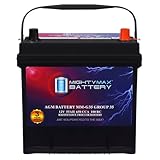
Mighty Max Battery MM-G35 Start and Stop Car BCI Group Size 35 12V 55Ah, 100RC, 650 CCA Rechargeable AGM Car Battery
Mighty Max Battery MM-H6 Start and Stop Car BCI Group Size 48 12V 70 AH, 120RC, 760 CCA Rechargeable AGM Car Battery
Lotus Car Battery Installation Guide (DIY or Shop)
- Prep the car: Park on level ground, ignition fully off, key out, lights off. On newer Lotus (Evora / Emira), keep the driver’s door cracked so you don’t lock yourself out while the 12V is disconnected.
- Access the battery: Elise/Exige owners: you may need to remove rear access panels or trunk liners. Evora/Emira: open the frunk or service panel. Be patient — Lotus packaging is tight.
- Memory saver (optional but smart): Some owners plug a “memory saver” 12V feed into the OBD-II port to keep ECUs and radios from losing memory. If you skip this step, be ready to clear warning lights after install.
- Disconnect negative (-) first: Loosen and remove the negative/ground cable. Tuck it safely where it cannot spring back to the terminal.
- Disconnect positive (+): Remove the positive cable and any hold-down brackets. Take note of how the hardware stacks (Lotus sometimes uses quirky brackets).
- Lift the old battery out: AGMs are heavy for their size; plan your grip. In Elise/Exige you’re working in tight quarters, so don’t ding the clam with the terminal posts.
- Clean the tray and check the hold-down: Look for corrosion or rubbed wiring. On older cars, make sure fiberglass and aluminum around the tray isn’t acid-stained. If it is, neutralize and touch up.
- Drop in the new battery (correct orientation): Positive post must be on the same side/orientation as the old unit so cables naturally reach without tension. This is why matching the correct “Group” size matters.
- Secure the hold-down: Lotus suspension is stiff; if the battery can hop, it will hop. A loose battery can short or crack the tray under load. Tighten gently but firmly — don’t crush the case.
- Reconnect positive (+) first, then negative (-): Tighten both terminals so they don’t wiggle. A loose terminal can cause random ABS/airbag/traction control lights that mimic sensor failure.
- Start the car and check voltage: After first start, measure charging voltage at the terminals (typically ~13.8–14.5V with the engine running). Too high = overcharging (bad regulator). Too low = alternator problem.
- Clear warning lights if needed: Newer Lotus models can briefly freak out after a full power loss. Drive a short loop; most modules relearn on their own. Persistent lights may need an OBD-II scan/reset.
Lotus Car Battery Maintenance & Longevity
- Use a smart maintainer: Lotus cars often sit. A smart trickle charger/maintainer that’s AGM-safe will dramatically extend life. Browse AGM-safe maintainers.
- Check resting voltage monthly: 12.6–12.9V (engine off, cold battery) = healthy. Anything below ~12.3V means you’re dipping into the discharge zone and sulfating plates sooner.
- Keep terminals tight and clean: Lotus vibration can slowly loosen clamps and cause intermittent power drops that look like ECU faults.
- Watch for parasitic drain: Aftermarket alarms, dash cams, radar detectors, and data loggers can pull a slow 24/7 draw. If the battery keeps dying in 4–5 days, measure parasitic draw with a meter.
- Avoid deep discharge: Running an AGM flat repeatedly (e.g. leaving hazards/fans on in the paddock with engine off) kills lifespan fast. If you need fans after shutdown on track, consider adding a pit fan or external cool-down blower instead of idling electronics off the main battery.
Signs You Need a New Battery
- Slow crank, then normal after warm restart: First start of the day is lazy, but hot restarts seem fine. Classic weak battery symptom, especially on supercharged Exige/Emira V6.
- Random warning lights / “Christmas tree dash” right after startup: Low voltage at ignition can freak out ABS, traction control, or airbag modules. If lights clear after a minute of driving, suspect low battery health, not failed sensors.
- Voltage below ~12.2V after sitting 24 hours: That’s below ~50% state of charge for most AGMs. It shouldn’t sag that low if the battery is fairly new and the car is stock.
- Visible swelling, leaking, or rotten-egg smell: Stop using it. A leaking flooded unit can corrode brackets and nearby aluminum. Swap immediately to a sealed AGM.
- It’s older than ~4–5 years (AGM) or ~3 years (cheap flooded) and you track the car: Hard launches, curbs, and heat cycles age batteries fast. Proactively replace before a track weekend, not after you get stranded in tech inspection.

YONHAN Battery Charger 10-Amp 12V and 24V Fully-Automatic Smart Car Battery Charger, Battery Maintainer Trickle Charger, and Battery Desulfator with Temperature Compensation

EZRED BMK1914 5-Piece Battery Maintenance Kit

LotFancy Battery Terminal Cleaners (2 pcs), Plus 12 pcs Battery Terminal Anti-Corrosion Fiber Washers (6 Red & 6 Green) for Car Marine Battery
Contact Lotus Customer Service & Support
- Lotus customer support: Reach out to Lotus Cars customer service in your region for official battery spec, warranty guidance, and recall/TSB info. They can confirm the correct battery group for your exact VIN, which matters because Lotus sometimes changes trays mid-production. Start with the official Lotus Contact Us page (or your local market version) and select Customer Care.
- Authorized Lotus dealer / service center: Dealers can register the battery install (where applicable on newer cars), update software if low-voltage created ghost errors, and check if chronic parasitic drain is linked to a known bulletin. Use the official Lotus Lotus Centres locator to find an authorized dealer or service center near you.
- Lotus owner’s manual / service manual diagrams: Your manual typically lists the OE battery size, polarity, and minimum CCA for your trim. If you don’t have the paper copy, many current handbooks are accessible from Lotus’ handbook section (for example, the Emira and Eletre handbook links under Services on lotuscars.com) or via dealer service portals. Always verify polarity and hold-down style before ordering online.
- Lotus dealer locator: Use Lotus’ official dealer locator to find the nearest authorized service point for in-warranty Emira/Evora electrical complaints, or to source an OEM-spec AGM that the dealer knows fits without trimming brackets. The global locator is available at the Lotus Centres search page.
Lotus Car Battery FAQs
Do Lotus cars use special batteries?
Most modern Lotus models (Elise, Exige, Evora, Emira) use compact, lightweight batteries with high Cold Cranking Amps (CCA) relative to their size, because they’re performance cars with tight engine bays. Some trims and newer models may use AGM (Absorbent Glass Mat) for better vibration resistance and charge stability. Always match the physical size, terminal orientation, and technology (AGM vs flooded) to avoid electrical warnings.
Can I replace a standard flooded battery with AGM in my Lotus?
Yes, upgrading from flooded to AGM is generally fine and often preferred in performance cars with high vibration, limited airflow, or occasional weekend-only use. AGM handles deep discharge and recharging better, which helps if the car sits. Do not downgrade from AGM to basic flooded if the car originally came with AGM.
Do I need to keep my Lotus on a battery maintainer?
It’s strongly recommended if the car isn’t driven every few days. Lotus sports cars often have minimal parasitic draw but may sit in garages for long periods, so a smart trickle charger or tender keeps voltage healthy and prevents no-starts.
How long should a Lotus car battery last?
Most Lotus batteries last about 3–5 years under normal use. If the car is stored often, rarely fully warmed up, or run with lots of electronics (aftermarket audio, dash cams, radar, etc.) without long drives to recharge, lifespan can drop to 2–3 years. A maintainer can extend that life.
How much is a Lotus car battery?
Typical price ranges are about $150–$250 for a high-quality AGM or lightweight performance battery sized for cars like the Elise/Exige, and around $200–$350 for larger AGM units used in higher-output or more comfort-oriented models like the Evora or Emira. Ultra-light lithium race batteries can cost $400+ but are not ideal for daily street use in cold weather.
Why won’t my Lotus start after sitting for a couple weeks?
Small, lightweight performance batteries have less reserve capacity than typical sedan batteries. After 1–2 weeks of sitting, voltage can sag below the threshold needed to crank, especially in cold weather. This doesn’t always mean the battery is “bad” — it may just be undercharged. Put it on a smart charger that supports AGM before replacing it.
What are signs I need a new battery in my Lotus?
Slow crank on startup, dash flicker during ignition, repeated need for a jump pack, radio/nav resets after starting, or voltage repeatedly testing under about 12.4V at rest even after a full drive are all common early warnings.
Bottom Line
Lotus cars are unforgiving about weak voltage. The safest default for modern Lotus (Evora, Emira, late Exige) is a high-quality AGM in the correct physical group (often H5 / Group 47 for Evora/Emira and 26R-style compact AGM for Elise/Exige). Classics like the Esprit can run a solid flooded or AGM Group 34, but absolutely benefit from a tender lead. Track-only toys can drop serious weight with LiFePO4 — just accept winter and daily-driver compromises. Before you click “buy,” confirm tray size, terminal orientation, and CCA. Then install it right, clamp it tight, and keep it topped. Your Lotus will crank fast, idle smooth, and stop throwing drama at startup.
ACDelco Gold 48AGM (88864541) 36 Month Warranty AGM BCI Group 48 Battery
Mighty Max Battery MM-G35 Start and Stop Car BCI Group Size 35 12V 55Ah, 100RC, 650 CCA Rechargeable AGM Car Battery