This guide walks you through how to pick the best car battery for your Lincoln sedan or SUV, why AGM is often the right move for newer Lincolns, what group size you actually need, and how much you should expect to pay. You’ll also get model-specific buying tips for Navigator, Aviator, Corsair, Nautilus, MKZ, MKX, Continental and more — plus DIY install steps, maintenance advice, and when not to cheap out. When you’re ready to shop, you can jump straight to live listings for H6 / Group 48 AGM, H7 / 94R AGM, and Group 65 high-CCA.
Table of Contents
- Quick Picks for Lincoln Owners (By Use Case)
- Top Battery Types for Lincolns (What to Choose & Why)
- Lincoln Model-Specific Buying Tips
- Lincoln Battery Fitment Cheat Sheet (Most-Common Sizes)
- Spec Targets: CCA, RC, and Warranty
- Best Car Battery Brands for Lincoln & Where-to-Buy
- Lincoln Car Battery Installation Guide (DIY or Shop)
- Lincoln Car Battery Maintenance & Longevity
- Signs You Need a New Battery
- Contact Lincoln Customer Service & Support
- Bottom Line for Lincoln Owners
Quick Picks for Lincoln Owners (By Use Case)
- Daily driver (Corsair / Nautilus / MKC / MKX), no start-stop: A high-quality flooded or EFB with decent Reserve Capacity (RC). Most of these cross over with Ford Edge/Escape platforms and often use Group H6 / 48 or H7 / 94R. Browse H6 Group 48 batteries. ~$150–$230 (Flooded/EFB)
- Start-stop equipped Lincoln (Auto Start-Stop): Use EFB at minimum, AGM preferred. Do not downgrade from AGM to a standard flooded battery — you’ll kill it early and may trigger charging system faults. See H6 AGM and 94R / H7 AGM. ~$200–$350
- Big SUV (Navigator / Aviator / Nautilus Black Label w/ tons of tech): AGM is strongly recommended because of high accessory load, air suspension, audio amps, seat/mirror heaters, and power liftgate. Look at Group 65 AGM truck/SUV batteries. ~$220–$380
- Short-trip city driver (lots of electronics on, engine off at lights): AGM wins. Faster recharge, better deep-cycle behavior, more stable voltage. Premium AGM picks. ~$230–$360
- Hot climate / desert heat: Heat is battery enemy #1. Choose higher RC and heat-tolerant plate design (EFB or AGM instead of basic flooded). Compare EFB options. ~$180–$280
- Cold climate / winter starts: Prioritize high CCA (Cold Cranking Amps). AGM typically keeps stronger cranking in sub-freezing weather. You can filter for “high CCA” in high-CCA AGM listings. ~$220–$360
- Older Town Car / Continental-style RWD V8 platforms: These often take Group 65 or similar large-case batteries with side bracing. Stick with a high-CCA flooded or AGM replacement sized correctly. Shop Group 65. ~$160–$260 (Flooded), $220–$330 (AGM)
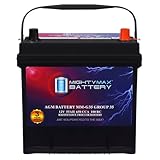
Mighty Max Battery MM-G35 Start and Stop Car BCI Group Size 35 12V 55Ah, 100RC, 650 CCA Rechargeable AGM Car battery

Mighty Max Battery MM-H7 Start and Stop Car BCI Group Size 94R 12V 80AH, 140RC, 850 CCA Rechargeable AGM Car Battery

Mighty Max Battery MM-H6 Start and Stop Car BCI Group Size 48 12V 70 AH, 120RC, 760 CCA Rechargeable AGM Car Battery
Top Battery Types for Lincolns (What to Choose & Why)
| Type | Best For | Pros | Cons / Watchouts | Typical Cost | Example Amazon Search |
|---|---|---|---|---|---|
| Flooded Lead-Acid | Older Lincolns without start-stop, mostly highway driving | Lowest upfront price, easy to source anywhere | Shorter life under heavy electronics load, weaker under deep cycling | $140–$200 | Group 65 flooded |
| EFB (Enhanced Flooded Battery) | Lincolns with light start-stop or frequent city use | Improved charge acceptance vs basic flooded, better in traffic and short trips | Costs more than basic flooded, still not as vibration-resistant as AGM | $180–$260 | EFB upgrades |
| AGM (Absorbent Glass Mat) | Navigator, Aviator, Nautilus Black Label, any high-electrical-load Lincoln | Excellent cranking, handles luxury accessories, resists vibration, lower self-discharge, best for cold starts | Higher price; must be properly charged by smart alternator/BCM | $220–$360 | 94R / H7 AGM |
| Deep-Cycle / Marine-Style AGM | Edge case: aftermarket audio systems / tailgating setups / limo-duty Navigators | Designed for repeated deep discharge, great for parked A/C, lights, amps | Overkill for normal commuters; sometimes taller or heavier and may not drop-in | $250–$400+ | AGM deep-cycle 12V |
Lincoln Model-Specific Buying Tips
- Lincoln Navigator (full-size SUV): Huge electrical demand (air suspension, power steps, heated 2nd/3rd rows, audio). Choose a high-capacity AGM SUV battery in Group 65 or H7/94R, depending on year. Expect ~$250–$380. If you see dim ambient lighting at idle or slow crank after short trips, it’s time.
- Lincoln Aviator (3-row crossover): Twin-turbo V6 + active safety + climate seats = high draw. Most Aviator trims are happiest on H6/H7 AGM. Look at H6 AGM. ~$220–$320.
- Lincoln Nautilus / MKX / MKC / Corsair: These midsize and compact SUVs often use Group 48 (H6) or 94R (H7). If you have Auto Start-Stop, stick with AGM or at least EFB. You’ll usually spend $190–$300. Short-trip suburban driving drains weak batteries fast, so reserve capacity matters.
- Lincoln MKZ / Lincoln Continental (luxury sedan): Lots of comfort electronics and sometimes adaptive steering. AGM is strongly recommended on newer trims. For older MKZ, a premium flooded or EFB can still work if no start-stop. Budget ~$180–$280.
- Older Town Car / classic Continental / LS V8 era: These cars are heavy, body-on-frame or early-2000s Ford Premier tech. They respond well to a high-CCA Group 65. Flooded is okay if the car is driven often, but an AGM upgrade helps if it sits in the garage for long periods. ~$160–$260 flooded, ~$230+ AGM.
- Hybrid or plug-in hybrid trims (e.g. MKZ Hybrid, Corsair Grand Touring PHEV): There’s a high-voltage pack for propulsion, but you still need a healthy 12V battery to boot the computers. Do not downsize or cheap out. Match the exact group size and technology (often AGM). ~$220–$350.
Lincoln Battery Fitment Cheat Sheet (Most-Common Sizes)
| Lincoln Model / Generation (Typical) | Common BCI / DIN Group | Notes | Amazon Search |
|---|---|---|---|
| Nautilus / MKX (mid-size SUV) | H6 / Group 48 (some trims), H7 / 94R (others) | AGM strongly recommended for trims with heavy infotainment + Start-Stop | Group 48 AGM |
| Corsair / MKC (compact SUV) | H6 / 48 | Check hold-down height; some years very tight under the cowl | Shop H6 |
| Aviator (3-row crossover) | H7 / 94R AGM | High accessory load, smart charging system expects AGM behavior | 94R AGM |
| Navigator (full-size SUV) | Group 65 (older), H7 / 94R (newer) | On big-trim Navigators, choose highest CCA you can fit | Group 65 AGM |
| MKZ / Continental (luxury sedan) | H6 / 48 (commonly), sometimes H5 / 47 in certain years | Some sedans tuck the battery tight near firewall under a cover – bring a 10mm socket | Group 47 AGM |
| Town Car / older Continental / LS | Group 65 | Classic Ford full-size layout, top-post. High CCA flooded is okay if no big audio upgrades | Group 65 |
Spec Targets: CCA, RC, and Warranty
RC: Reserve Capacity
Tech: Flooded / EFB / AGM
- CCA (Cold Cranking Amps): Meet or beat the factory CCA spec. In cold climates, +50 to +100 CCA over stock spec gives easier winter starts and faster oil circulation.
- RC (Reserve Capacity): RC measures how long the battery can power accessories if the alternator isn’t helping. Big SUVs with captain’s chairs, heated features, and high-end audio benefit from higher RC, especially in traffic or tailgating with engine off.
- Technology match: If the vehicle shipped with EFB or AGM, do not downgrade to basic flooded. The smart charging module and idle start-stop logic assume that higher cycling durability.
- Warranty: Target at least 36 months free replacement (or regional equivalent). Luxury vehicles drain batteries harder; a weak 12V can trigger “system fault” warnings that look like sensor failures but are actually voltage drop.
- Terminal orientation & height: Many Lincolns share Ford-style top posts and tight plastic covers. A battery that’s 1–2 cm taller than spec may prevent the cover from closing or rub wiring. Always check post location (left/right positive).
Best Car Battery Brands for Lincoln & Where-to-Buy
| Brand / Line | Why Lincoln Owners Like It | Watch For | Amazon Search |
|---|---|---|---|
| AGM premium lines (often sold as “Platinum AGM”, “Gold AGM”, etc.) | High CCA + strong RC, built for luxury SUVs with tons of powered features | Higher price, but less likely to leave you stranded in winter | Premium AGM listings |
| OEM-spec replacement batteries | Meet Lincoln/Ford charging system expectations without BCM relearn drama | Can cost more than aftermarket with equal specs | Motorcraft H6 AGM |
| EFB mid-tier lines | Good for mild start-stop / city use without full AGM pricing | Still not as deep-cycle-capable as true AGM for heavy accessory use | Shop EFB |
| High-CCA Truck/SUV batteries (Group 65 / 94R) | Great for Navigator / Aviator owners towing or running entertainment systems with engine off | Heavier, sometimes physically larger: confirm fitment depth and clamp style | 94R / H7 SUV batteries |
- Buy online (Amazon, etc.): Easiest way to compare CCA, RC, and warranty across brands fast. You can filter by group size (H6, H7, 65). Many listings offer scheduled mobile install in some regions.
- Buy locally (parts store / Lincoln dealer): Faster swap if you’re stranded, and they can test/print your current battery health for free.
- Core charge: Most sellers apply a refundable “core charge” until you return the old battery. Bring the old one back in the trunk and get that money back.
How to Check Freshness & Authenticity
- Date code: Every battery has a build date (often letter = month, number = year). You want something built within the last ~3–6 months if possible. Very old “new” stock means shorter real lifespan.
- Case condition: No swelling, no acid residue around caps, no hairline cracks, no corroded posts. Reject anything sketchy.
- Label + specs: CCA and RC on the sticker should match the listing. If the sticker looks reprinted or off-brand, walk away.
- Branding & serial: Reputable batteries have consistent branding, QR codes / batch IDs, and clear safety markings. Counterfeit or grey-market units often look “almost right” but with spelling/grammar errors or cheap ink.
Car Battery Warranty Tips
- Free replacement vs prorated: A “36-month free replacement” means if it dies in that window, you get a new battery with no math games. After that, prorated credit gets more annoying and less valuable.
- Keep receipt / digital proof: For warranty claims, you usually need purchase date. Save the PDF/email in your phone’s cloud drive.
- Electrical mods matter: Heavy aftermarket audio, light bars, or running tailgate TVs with the engine off can be considered “misuse.” Know that before you rely on warranty.
- Dealer installs: Some Lincoln dealers roll battery cost + install into a simple service invoice. That invoice itself is proof of warranty, which is convenient if you’re traveling.

ACDelco Gold 48AGM (88864541) 36 Month Warranty AGM BCI Group 48 Battery
Mighty Max Battery MM-G35 Start and Stop Car BCI Group Size 35 12V 55Ah, 100RC, 650 CCA Rechargeable AGM Car battery
Mighty Max Battery MM-H6 Start and Stop Car BCI Group Size 48 12V 70 AH, 120RC, 760 CCA Rechargeable AGM Car Battery
Lincoln Car Battery Installation Guide (DIY or Shop)
- Save memory if possible: Modern Lincolns have memory seats, electronic steering calibration, radio presets, sometimes window indexing. A “memory saver” (OBD-II battery saver) can keep modules alive during the swap. You can find them alongside jump packs in memory saver tools.
- Engine OFF, keys out, lights off: Turn off headlights, HVAC blower, interior lights. Let the vehicle sit a couple minutes so control modules go to sleep.
- Locate battery: In many Lincolns it’s under the hood near the firewall or passenger side cowl. Some models hide it under a plastic cover you release with basic clips or a 10mm socket.
- Disconnect negative (–) first: Loosen the negative terminal and move it aside so it cannot spring back. Then remove the positive (+). This reduces the chance of shorting tools to ground.
- Remove hold-down / bracket: Most Lincolns use a clamp at the base of the battery. Keep track of bolts and bracket orientation.
- Lift battery straight up: They’re heavy. Use both hands or a battery strap. Avoid tipping — you don’t want acid spill on paint or trim.
- Clean terminals and tray: Use a battery terminal brush or mild baking-soda-and-water solution to neutralize any crusty corrosion on the tray and clamps. Dry it fully.
- Drop in new battery (correct orientation): Positive post must line up with the positive cable. Make sure it sits flat in the tray and the hood or cover can still close.
- Reinstall hold-down: Tight but not gorilla-tight. The battery should not slide or rock under acceleration/braking.
- Reconnect positive (+) first, negative (–) last: This is the reverse of removal. Snug the terminals firmly so they cannot twist by hand.
- Start the car and check dash: You may see temporary warnings (steering assist, traction control, etc.). After a short drive, most modules relearn and the lights clear. If your Lincoln requires a Battery Management System (BMS) reset or “battery registration,” a dealer or good scan tool can do it.
Lincoln Car Battery Maintenance & Longevity
- Drive long enough to recharge: A bunch of 5-minute school runs with heated seats on will destroy even a premium AGM. Aim for periodic 20–30 minute drives or top-up with a smart maintainer.
- Use a smart charger if it sits: Luxury SUVs that sit for weeks (vacation home, seasonal vehicle) should live on a low-amp AGM-compatible maintainer. See AGM smart trickle chargers.
- Keep terminals clean: White/green crust increases resistance and heat. Clean and apply a light protective spray or dielectric grease on the clamps.
- Watch parasitic draw: Leaving phone chargers, dash cams, coolers, or DVD systems plugged in can quietly drain the battery overnight.
- Avoid full discharge: Deep-cycling a starting battery (running accessories until it’s “dead”) can take literal years off its life, even if you jump-start it later.
Signs You Need a New Battery
- Slow crank or “lazy” start: Engine turns over slower than normal, especially first thing in the morning.
- Random warning messages: “Service AdvanceTrac,” “Check Charging System,” steering assist warnings, etc. Low voltage can freak out chassis modules and ABS/ESC sensors.
- Dim interior / flickering ambient lighting at idle: Classic on Navigator and Aviator when the main battery is getting weak.
- Start-Stop stopped working: On vehicles with Auto Start-Stop, the system will disable itself if the battery can’t hold enough reserve. That’s an early clue, not just “annoying behavior.”
- 3–5 year age: In a high-load luxury vehicle, 4+ years on the original battery is already “bonus time.” Proactively test around year 3, not after a no-start event.

LotFancy Battery Terminal Cleaners (2 pcs), Plus 12 pcs Battery Terminal Anti-Corrosion Fiber Washers (6 Red & 6 Green) for Car Marine RV
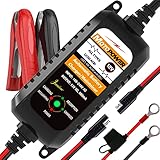
MOTOPOWER MP00205A 12V 800mA Automatic Battery Charger, Maintainer, Trickle and Desulfator

YONHAN Battery Charger 10-Amp 12V and 24V Fully-Automatic Smart Car Battery Charger, Battery Maintainer Trickle Charger, and Battery Desulfator with Temperature Compensation
Contact Lincoln Customer Service & Support
- Confirm correct battery group/part number for your exact VIN
- Tell you if your vehicle still has roadside assistance coverage
- Book dealer service or mobile boost/jump in some regions
- You need a same-day battery install
- You want the battery registered in the car’s Battery Management System (some newer Lincolns track battery health)
- You want OEM-spec Motorcraft AGM with warranty paperwork tied to your VIN
Lincoln Car Battery FAQs
Can I upgrade from a standard flooded battery to AGM in my Lincoln?
Yes, in most modern Lincolns (especially push-button start, lots of electronic features), AGM is considered an upgrade. AGM batteries handle higher accessory loads, recover faster after short trips, and tolerate deep discharge better than basic flooded lead-acid. The main rule: you can upgrade flooded → AGM, but you should not downgrade from AGM → regular flooded in a Lincoln that came factory with AGM or an enhanced battery, because that can cause early failure and possible warning messages.
Do I need a special battery for start-stop or intelligent charging in my Lincoln?
If your Lincoln uses start-stop, auto idle shutoff, or an advanced energy management/charging system, you should use at least EFB (Enhanced Flooded Battery) or AGM (Absorbent Glass Mat). Those chemistries are designed for repeated restarts and high electrical demand while the engine is off at traffic lights. Dropping in a cheaper conventional flooded battery can shorten lifespan dramatically and may trigger “Low Battery” or charging system warnings sooner than expected.
How long should a Lincoln car battery last?
Most Lincoln batteries last around 3–5 years in normal mixed driving. Lots of short trips, sitting parked for long periods with electronics powered, extreme heat, or heavy accessory usage (heated/cooled seats, big audio draw, long idle with A/C) can pull that down to about 2–3 years. A Lincoln that does regular highway runs (good full recharge cycles) and lives in mild climate can see 5+ years from a high-quality AGM.
How much is a Lincoln car battery?
Typical Lincoln battery pricing lands roughly in these ranges: about $140–$200 for a standard flooded battery (older models without start-stop), $170–$260 for an EFB in vehicles with mild start-stop demands, and $200–$350 for a premium AGM that supports high electronics load and luxury features. Larger physical group sizes with higher Cold Cranking Amps (CCA) and stronger Reserve Capacity usually sit at the top of that range.
What size battery does my Lincoln need?
You should match the original BCI group size (for example: H6 / Group 48, H7 / Group 94R, etc.), make sure the positive and negative posts are in the correct orientation, and meet or exceed the factory Cold Cranking Amps (CCA) rating. The fastest way to confirm is to read the label on the battery that’s in the vehicle now, or check the exact spec in the owner’s manual before buying.
When should I replace the battery instead of just charging or jump-starting it?
If the engine cranks slowly first thing in the morning, you’re seeing low-voltage messages, memory resets (radio presets disappear, clock resets), dim interior lights when unlocking, or voltage keeps dropping below ~12.4V even after a good highway drive, that battery is usually sulfated/tired. At that point, replacement is more reliable and safer for the vehicle’s sensitive electronics than repeated jump-starts.
Does warranty matter when choosing a Lincoln battery?
Definitely. Aim for a battery with a clear free-replacement period (often 36 months on higher-end AGM options). A longer no-hassle replacement window usually signals better internal plate design, better heat resistance, and stronger vibration resistance — all important for heavier luxury vehicles with a lot of always-on electronics.
Bottom Line for Lincoln Owners
- Step 1: Confirm your group size (H6/48, H7/94R, 65, etc.) and post orientation before you buy.
- Step 2: Match or upgrade the tech. Flooded → AGM is fine. AGM → Flooded is not.
- Step 3: Look at CCA, RC, and warranty — not just price. High CCA + strong RC keeps luxury features happy.
- Step 4: If you have Start-Stop, do not cheap out. Buy AGM/EFB only.
- Step 5: Register or relearn the new battery if your Lincoln requires it, so the charging system treats it correctly.