Rivian trucks and SUVs run on a massive high-voltage pack for propulsion – but just like every other modern EV, they still depend on a separate low-voltage battery to boot computers, power safety systems, run lights, raise suspensions, pop the frunk, and wake the main drive pack. When that 12‑volt battery gets weak, you get warnings, weird electronics behavior, or in the worst case: a totally bricked R1T or R1S that won’t shift into Drive.This guide walks you through the best replacement battery options for Rivian owners (AGM vs lithium), what fits different build years, how much you should expect to spend, and how to safely swap and maintain your low-voltage battery. You’ll also see quick-buy shortcuts for popular 12V sizes like Group 94R / H7 AGM and upgrade-style lithium drop-ins, plus must-have gear like portable jump starters and smart tenders. When you’re ready to compare pricing, check these live searches for Rivian-friendly battery formats and accessories: Group 94R / H7 AGM batteries, 12V LiFePO4 (lithium) upgrades, and portable jump starters.
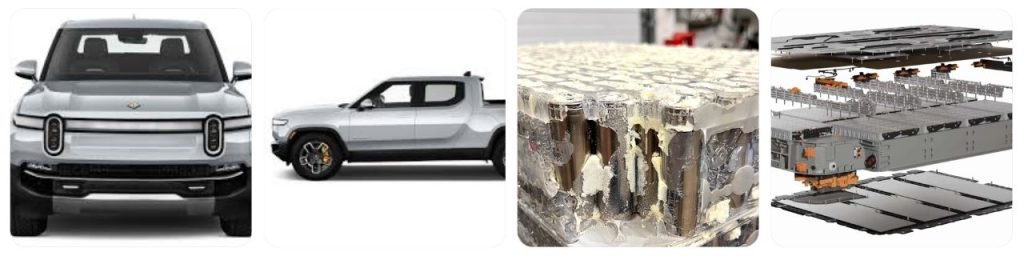
Table of Contents
- Quick Picks for Rivian Owners (By Use Case)
- Top Battery Types for Rivians (What to Choose & Why)
- Rivian Model-Specific Buying Tips
- Rivian Battery Fitment Cheat Sheet (Most-Common Sizes)
- Spec Targets: CCA, RC, and Warranty
- Best Car Battery Brands for Rivian & Where-to-Buy
- Rivian Car Battery Installation Guide (DIY or Shop)
- Rivian Car Battery Maintenance & Longevity
- Contact Rivian Customer Service & Support
- Bottom Line
Quick Picks for Rivian Owners (By Use Case)
- Daily driving / light accessory use (most newer R1T & R1S builds with a single 12V): High-quality AGM (Absorbed Glass Mat) in the common Group 94R / H7 size. Look for ~140 min Reserve Capacity and 750–850+ CCA for stability during short trips. Browse 94R/H7 AGM options. ~$180–$320
- Older dual‑battery Rivian (2021–early 2023 builds): You may need two smaller 12V batteries instead of one big one. Many owners upgrade both to lithium drop-ins. See 12V LiFePO4 sets. ~$300–$700 for the pair
- Heavy campsite / tailgate power (lights, fridge, air compressor in camp mode): Premium AGM or LiFePO4 lithium for higher usable capacity and deeper discharge tolerance. Consider lithium if you often leave the vehicle in Accessory Mode without driving. Bluetooth LiFePO4 12V upgrades. ~$300–$450 each
- Cold-climate Rivian (snow trips, ski lots, sub-freezing mornings): High-CCA AGM. AGM chemistry delivers better low-temp cranking than standard flooded lead-acid, and it tolerates winch pulls + heater loads better. Shop high-CCA 94R AGM. ~$220–$360
- Overlanding / off-road / lots of vibration: AGM or ruggedized deep-cycle AGM with reinforced plates. These handle washboard trails and winch spikes. See overland-friendly AGM. ~$250–$400
- Backup plan so you’re never stranded: Keep a high-output lithium jump starter rated for large trucks/SUVs in the frunk or gear tunnel. That tiny pack can wake the Rivian’s 12V system long enough to boot the computers and let you shift to Neutral or Drive. Browse truck-rated jump starters. ~$120–$250

ECO-WORTHY 12V 20Ah LiFePO4 Lithium Battery, 4000+ Deep Cycle Rechargeable Battery with BMS for Fish Finder, Ham Radio, Solar System, Outdoor Camping

Mighty Max Battery ML18-12 - 12 Volt 18 AH, Nut and Bolt (NB) Terminal, Rechargeable SLA AGM Battery

GOLDENMATE 12V 20Ah LiFePO4 Battery, IP67 Waterproof, 12V Lithium Battery w/ 5000+ Deep Cycles, Built-in BMS, Premium Lithium Iron Phosphate Cell, Ideal for Solar, Marine, Fishfinder, Off-grid camping
Top Battery Types for Rivians (What to Choose & Why)
| Type | Why It Matters for Rivian | Typical Use / Notes | Approx. Cost |
|---|---|---|---|
| Flooded Lead-Acid (traditional) | Old-school, cheapest. Adequate in mild climates, but doesn’t love deep discharge. Rivian computers, air suspension, cameras, HVAC, etc. can draw a lot while parked, which can stress basic flooded designs. | Okay as an emergency/temporary replacement if you’re stuck, but not ideal for long-term in a high-load EV platform. | $150–$220 (Group 94R search: 94R flooded) |
| AGM (Absorbed Glass Mat) | Plates are packed and immobilized in fiberglass mats. Better vibration resistance, higher Reserve Capacity, faster recharge acceptance from the DC-DC converter, and stronger cold-weather performance. | Sweet spot for most newer R1T / R1S owners. This is what many Rivians ship with or get from service as a warranty replacement. | $180–$320 (see Group 94R / H7 AGM) |
| LiFePO4 Lithium 12V (a.k.a. LFP) | Much lighter, higher usable capacity, can deliver steady voltage deeper into discharge. Many Rivian owners upgrade to lithium for longer “parked with accessories on” runtime and slower aging. | Great for overlanding, camping, and older dual‑battery Rivians where you can replace one or both 12V units with lithium “drop-ins.” Some come with built‑in Bluetooth monitoring. | $300–$450 each (search 12V LiFePO4 Bluetooth) |
Rivian Model-Specific Buying Tips
- R1T (all years): The R1T uses a low-voltage battery (or batteries, on early builds) to run the entire truck’s electronics. Later trucks consolidated to a single, higher-capacity AGM-style 12V module mounted under the cabin instead of in the frunk. Expect ~$200–$320 for a quality AGM, and ~$350+ for a lithium upgrade set. Check AGM 94R/H7.
- R1S (all years): Same story as R1T – early SUVs ran two smaller 12V batteries, later builds moved to one higher-capacity unit under the passenger seat area, and Rivian service can swap it in under warranty early on. Expect roughly $180–$300 for a premium AGM replacement, or ~$350–$450 for LiFePO4.
- Early-build R1T / R1S (dual 12V setup, roughly 2021–early 2023): You may still have two separate 12V batteries. Many owners proactively upgrade both to LiFePO4 to reduce random “12V low voltage” warnings. Budget $600–$700 if you’re doing a matched lithium pair.
- Later-build R1T / R1S (single 12V setup, mid‑2023+): One physically larger AGM battery with higher Reserve Capacity. Easier service, cheaper long-term because you’re only buying one battery. Still consider a lithium swap if you camp or draw accessories for hours without driving.
- Future Rivian R2 / next-gen models: Rivian has signaled a push toward cost-optimized design and simplified electrical architecture on future R2-class vehicles. Expect a single serviceable low-voltage battery in an easier-to-access cabin location (not buried in the frunk). Pricing will likely mirror the R1T/R1S single-AGM setup (~$200–$320) with optional lithium upgrades as the aftermarket matures.
- Budget tip: Rivian service centers can quote you an OEM replacement 12V (~$300+ parts/labor). Doing it yourself with an equivalent spec AGM or lithium can save money, but you must follow safe shutdown and keep the vehicle powered during the swap so modules don’t crash.
Rivian Battery Fitment Cheat Sheet (Most-Common Sizes)
| Vehicle / Build Range | 12V Layout | Common Replacement Style | Shopping Keywords | Notes |
|---|---|---|---|---|
| R1T / R1S launch–early 2023 | Dual 12V batteries | Two smaller AGM or LiFePO4 drop-ins | “Rivian dual 12V lithium”, “R1T 12V upgrade set” | Both need to be healthy. Many owners upgrade both at once to lithium for longer life and fewer low-voltage alerts. |
| R1T / R1S mid‑2023 → present | Single 12V battery | AGM Group 94R / H7 (high RC, ~750–850+ CCA) | “Group 94R AGM”, “H7 AGM 12V” | This battery usually lives under the passenger seat area / cabin floor, not loose in the frunk. Expect ~$200–$320 for quality AGM. |
| Overland / camping builds | Single or dual (depends on build year) | LiFePO4 (12V lithium) with built‑in BMS and Bluetooth monitor | “12V LiFePO4 Rivian”, “Bluetooth LFP 12V” | Great for long accessory runtime. Check physical dimensions and terminal orientation before buying. |
| Emergency gear for any Rivian | n/a | Portable jump starter / booster pack | “truck jump starter 2000A” | A high-output booster can wake the low-voltage rail so you can get out of Park even if your 12V is flat. |
Spec Targets: CCA, RC, and Warranty
- CCA (Cold Cranking Amps): Even though Rivian isn’t “cranking” an engine, high CCA still matters. It’s shorthand for how well the battery can deliver big bursts of current in the cold to wake pumps, heaters, and control modules. Aim to meet or beat your OEM rating; for Group 94R AGM, 750–850+ CCA is common.
- RC (Reserve Capacity): RC is how long the battery can hold up the truck’s 12V systems with no charging support. Higher RC = more time for HVAC, interior lighting, bed lights, and camp accessories without panicking.
- Technology: AGM is the Rivian “default good.” LiFePO4 (LFP) is the “premium/upgrade” path for lighter weight, higher usable capacity, and longer cycle life. Do not replace AGM/LFP with a cheap flooded battery if you can avoid it.
- Warranty: Shoot for 36+ months free replacement on AGM, or ~4-year full replacement on quality LiFePO4. Batteries with longer warranties generally use better internal plates/cells.
- Charging profile: Rivian’s DC-DC converter charges the 12V automatically from the main pack. Aftermarket LiFePO4 packs should include a built-in BMS that’s compatible with an automotive/EV charge profile (over-voltage and cold-temp protection).
Best Car Battery Brands for Rivian & Where-to-Buy
| Brand / Style | Why Rivian Owners Like It | Where to Look | Good For |
|---|---|---|---|
| Premium AGM (Group 94R / H7) | Strong CCA, high RC, rugged against vibration. Common in German luxury SUVs and EVs, so easy to source nationwide. | Amazon 94R AGM search, local auto parts stores, Rivian Service | Most 2023+ single‑battery Rivians, cold-climate owners, off-roaders |
| LiFePO4 / LFP “drop-in” 12V | Very high usable capacity for camping and tailgating. Often ~4-year full-replacement warranty and app/Bluetooth monitoring. | Amazon LiFePO4 12V search, EV-focused aftermarket shops | Overlanding builds, early dual‑battery trucks, people who hate surprise low-voltage warnings |
| OEM Rivian service battery | Direct fit, correct vents/terminals, and you keep everything 100% factory for warranty conversations. | Rivian Service Center / Mobile Service quote | Owners under warranty or not comfortable doing a live 12V swap themselves |
| Jump starter / booster pack | Lets you self-rescue if the 12V goes flat at a campsite or trailhead so you can wake the truck and get moving. | Amazon jump starter search | Everyone. Keep one in the frunk/gear tunnel. |
- Buying online: Pros – easy to compare CCA/RC/warranty, fast delivery. Cons – you’ll handle install and core return yourself.
- Local parts store: Pros – instant pickup, they often test your old 12V for free. Cons – fitment lookup tools may lag behind Rivian’s newest build revisions.
- Rivian Service Center / Mobile Service: Pros – they know your exact build (single vs dual battery, software state) and will install/initialize it. Cons – usually the most expensive path once you’re out of warranty (~$300+).
How to Check Freshness & Authenticity
- Date code: All 12V batteries have a build/date stamp or label. Fresher is better. Try not to buy something that’s been sitting more than ~6 months on a shelf unless it’s been maintained on a smart charger.
- Physical condition: No cracks, bulges, corrosion around the posts, or leaking electrolyte. On AGM and LiFePO4 you shouldn’t see/smell anything funky.
- Correct terminals: Rivian uses tight packaging. Make sure the positive (+) and negative (−) posts line up exactly like stock so cables aren’t stretched or crossed.
- Branding / labeling: Stick with known brands or reputable sellers. Counterfeit or mystery-label lithium packs are risky in a high-current EV environment.
- Warranty card / QR: Quality AGM and LiFePO4 packs come with a scannable warranty or registration. Register it so you can claim replacement if it fails early.
Car Battery Warranty Tips
- Free replacement vs. pro-rated: A real 36–48 month free replacement warranty is more valuable than a long pro-rated warranty that gives you only partial credit.
- Keep proof of install: Take a photo of the odometer (or Rivian app mileage) and the battery label the day you install it. That becomes your timestamp if you claim warranty later.
- Check Rivian coverage: Low-voltage battery failures may still be handled under Rivian warranty/roadside if you’re within coverage. Sometimes they’ll swap it at no cost the first time it throws errors.

ACDelco Gold 48AGM (88864541) 36 Month Warranty AGM BCI Group 48 Battery

Mighty Max Battery MM-H6 Start and Stop Car BCI Group Size 48 12V 70 AH, 120RC, 760 CCA Rechargeable AGM Car Battery
Mighty Max Battery MM-G35 Start and Stop Car BCI Group Size 35 12V 55Ah, 100RC, 650 CCA Rechargeable AGM Car battery
Rivian Car Battery Installation Guide (DIY or Shop)
- Identify your setup: Open the Rivian app or service docs and confirm if you have a dual 12V (early builds) or single 12V (mid‑2023+). Location changed over time: early trucks often had service points under/near the frunk; later trucks tuck the 12V under the passenger seat area / cabin floor.
- Prep the truck safely: Park on flat ground, engage Park, and keep the truck connected to a Level 2 charger if you can. Staying plugged in helps keep modules alive while you swap so you don’t “brick” the vehicle mid-job.
- Access panels: You may need to remove trim panels, frunk tubs, or interior covers (Torx bits). Keep track of clips and screws in order. Rivian hides the 12V very cleanly, so don’t rush.
- Maintain power (advanced users only): Some DIYers hook up a memory saver / auxiliary 12V jumper pack to the cables before disconnecting the original battery so the computers never fully lose power. If you’re not 100% confident in doing a hot swap, skip this and let Rivian Service handle it.
- Disconnect negative first: Loosen and remove the negative (−) cable, then the positive (+). Do not let the wrench bridge terminals or chassis. Avoid sparks.
- Remove the old battery/batteries: Lift straight up and out. AGM batteries are heavy; lithium packs are lighter but still awkward in tight spaces.
- Drop in the new battery: Make sure it sits flat, no cables pinched. Reconnect positive (+) first, then negative (−). Tighten firmly but don’t overtighten and crack a post.
- Reassemble trims and covers: Reinstall the frunk tub / interior panels and torque fasteners snug so they don’t rattle off-road.
- Wake the truck: Close doors, lock/unlock, or use the app to wake the vehicle. Clear any low-voltage warnings. If a warning persists or the truck won’t shift, call Rivian Service or Roadside Assistance for a software-level reset.
- Recycle the old battery: AGM/lead-acid batteries carry a core charge. Take them to a parts store or recycler. Don’t toss in household trash.
Rivian Car Battery Maintenance & Longevity
- Drive (or charge) regularly: The Rivian’s DC-DC converter keeps the 12V topped off when the high-voltage pack is awake. Leaving the truck idle for long periods without charging can slowly drain the low-voltage system.
- Camp mode discipline: Long tailgate/camp sessions with lights, music, A/C or heat running will hammer the 12V. If you do this a lot, upgrade to higher RC AGM or LiFePO4 and carry a jump starter.
- Software updates: Keep OTA software current. Rivian has pushed updates that improve how long the truck “sleeps” before waking the DC-DC converter to recharge the 12V, reducing phantom drain.
- Watch for warnings: “12V battery fault” or “Vehicle may not restart” messages mean act now. Don’t ignore them – a weak 12V can strand you even if you have 70% main pack left.
- Inspect terminals: Any loose clamp or corrosion can cause intermittent low-voltage faults. Make sure connections stay clean and tight after off-road washdowns.
Signs You Need a New Battery
- Random system faults, alerts about low 12V, or Driver+ / suspension / HVAC modules dropping offline overnight.
- Truck appears “dead” or won’t shift out of Park even though the traction battery is charged.
- Interior screens flicker or reboot when you unlock the truck.
- You needed an external jump starter recently. That’s usually your early warning that capacity is fading.

LotFancy Battery Terminal Cleaners (2 pcs), Plus 12 pcs Battery Terminal Anti-Corrosion Fiber Washers (6 Red & 6 Green) for Car Marine RV
MOTOPOWER MP00205A 12V 800mA Automatic Battery Charger, Maintainer, Trickle and Desulfator

YONHAN Battery Charger 10-Amp 12V and 24V Fully-Automatic Smart Car Battery Charger, Battery Maintainer Trickle Charger, and Battery Desulfator with Temperature Compensation
Contact Rivian Customer Service & Support
- In-app Support / Live Chat: Open the Rivian app, go to Service → Get Help. You can start a live chat 24/7 with a Rivian Support Advisor, as described in the Rivian 24/7 Live Chat announcement or via the main Rivian Customer Support page.
- Roadside Assistance: Use the SOS button in the vehicle overhead console or call Rivian roadside (toll-free in North America). Official details and phone numbers are listed on the Rivian Roadside Assistance page; they can jump your 12V, tow you to a service center, or extract you off-road.
- Phone Support: Rivian publishes a dedicated phone line for owners. Current contact info is kept up to date on the Customer Support page (commonly listed as 1-888-RIVIAN-1 / 1-888-748-4261 in North America), with roadside assistance available 24/7.
- Service Center Visit / Mobile Service: Through the app you can schedule service, request mobile service, or locate the nearest service facility. You can also see how service works on Rivian’s Service Experience page and browse locations via the Service Support section.
- Owner resources: Check the Support section in the app or on Rivian.com/support for service bulletins, manuals, warranty terms, and high-voltage / 12V safety info. This is also where you’ll see any recall or campaign affecting low-voltage batteries.
Rivian Car Battery FAQs
How long should a Rivian car battery last?
You’re dealing with two “batteries” in a Rivian: the main high-voltage traction pack that powers the motors, and the 12V low-voltage battery that runs accessories and control modules. The high-voltage pack is engineered for long-term use — generally many years and well over 100,000+ miles with proper thermal management and software balancing. It’s not treated like a normal wear item. The smaller 12V battery, however, is a wear item. Depending on climate, accessory use (camping mode, powering accessories while parked, frequent wake/sleep cycles), and how often you drive, most Rivian 12V batteries last around 3–5 years. Heavy accessory draw in extreme heat or cold can push that closer to 2–3 years, while mild climates and regular driving can stretch it toward the high end of that range.
How much is a Rivian car battery?
If you’re talking about the high-voltage traction battery (the giant pack under the floor), that’s a five-figure component and is typically handled through Rivian service/warranty rather than treated as a normal “buy a new battery” purchase. For most owners, “battery replacement cost” actually means the 12V low-voltage battery. A quality replacement 12V battery for a Rivian generally runs a couple hundred dollars: roughly ~$200–$400 depending on chemistry (traditional AGM vs. newer lithium-style low-voltage packs with a built-in battery management system) and whether Rivian installs it for you or you source a compatible unit yourself.
Can I upgrade my Rivian’s 12V battery to a higher-tech chemistry?
In many EVs, including Rivian, the low-voltage system is tuned for a specific chemistry and voltage profile (for example, AGM-style lead-acid or a lithium low-voltage module with an internal BMS). Moving “up” to a different chemistry is only considered safe if the replacement is explicitly built as a Rivian-compatible low-voltage pack with proper regulation. Dropping in a random generic lithium 12V or off-the-shelf powersports battery can confuse the DC-DC charging logic, trigger warnings, or shorten service life. The safe path is: match what the truck/SUV shipped with, or use an aftermarket unit that specifically states Rivian compatibility.
Why does an electric truck even need a 12V battery?
Just like Tesla, Rivian still uses a low-voltage battery to power control modules, lighting, infotainment, locks, contactors, sensors, and other “always-on / wake-up” systems. The big high-voltage pack doesn’t directly run those components — it steps down through a DC-DC converter, and the 12V battery buffers that supply. If the 12V battery gets weak, you can see weird warning messages, accessory failures, or the vehicle refusing to “boot up,” even though the main traction pack is fine.
What are signs that my Rivian needs a new 12V battery?
Watch for slow or glitchy wake-up when you open the door, warning messages about low-voltage or electrical system faults, screens rebooting unexpectedly, or accessories (lights, infotainment, HVAC fans at startup) acting weak. If you’re getting repeated low-voltage alerts or roadside support has to “jump” the 12V system, it’s time to schedule a replacement instead of repeatedly nursing it.
Does warranty matter on a Rivian replacement battery?
Yes. You want a clear free-replacement period (not just pro-rated credit) because the 12V battery in an EV is doing more background work than people realize — powering cameras in security modes, keeping modules awake for OTA updates, supporting accessory loads while camping, etc. A stronger warranty usually points to better internal plate design (AGM) or a more robust BMS (lithium low-voltage module), which means fewer surprise low-voltage faults down the road.
Bottom Line
ACDelco Gold 48AGM (88864541) 36 Month Warranty AGM BCI Group 48 Battery
Mighty Max Battery MM-H6 Start and Stop Car BCI Group Size 48 12V 70 AH, 120RC, 760 CCA Rechargeable AGM Car Battery